Paracetamol (acetaminophen) (CAS 103-90-2)
Acetaminophen
CAS 103-90-2 · C8H9NO2 · MW 151.16 g/mol
Safety data sheet with all sections: GHS classification, transport, regulatory status, spectra, 3D model and literature.
Full record: Paracetamol (acetaminophen) (CAS 103-90-2) — Safety Data Sheet →

Modellansichten
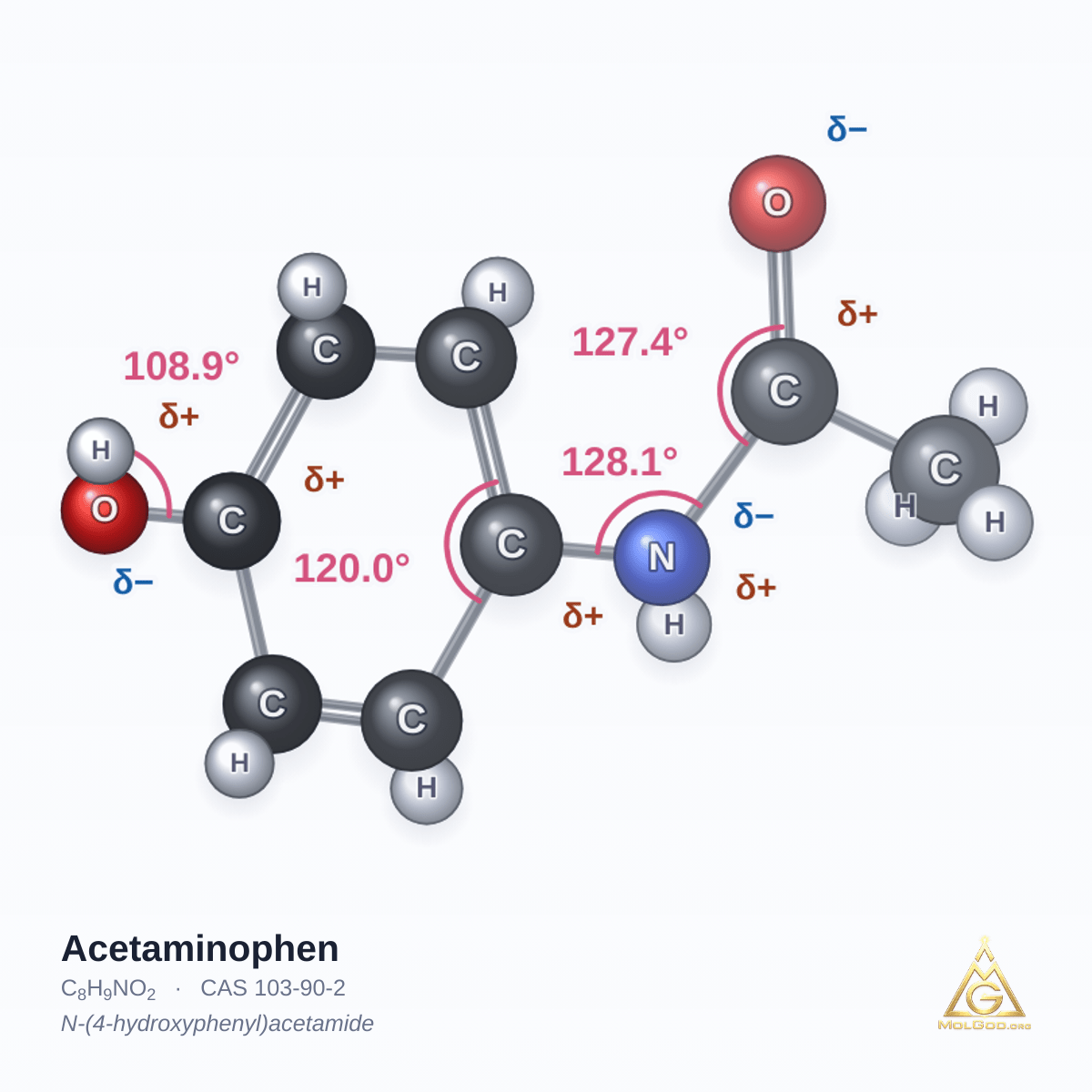
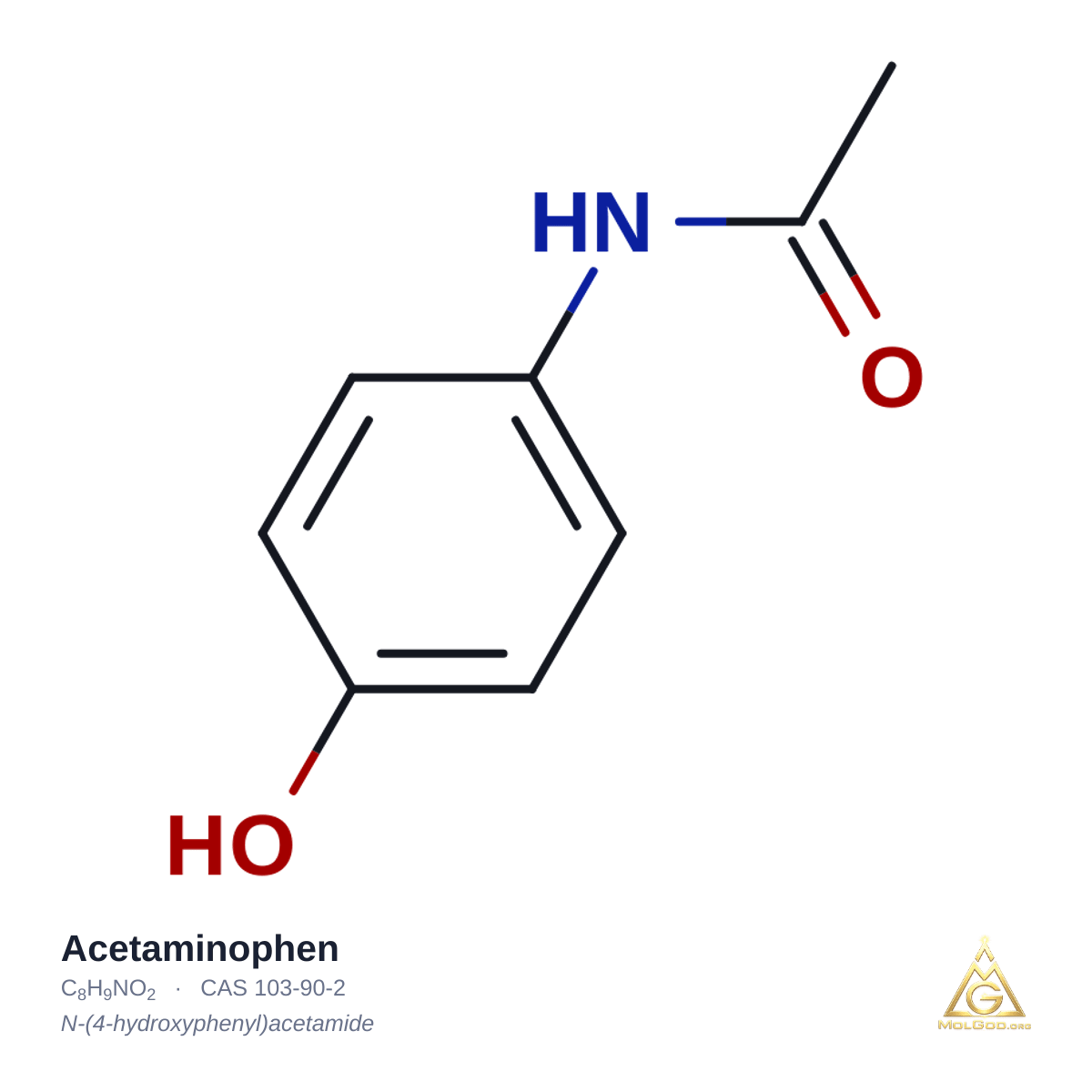
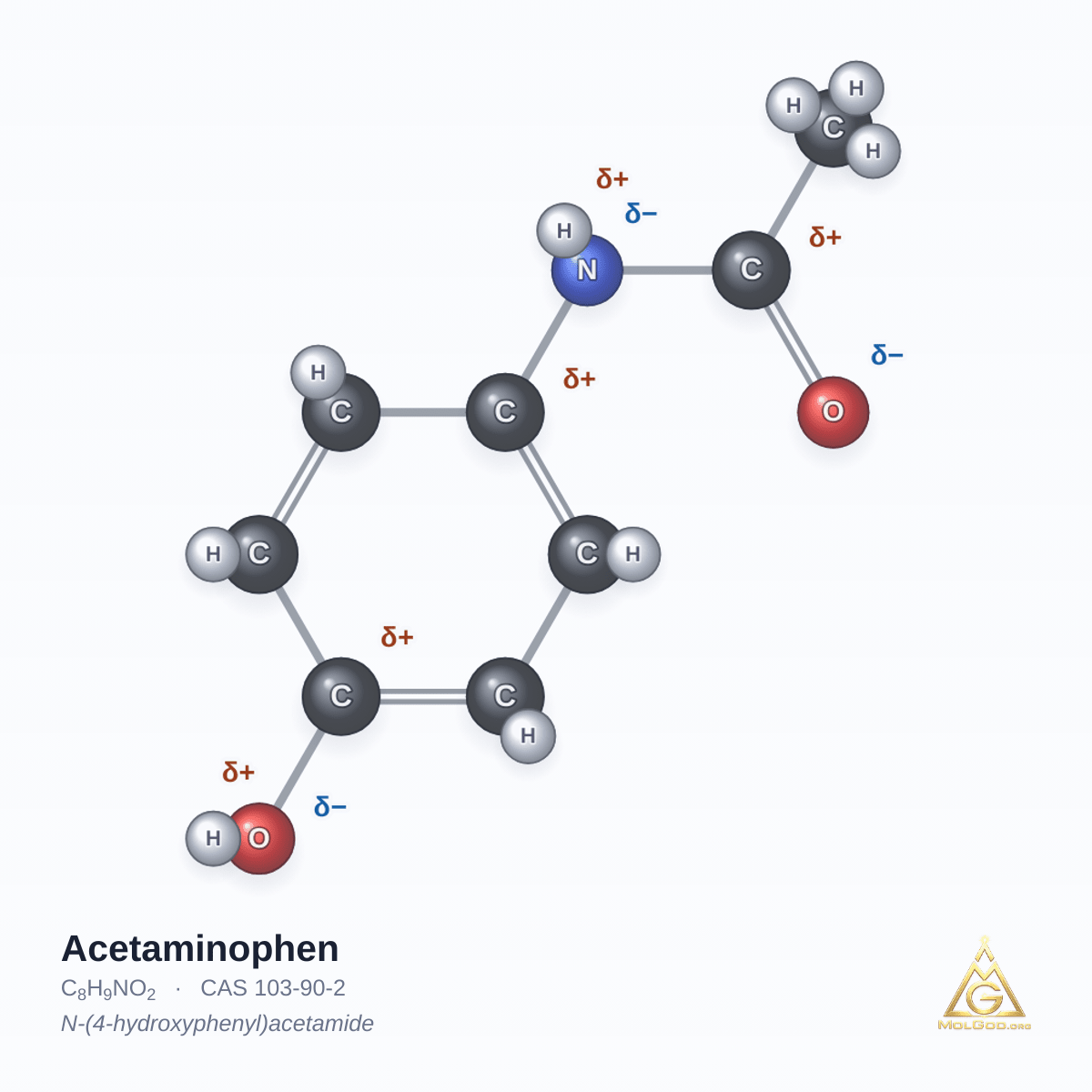
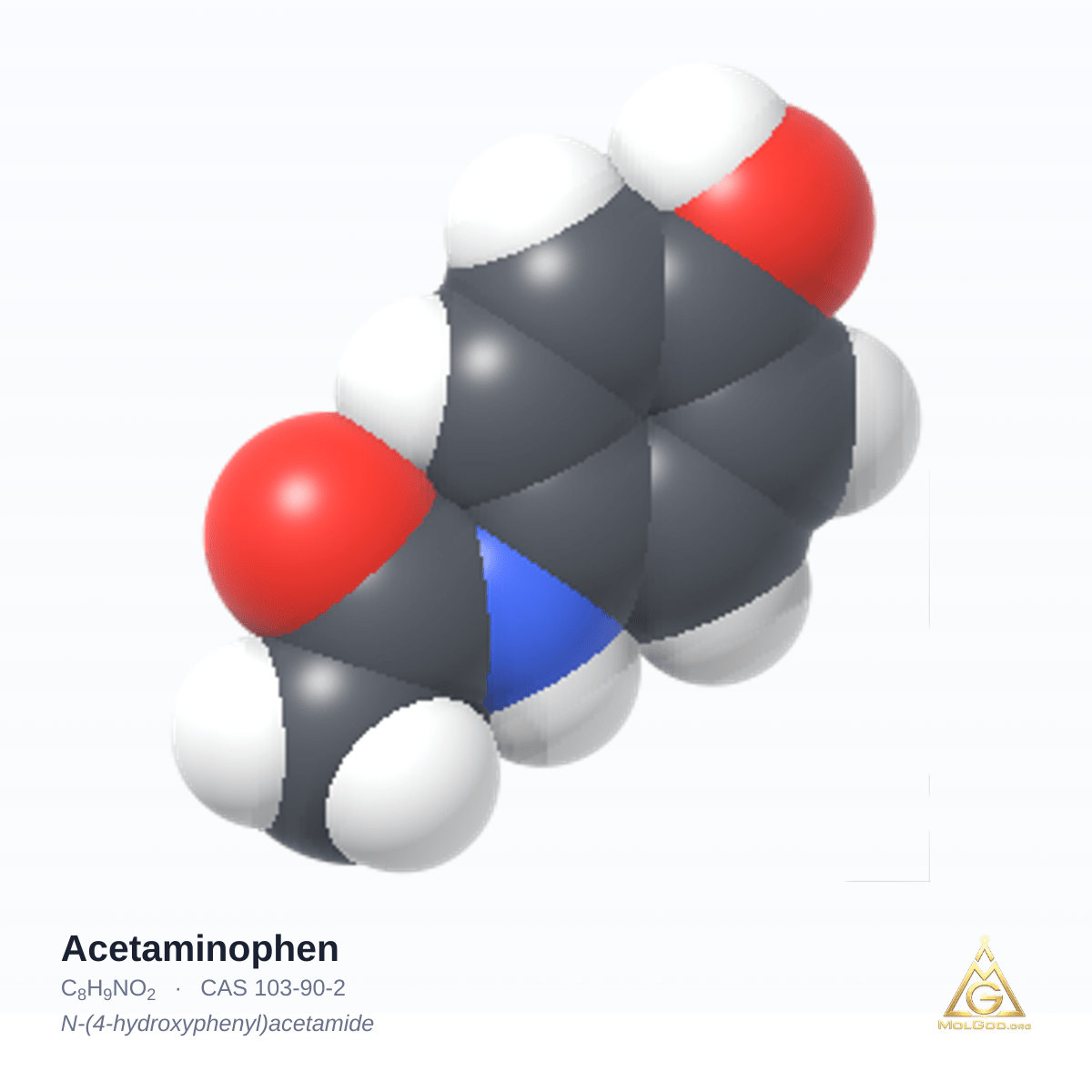
© 2026 MolGod.org. Alle Rechte vorbehalten. · Bildrechte
🖨️ 3D-Druckmodell und LizenzMolGod_Print3D_1
Ein druckfertiges Modell dieses Moleküls auf einem Sockel: drehen, heranzoomen und ansehen, wie es direkt aus dem Drucker und nach dem Entfernen der Stützen aussieht.
Preview of the 6-colour print model — rotate it with your mouse or finger; see it as printed, finished, as the molecule alone, and where to cut it off the pencils
 Loading the 3D model…
Drag to rotate; scroll or pinch to zoom. Each part is shown in the colour of its filament.
⬇️ Print file for H2C (3MF) · 35 MBFull multicolour specification ↓
Vorschau des 3D-Druckmodells — mit Maus oder Finger drehen; umschalten: mit Stützen / ohne Stützen
Zum Drehen ziehen; Mausrad oder zwei Finger zum Zoomen.
Selbst drucken — kostenlos
- Lizenz CC BY-NC-SA 4.0: Das Druckmodell (mit Sockel) darf für nichtkommerzielle Zwecke — zu Hause, in Schule, Hochschule oder Werkstatt — mit Namensnennung gedruckt, geteilt und bearbeitet werden. CC BY-NC-SA 4.0
- Kommerzielle Nutzung — Verkauf von Drucken und kostenpflichtige Druckdienste — nur mit unserer Lizenz: pure@molgod.org.
- Das Molekül allein (Dateien NORMAL und ENGRAVED) bleibt unter CC BY-SA 4.0.
1. Datei herunterladen
Unsicher, was Sie wählen sollen? Prusa MK4, MINI oder Ender-3 S1 — nehmen Sie dessen G-Code. Ein anderer Drucker — das 3MF-Projekt (PrusaSlicer) oder die STL (andere Slicer). Druck in einer Werkstatt oder Druckerei — geben Sie das ZIP-Paket und das PDF-Datenblatt weiter.
Fertiger G-Code für Ihren Drucker — jede Datei nur für den Drucker in ihrem Namen. Laden und drucken:
Anderer Drucker? Laden Sie das 3MF-Projekt mit allen Einstellungen herunter und öffnen Sie es in PrusaSlicer — oder importieren Sie das Modell in Ihren eigenen Slicer.
2. Unverändert drucken
Sockel flach auf dem Druckbett, nicht drehen und nicht skalieren — die Datei ist in Millimetern. Lassen Sie die automatischen Stützen im Slicer eingeschaltet.
In Ihrem eigenen Slicer: organische (Baum-)Stützen mit ausgeschaltetem „nur auf dem Druckbett“ (on build plate only) — jeder Baum beginnt auf der Basis (Cura: Support Placement = Everywhere). Drücken Sie nach der Wahl Ihres Druckers A (Anordnen), damit das Modell in der Mitte des Druckbetts steht.
3. Modell fertigstellen
Entfernen Sie nur die orangefarbenen Slicer-Stützen. Behalten Sie alle 13 gelben Stifte — sie gehören zum Modell und tragen das Molekül. Schneiden Sie die Stützen mit einem Seitenschneider von oben nach unten ab; nicht ziehen und nicht verdrehen. Das Modell wird in einer Farbe gedruckt — die Farben gibt es nur in der Vorschau und im Bild unten.
Bild 3 ist ein Rendering, kein Foto eines Drucks — das Modell wird einfarbig gedruckt.
Optional: Möchten Sie das Molekül in der Hand drehen? Schneiden Sie zum Schluss jeden gelben Stift an seinem dünnen Hals direkt unter der Kugel (etwa 2 mm) durch und schleifen Sie den kleinen Kegel ab, der an der Kugel bleibt. Arbeiten Sie langsam — die Bindungen sind etwa 2 mm dick. Diesen Schritt haben wir noch nicht mit einem eigenen Druck bestätigt.
4. Zeigen Sie uns Ihren Druck
Schicken Sie uns Fotos Ihres Drucks — mit den Stützen und nach dem Entfernen — an pure@molgod.org.
Diese 4 Fotos helfen uns am meisten: das ganze Modell mit Stützen, das fertige Modell nach dem Entfernen, eine Nahaufnahme der dünnsten Bindungen und eine Nahaufnahme der Buchstaben auf den Kugeln. Feedback ist willkommen, aber keine Bedingung für den Download oder die Nutzung des Modells.
3D-Druck steckt voller Details. Wenn etwas nicht gelungen ist, schicken Sie uns Fotos: Wir helfen Ihnen und verbessern das Modell anhand Ihrer Hinweise. Lehrkraft? Machen Sie bei Welle 1 des Pilotprojekts mit →
Kein 3D-Drucker?
Fragen Sie im Makerspace Ihrer Schule, in einer Bibliothek mit 3D-Drucker oder bei einem 3D-Druckdienst in Ihrer Nähe. Geben Sie ihnen das Druckpaket oder das technische Datenblatt (PDF) — darin steht alles, was sie brauchen.
Ein kostenpflichtiger 3D-Druckdienst ist kommerzielle Nutzung und braucht unsere kommerzielle Lizenz: pure@molgod.org. Eine Schulwerkstatt, Bibliothek oder Hochschule, die kostenlos druckt, braucht sie nicht.
Stand: digital und im Slicer geprüft; physisch haben wir es noch nicht gedruckt. Ihr Druck könnte der erste sein. Druckeinstellungen, Dateien und Lizenz ↓
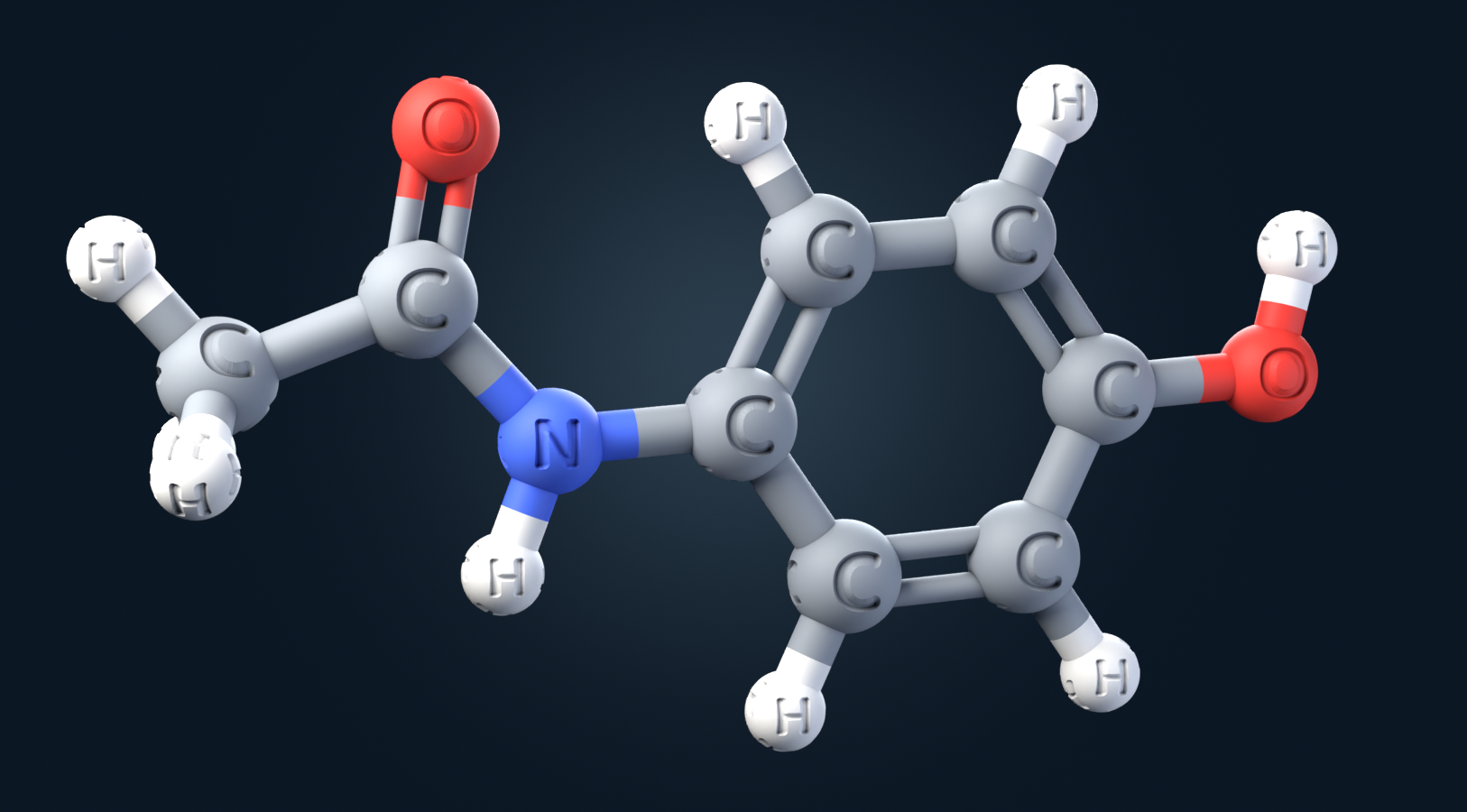 Bild herunterladen
MG_106-378-790-33 · engraved · 341,782 △ · 16 MB · SHA-256 dd16a6f53ccb6b78
3D-Modell herunterladen: Acetaminophen, C8H9NO2, CAS 103-90-2 · ENGRAVED (C, H, N, O) · 16 MB
MG_106-378-790-33 · ready to print · ANT HOUSE v7 · 390,946 △ · 19 MB · SHA-256 4f3bff329c067442
Digital geometry validated. Slicer-tested with the stated profile. Physical print not yet tested.
Druckgröße in Millimetern: mit 100 % importieren, nicht skalieren.
| Datei | molgod-103-90-2-ready-to-print.stl · ANT HOUSE v7 SHA-256 4f3bff329c06744285c751551a3e7defc7c81c01b806ce2bf13bc26718b005f0Geslict am 2026-10-29 (UTC) für diesen SHA-256 |
|---|---|
| Reifegrad | Stufe 3 von 5 — Slicer-verifiziert (1 Generiert · 2 Geometrie validiert · 3 Slicer-verifiziert · 4 Physisch gedruckt · 5 Druckqualifiziert). Für den FDM-Druck konzipiert. Geometrie validiert, Slicing mit dem angegebenen Profil geprüft. Ein physischer Druck wurde noch nicht durchgeführt. |
| Methode | FDM, PLA 1.75 mm |
| Düse | 0.4 mm (die kleinsten Details sind für diese Düse ausgelegt; keine größere verwenden) |
| Schichthöhe | 0.2 mm |
| Füllung | 15%, 3 Perimeter |
| Stützstrukturen | Ja. 13 Bleistiftstützen (Ø 3.5 / 5 mm, sechseckig, Graphithals Ø 1.8 mm mit 45°-Kelch unter dem Atom, 10.0–52.5 mm lang) sind Teil des Modells — nicht entfernen. Aktivieren Sie zusätzlich die automatischen Stützstrukturen des Slicers: Sie sind temporär (ca. 16.5 % des Druckvolumens in unserem Durchlauf) — entfernen Sie sie vorsichtig an den kleinsten Kugeln (z. B. Wasserstoff) und dünnen Bindungen. In Ihrem eigenen Slicer: organische (Baum-)Stützen mit ausgeschaltetem „nur auf dem Druckbett“ (on build plate only) — jeder Baum beginnt auf der Basis (Cura: Support Placement = Everywhere). Drücken Sie nach der Wahl Ihres Druckers A (Anordnen), damit das Modell in der Mitte des Druckbetts steht. |
| Temperatur | 3MF-Profil: 215 °C Düse in der ersten Schicht, danach 210 °C; Bett 60 °C (Ausgangswert — halten Sie sich an den Bereich des Filamentherstellers); Bauteillüfter ab Schicht 4. Die fertigen G-Codes nutzen die Temperaturen und Lüftereinstellungen der Druckerhersteller (Liste: gcode/README_GCODE.txt im Paket). Fertiger G-Code (Prusa MK4, Prusa MINI, Creality Ender-3 S1): Düse 210 °C in der 1. Schicht, danach 205 °C; Bett 60 °C — Werte aus dem Kopf jeder Datei. |
| Ausrichtung | Wie geliefert drucken: Sockel flach auf dem Druckbett (Seite mit QR-Code nach unten); nicht drehen |
| Maßstab | Mit 100 % importieren — die Datei ist in Millimetern; nicht skalieren (Molekülmaßstab 1 Å = 10.14 mm) |
| Gesamtabmessungen | 100.0 × 100.0 × 90.4 mm (X × Y × Z); Sockel Ø 100 × 20 mm |
| Validiert | 2026-10-31 (UTC): Geometrieprüfungen dieser Datei |
| Mindestgröße Druckbett | 125 × 125 mm; Höhe 96 mm |
| Geschätzte Druckzeit | etwa 9 h 45 min (3MF-Profil in PrusaSlicer; Zeiten der fertigen G-Codes oben) |
| Filament (PLA) | ca. 83–84 g (Slicer-Schätzung) |
So wird dieses Modell gedruckt
Renderings (PNG):
Für Druckdienstleister:
Technisches Datenblatt (PDF: Zeichnung, Abmessungen, Druckspezifikation) · 584 KB · SHA-256 0280e3acbd205ba8…
Druckpaket (ZIP: STL, 3MF mit Einstellungen, G-Code, Schritt-für-Schritt-Anleitung, Konstruktionsnotizen mit Quellen, Bild „was entfernen“, Vorschauen, Slicer-Profil, Prüfbericht, QC-Checkliste, Rückmeldeformular, Lizenz) · 45 MB · SHA-256 f757396eabf98afa…
3D-Modell herunterladen: Acetaminophen, C8H9NO2, CAS 103-90-2 · READY TO PRINT · 19 MB · base Ø 100 mm · single integrated solid


Pictures above are renders of the print model, not photos (the second one shows it as printed, with its supports). The multicolour version has not been printed yet.
- For Bambu Lab H2C
- 6 colours, one print
- 0.4 mm nozzle · 0.16 mm layers
- 1010 filament changes
- about 16 h 19 min
- about 166 g of PLA
Made for one printer
This release is one print file for the Bambu Lab H2C. We have not prepared or tested it for other printers.
What you get
Paracetamol as a ball-and-stick model in six colours, printed in one go and standing on the same pencil pillars as the single-colour READY TO PRINT version: CPK atoms with element letters, red pencils with gold sharpened wood, and a white base, 100 mm across, with the blue MolGod.org logo, the raised formula C8H9NO2 and a raised ACETAMINOPHEN / CAS 103-90-2 label.
Atom colours follow the chemistry convention
Each atom shows its element symbol and the CPK colour used for molecular models in chemistry: carbon black, hydrogen white, nitrogen blue, oxygen red. CPK stands for the Corey–Pauling–Koltun space-filling models cited below. Single bonds are white. The one double bond to a heteroatom in paracetamol, the C=O of the amide group, is printed red so it stands out; the C=C double bonds of the benzene ring stay white.
Where the name CPK comes from
- Corey, Robert B., and Linus Pauling. 1953. "Molecular Models of Amino Acids, Peptides, and Proteins." Review of Scientific Instruments 24 (8): 621–627. https://doi.org/10.1063/1.1770803
- Koltun, Walter L. 1965. "Precision Space-Filling Atomic Models." Biopolymers 3 (6): 665–679. https://doi.org/10.1002/bip.360030606
Where the geometry comes from
Atom positions come from the 3D conformer of paracetamol computed by PubChem (CID 1983) with the OMEGA conformer generator. It is a computed structure, not an experimental crystal structure. The MolGod engine (R3, recipe r3-1.3) scales it, orients it for printing and sets it on the base with its own pencil supports.
Sources for the 3D structure
- Bolton, Evan E., Jie Chen, Sunghwan Kim, Lianyi Han, Siqian He, Wenyao Shi, Vahan Simonyan, Yan Sun, et al. 2011. "PubChem3D: A New Resource for Scientists." Journal of Cheminformatics 3: 32. https://doi.org/10.1186/1758-2946-3-32
- Hawkins, Paul C. D., A. Geoffrey Skillman, Gregory L. Warren, Benjamin A. Ellingson, and Matthew T. Stahl. 2010. "Conformer Generation with OMEGA: Algorithm and Validation Using High Quality Structures from the Protein Databank and Cambridge Structural Database." Journal of Chemical Information and Modeling 50 (4): 572–584. https://doi.org/10.1021/ci100031x
Which file do I need?
There is one: the sliced 3MF for the H2C. It holds the model split into six colours, our printer, filament and support settings, and the G-code. Print it as it is, or open it in Bambu Studio, change what you like and slice again.
Print settings
Nozzle 0.4 mm on every nozzle, layer 0.16 mm, Bambu PLA Basic in six colours. Supports: regular, snug style, threshold 40°, with "remove small overhangs" switched off; a support blocker ring at the bottom edge of the base is part of the file. Of the five support settings we sliced, 40° needed the least support material while keeping every support off the build plate. All supports stand on the base or on the model. The G-code contains 1010 filament changes; Bambu Studio estimates 16 h 19 min and 166 g. Your printer and settings may differ.
Cutting the molecule off the pencils
The pencils hold the molecule during printing and can stay as a display stand. If you want the molecule on its own, each pencil ends in a small cone under the atom, the scissor cup, printed in the colour of that atom:
- Remove the slicer supports first (snug supports, not trees). The red pencils are part of the model and stay.
- Cut with flush cutters straight across the black graphite where it meets the cup. The cross-section there is about 2 mm.
- Cut one pencil at a time and do not twist or pull the molecule: the bonds are thin.
- The cut face stays in the colour of the atom. Smooth a small stub with fine sandpaper if you like.
Using it in class
The model can help pupils recognise atoms by colour and symbol, find the benzene ring with its hydroxyl group on one side and the amide group on the opposite side, spot the single C=O double bond in red, and compare the flat formula on the base with the 3D shape. We have not run classroom studies yet; teachers who try it are welcome to write to pure@molgod.org.
Filaments: six colours, one per nozzle (the 7th nozzle stays free)
- Jade White 10100 · 92.7 gbase, hydrogen atoms, single bonds and the C=C bonds of the ring, letters on C, N and O
- Black 10101 · 18.3 gcarbon atoms, pencil graphite, letters on H
- Blue 10601 · 9.1 gthe nitrogen atom, MolGod.org logo, ACETAMINOPHEN label, CAS number, formula
- Red 10200 · 24.0 goxygen atoms, the C=O bond, pencil bodies
- Light Gray 10104 · 4.9 gmetal ferrules on the long pencils
- Gold · 17.2 gsharpened wood and erasers
Downloads
Current multicolour release: r2 (5 November 2026), checked digitally and in the slicer; a physical multicolour test print is still pending. The pictures on this tab are renders.
Quality passport · release r2 · 5 November 2026
What we checked for this multicolour release, what the result was and what it is based on. A higher step is never assumed from a lower one.
- PASSChemical identityCAS 103-90-2, C8H9NO2, InChIKey RZVAJINKPMORJF-UHFFFAOYSA-N, PubChem CID 1983. The model has 20 atoms, matching the formula (8 C, 9 H, 1 N, 2 O), each with its element letter.
- PASSGeometry and meshOne watertight solid, 382,722 triangles, 139,123 mm³; inside it the colour parts match its volume to within 0.000005 %. 24 bond cylinders (the C=O bond and the three C=C bonds of the ring are drawn double), 13 pencils.
- PASSMulticolour checksColour split complete: 20 atoms with letters, 24 bond cylinders, no part without a colour, no fragments. Built with the same design rules as our reference multicolour model, checked automatically before the build.
- PASSSlicer check (Bambu Studio 02.08.02.61, H2C)Sliced without errors; 0 unsupported spots on the model; no supports on the build plate. Five support settings were sliced and compared; at 46° and with tree supports some supports reached the build plate, so 40° was chosen.
- PASSPreview checks (molecule only, where to cut)13 cuts for 13 pencils, sharpened wood under every cut and under no other flat underside, the molecule comes off as one piece, nothing left above any cut.
- PENDINGPhysical multicolour printNot printed yet.
Level 3 of 5 — Slicer Verified (1 Generated · 2 Geometry Validated · 3 Slicer Verified · 4 Physically Printed · 5 Print Qualified). Designed for FDM printing. Geometry validated and slicing checked using the specified profile. No physical print has been made yet.
Release r2: digital geometry checked; sliced and checked in Bambu Studio 02.08.02.61 on the Bambu Lab H2C profile. Physical multicolour print: pending.
Licence of this print model: CC BY-NC-SA 4.0 International (non-commercial) - https://creativecommons.org/licenses/by-nc-sa/4.0/
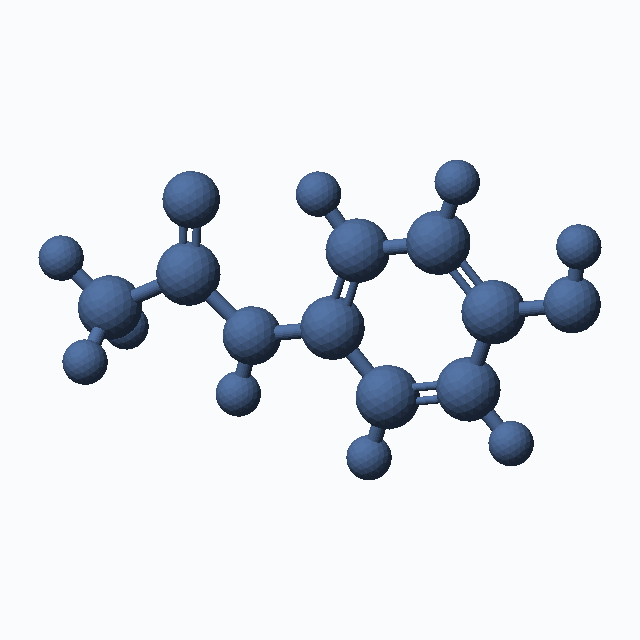 Bild herunterladen
MG_106-378-790-33 · normal · 8,704 △ · 425 KB · SHA-256 e8d15833d65fe88b
3D-Modell herunterladen: Acetaminophen, C8H9NO2, CAS 103-90-2 · NORMAL · 425 KB
⚠️ Logo und Name MolGod.org, einschließlich des erhabenen Logos auf dem Sockel, sind unsere Marke. Creative-Commons-Lizenzen umfassen keine Marken (§ 2(b)(2)). Ohne unsere schriftliche Zustimmung dürfen Sie das MolGod.org-Logo nicht zur Kennzeichnung eigener Produkte, in der Werbung oder in einer Weise verwenden, die unsere Unterstützung nahelegt.
Über Paracetamol (acetaminophen) (CAS 103-90-2)
Paracetamol (acetaminophen) (CAS 103-90-2) ist eine chemische Verbindung, registriert unter der Nummer CAS 103-90-2, mit der Summenformel C8H9NO2, und einer Molmasse von 151.16 g/mol.
Das Molekül enthält 20 Atome, verbunden durch 20 chemische Bindungen. Der vollständige systematische IUPAC-Name dieser Verbindung lautet N-(4-hydroxyphenyl)acetamide. Das interaktive 3D-Modell oben zeigt die räumliche Anordnung der Atome — Sie können es mit der Maus drehen, mit dem Scrollrad zoomen und zwischen den Darstellungsmodi Skelett / Ball & Stick / Space Fill wechseln.
Hinsichtlich der physikalisch-chemischen Eigenschaften der Verteilungskoeffizient logP = 0.5 (positiver Wert, lipophile Verbindung), polare Oberfläche PSA = 49.3 Ų, 2 Donatoren und 2 Wasserstoffbrücken-Akzeptoren. Diese Parameter sind entscheidend für die Beurteilung der Bioverfügbarkeit und der Wechselwirkung mit Biomolekülen.
Die chemischen Daten für diese Verbindung stammen aus PubChem (NIH NLM NCBI), einer der größten chemischen Datenbanken der Welt. Alle Informationen werden automatisch aktualisiert und um GHS-Gefahrenhinweise gemäß der CLP-Verordnung (EG 1272/2008) ergänzt. Das interaktive 3D-Modell und die Bilder des Viewers sind urheberrechtlich geschützt (© MolGod.org) — Nutzungsbedingungen: molgod.org/copyright/.
Physikalisch-chemische Eigenschaften
| Molecular formula | C8H9NO2 |
| Molar mass | 151.16 g/mol |
| IUPAC | N-(4-hydroxyphenyl)acetamide |
| SMILES | CC(=O)NC1=CC=C(C=C1)O |
| InChIKey | RZVAJINKPMORJF-UHFFFAOYSA-N |
| logP (XLogP3) | 0.5 |
| PSA | 49.3 Ų |
| HBD / HBA | 2 / 2 |
| PubChem CID | CID 1983 ↗ |
GHS-Sicherheit
Signalwort: Achtung
H302 — Gesundheitsschädlich bei Verschlucken.
H315 — Verursacht Hautreizungen.
H319 — Verursacht schwere Augenreizung.
H412 — Schädlich für Wasserorganismen, mit langfristiger Wirkung.
Wissenschaftliche Literatur
Related literature
6 articles · 5 open access · Sources: PubMed, OpenAlex, Semantic Scholar
📈 Publikationszeitachse (Anzahl der Artikel: 6)
Balkenhöhe = Anzahl der Artikel im jeweiligen Jahr. Bewegen Sie den Mauszeiger über einen Balken, um Details anzuzeigen.
Data from PubMed (NIH NLM), OpenAlex (CC0), Semantic Scholar (AI2). AI Summary generated by Semantic Scholar TLDR. Articles marked with  require paid access.
Synonyme
Datenquellen
- 📊 PubChem CID 1983 — NIH
- 🔬 NIST WebBook — Spektroskopie
- 💊 ChEMBL — Bioaktivität
Verwandte Moleküle
📜 Lizenz und ProvenienzMolGod_License_1
- Modell
- Acetaminophen ·
103-90-2 - InChIKey
- RZVAJINKPMORJF-UHFFFAOYSA-N
- Lizenz
- CC BY-SA 4.0 International
- Lizenz des Druckmodells (READY TO PRINT)
- CC BY-NC-SA 4.0 International — Modell mit Sockel und Stiften; die Lizenz oben gilt für die Moleküldateien NORMAL und ENGRAVED
- Namensnennung
- MolGod Scientific — Acetaminophen (CAS 103-90-2)
- Lizenz- und Provenienzeintrag
- Acetaminophen (CAS 103-90-2) →
- MolGod-Moleküleintrag
- Acetaminophen →
- Quelldaten
- PubChem CID 1983 ↗
- Modellinformationen
- STL erzeugt von MolGod ·
MolGod STL Exporter build 48804cd20b0d· erzeugt 2026-10-14 - SHA-256 (STL)
- e8d15833d65fe88b00a99c0937d8a8c066c9b48fc0b20f5ea6390fb655955042
- MD5 (STL)
- d6120b63c977e9052eaf3694c1f28a84
- MolGod Identification Number
- MG_106-378-790-33
- Transformation
- MolGod Scientific Kugel-Stab-Netz
- Änderungen
- In ein trianguliertes Molekülnetz umgewandelt; Atomkoordinaten und Konnektivität unverändert.
- Wikimedia Commons
- STL · PNG

Laden Sie das Modell herunter, drucken Sie es aus und nutzen Sie es im Unterricht. Wenn Sie ein Foto, ein Material oder eine Bearbeitung veröffentlichen, verlangt die Lizenz CC BY-SA 4.0 International: „MolGod Scientific“ als Urheber des Modells nennen, auf das Original und den Lizenztext verlinken, vorgenommene Änderungen kenntlich machen und Bearbeitungen unter derselben Lizenz weitergeben. Einen fertigen Namensnennungstext finden Sie in diesem Abschnitt. Ohne Registrierung, ohne Kosten und ohne Pflicht zur Bewertung.
Dieser Hinweis gilt für die Moleküldateien NORMAL und ENGRAVED. Das READY-TO-PRINT-Modell mit Sockel steht unter CC BY-NC-SA 4.0 (nichtkommerzielle Nutzung) — Details im Tab READY TO PRINT. ↑
⚠️ Logo und Name MolGod.org, einschließlich des erhabenen Logos auf dem Sockel, sind unsere Marke. Creative-Commons-Lizenzen umfassen keine Marken (§ 2(b)(2)). Ohne unsere schriftliche Zustimmung dürfen Sie das MolGod.org-Logo nicht zur Kennzeichnung eigener Produkte, in der Werbung oder in einer Weise verwenden, die unsere Unterstützung nahelegt.
Diese Lizenz gilt für das von MolGod erstellte STL-Mesh, nicht automatisch für Quellmaterial Dritter.