Paracetamol (acetaminophen) (CAS 103-90-2)
Acetaminophen
CAS 103-90-2 · C8H9NO2 · MW 151.16 g/mol
Safety data sheet with all sections: GHS classification, transport, regulatory status, spectra, 3D model and literature.
Full record: Paracetamol (acetaminophen) (CAS 103-90-2) — Safety Data Sheet →

Viste del modello
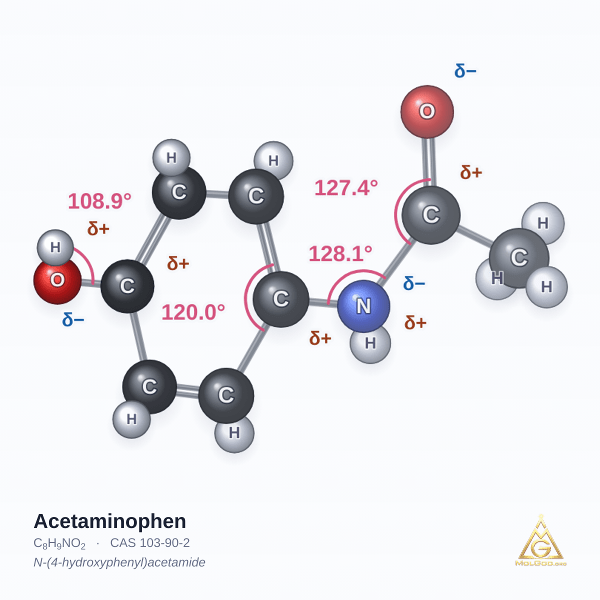
modello 3D a sfere e bastoncini 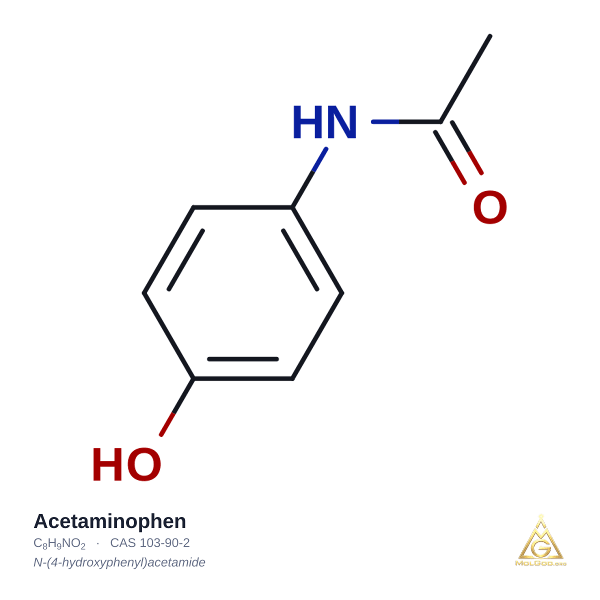
modello 3D scheletrico modello 3D a riempimento spaziale – animazione di rotazione 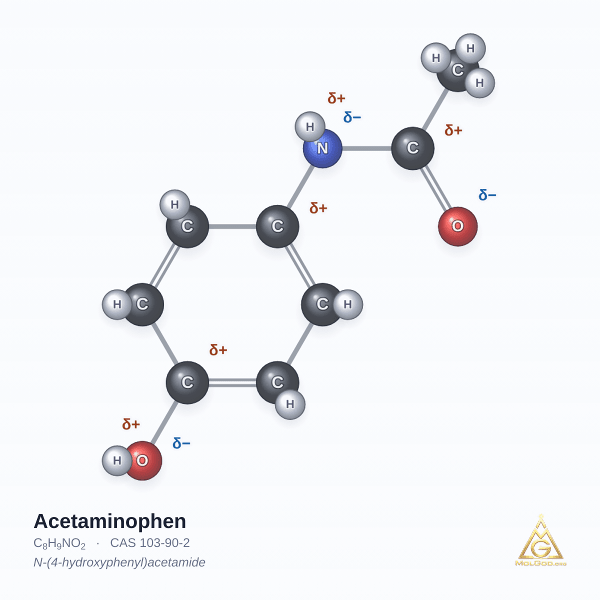
struttura 2D
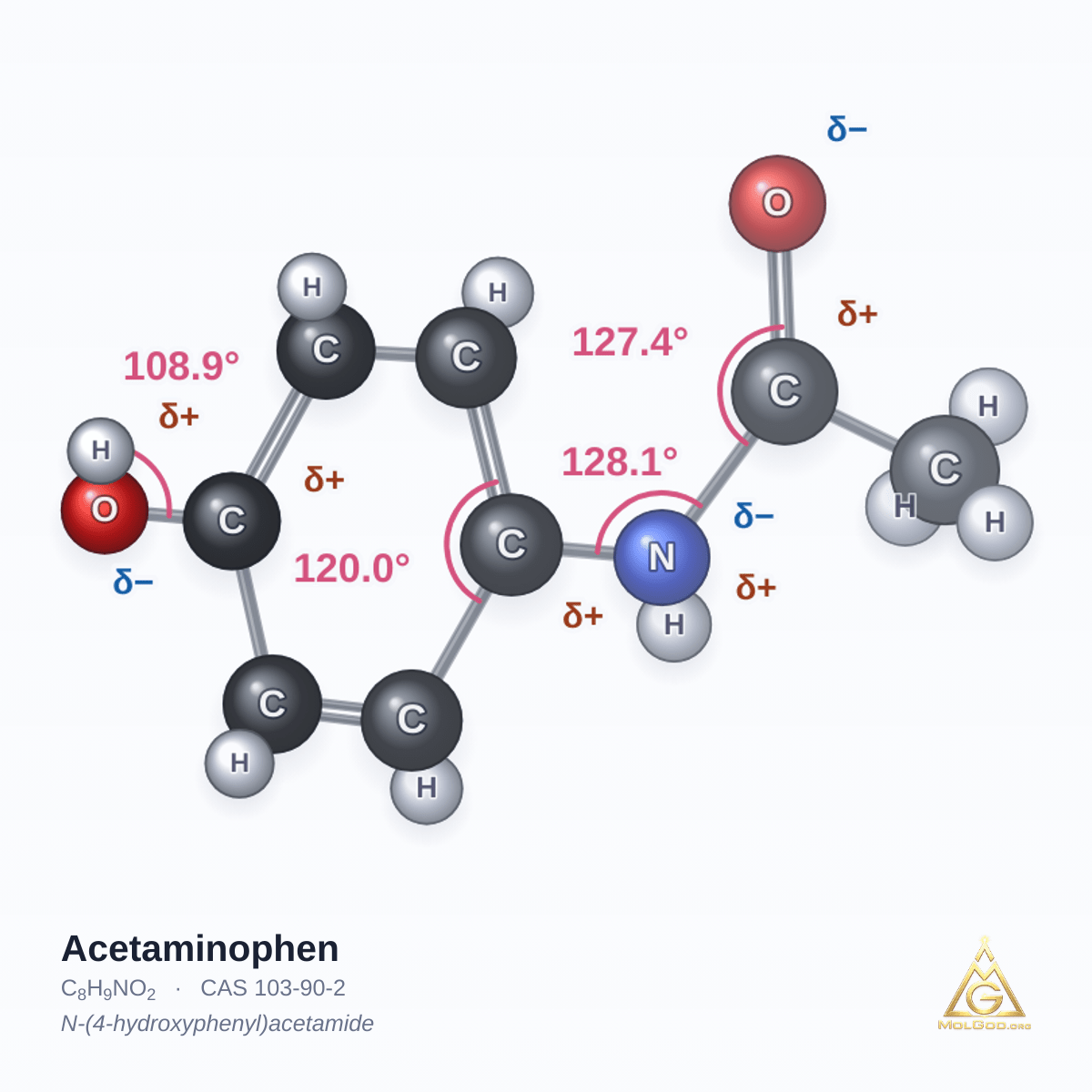
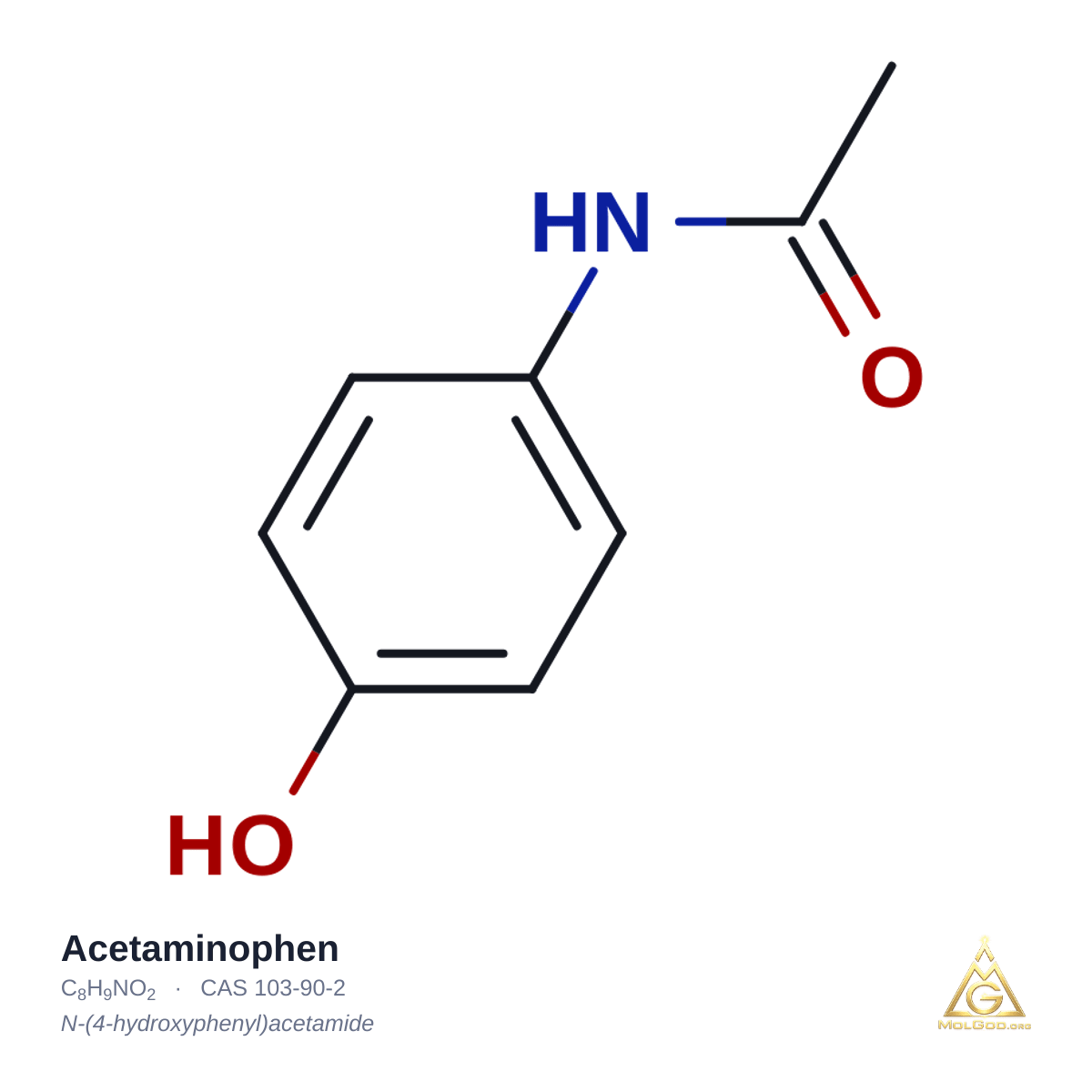
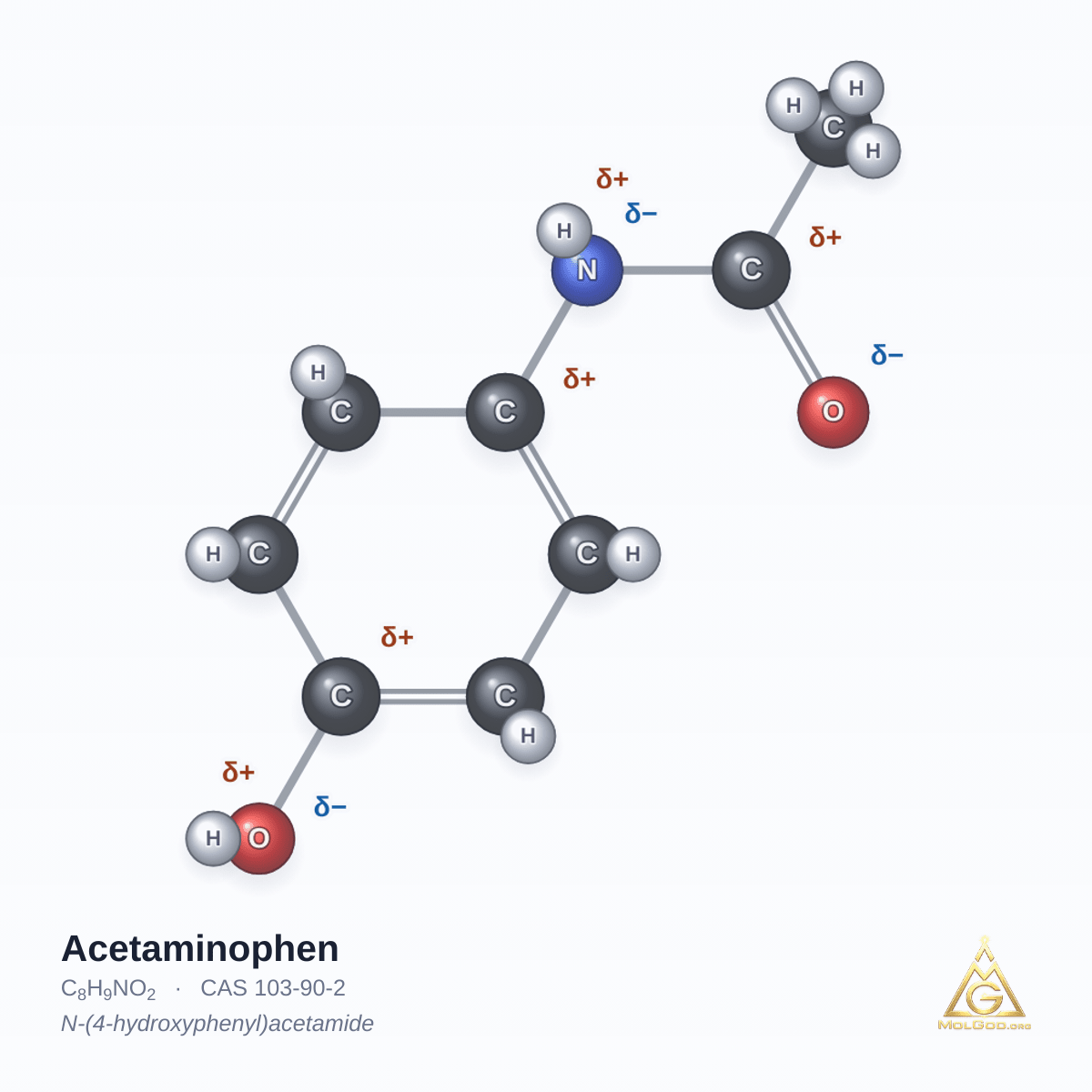
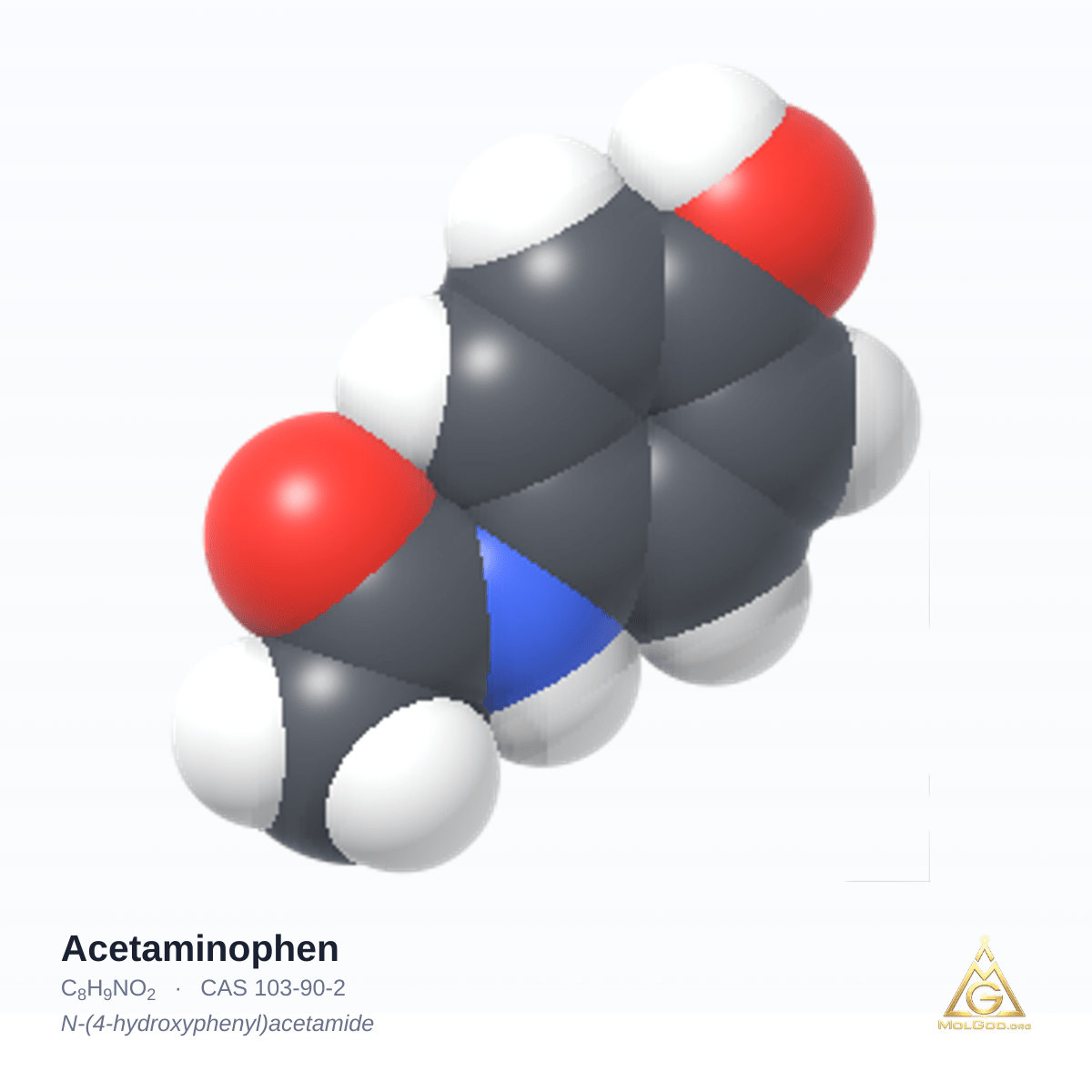
© 2026 MolGod.org. Tutti i diritti riservati. · Diritti sulle immagini
🖨️ Modello per la stampa 3D e licenzaMolGod_Print3D_1
Un modello pronto da stampare di questa molecola su una base: ruotalo, ingrandiscilo e guarda com’è appena uscito dalla stampante e dopo la rimozione dei supporti.
Preview of the 6-colour print model — rotate it with your mouse or finger; see it as printed, finished, as the molecule alone, and where to cut it off the pencils
 Loading the 3D model…
Drag to rotate; scroll or pinch to zoom. Each part is shown in the colour of its filament.
⬇️ Print file for H2C (3MF) · 35 MBFull multicolour specification ↓
Anteprima del modello da stampare in 3D — ruotalo con il mouse o con il dito; passa da: con supporti / senza supporti
Trascina per ruotare; rotellina o due dita per lo zoom.
Stampalo tu stesso — gratis
- Licenza CC BY-NC-SA 4.0: puoi stampare, condividere e modificare il modello da stampare (con base) per scopi non commerciali — a casa, a scuola, all’università, in laboratorio — citando l’autore. CC BY-NC-SA 4.0
- Uso commerciale — vendita di stampe e servizi di stampa a pagamento — solo con la nostra licenza: pure@molgod.org.
- La sola molecola (file NORMAL ed ENGRAVED) resta con licenza CC BY-SA 4.0.
1. Scarica un file
Non sai cosa scegliere? Prusa MK4, MINI o Ender-3 S1 — prendi il suo G-code. Un’altra stampante — il progetto 3MF (PrusaSlicer) o l’STL (altri slicer). Stampi in un laboratorio o in una copisteria 3D — consegna il pacchetto ZIP e la scheda tecnica PDF.
G-code pronto per la tua stampante — ogni file solo per la stampante indicata nel nome. Caricalo e stampa:
Un’altra stampante? Scarica il progetto 3MF con tutte le impostazioni e aprilo in PrusaSlicer — oppure importa il modello nel tuo slicer.
2. Stampa così com’è
Base piatta sul piano, senza ruotare né scalare — il file è in millimetri. Lascia attivi i supporti automatici dello slicer.
Nel tuo slicer: supporti organici (ad albero) con «solo sul piano» (on build plate only) DISATTIVATO — ogni albero parte dalla base (Cura: Support Placement = Everywhere). Dopo aver scelto la tua stampante, premi A (Disponi) perché il modello stia al centro del piano.
3. Rifinisci il modello
Rimuovi solo i supporti arancioni dello slicer. Lascia tutte le 13 matite gialle: fanno parte del modello e sostengono la molecola. Taglia i supporti con un tronchesino, dall’alto verso il basso; non tirare e non torcere. Il modello si stampa in un solo colore — i colori ci sono solo nell’anteprima e nell’immagine qui sotto.
Il riquadro 3 è un render, non una foto di una stampa — il modello si stampa in un solo colore.
Facoltativo: vuoi ruotare la molecola in mano? Come ultimo passo, taglia ogni matita gialla nel suo collo sottile appena sotto la sfera (circa 2 mm) e leviga il piccolo cono che resta sulla sfera. Procedi piano: i legami sono spessi circa 2 mm. Non abbiamo ancora confermato questo passaggio con una nostra stampa.
4. Mostraci la tua stampa
Inviaci le foto della tua stampa — con i supporti e dopo averli rimossi — a pure@molgod.org.
Queste 4 foto ci aiutano di più: il modello intero con i supporti, il modello finito dopo averli rimossi, un primo piano dei legami più sottili e un primo piano delle lettere sulle sfere. Il feedback è gradito, ma non è una condizione per scaricare o usare il modello.
La stampa 3D è fatta di dettagli. Se qualcosa non è riuscito, inviaci le foto: ti aiuteremo e miglioreremo il modello in base alle tue osservazioni. Insegnante? Partecipa all’Ondata 1 del progetto pilota →
Non hai una stampante 3D?
Chiedi al laboratorio della tua scuola, a una biblioteca con stampante 3D o a un servizio di stampa 3D vicino a te. Dai loro il pacchetto di stampa o la scheda tecnica (PDF): contiene tutto ciò che serve.
Un servizio di stampa 3D a pagamento è un uso commerciale e richiede la nostra licenza commerciale: pure@molgod.org. Un laboratorio scolastico, una biblioteca o un’università che stampa gratuitamente non ne ha bisogno.
Stato: verificato in digitale e nello slicer; non l’abbiamo ancora stampato fisicamente. La tua stampa potrebbe essere la prima. Impostazioni di stampa, file e licenza ↓
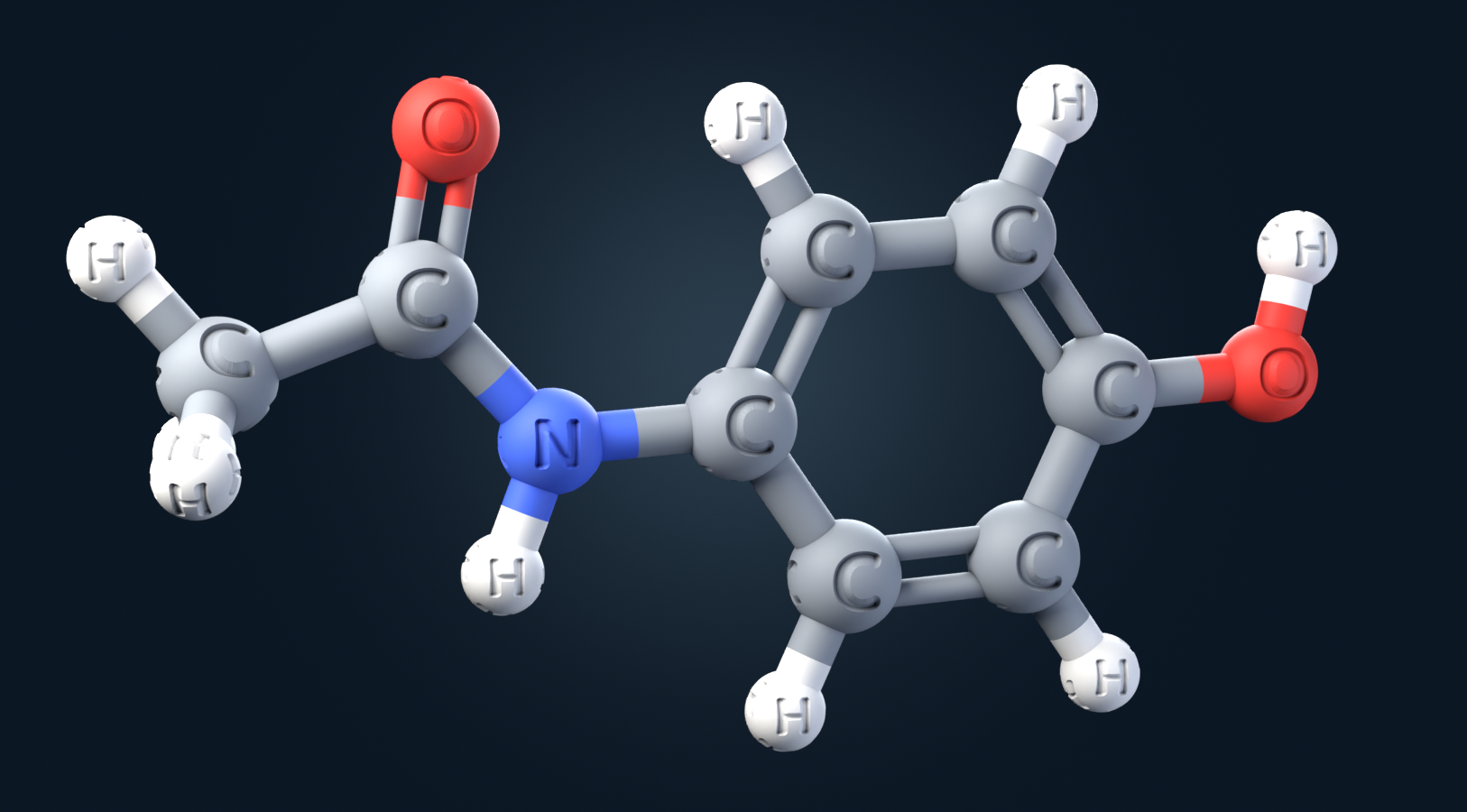 Scarica immagine
MG_106-378-790-33 · engraved · 341,782 △ · 16 MB · SHA-256 dd16a6f53ccb6b78
Scarica il modello 3D: Acetaminophen, C8H9NO2, CAS 103-90-2 · ENGRAVED (C, H, N, O) · 16 MB
MG_106-378-790-33 · ready to print · ANT HOUSE v7 · 390,946 △ · 19 MB · SHA-256 4f3bff329c067442
Digital geometry validated. Slicer-tested with the stated profile. Physical print not yet tested.
Dimensioni di stampa in millimetri: importa al 100 %, non scalare.
| File | molgod-103-90-2-ready-to-print.stl · ANT HOUSE v7 SHA-256 4f3bff329c06744285c751551a3e7defc7c81c01b806ce2bf13bc26718b005f0Slicing eseguito il 2026-10-29 (UTC) per questo SHA-256 |
|---|---|
| Livello di maturità | Livello 3 di 5 — Verificato con slicer (1 Generato · 2 Geometria validata · 3 Verificato con slicer · 4 Stampato fisicamente · 5 Qualificato per la stampa). Progettato per la stampa FDM. Geometria validata, slicing verificato con il profilo indicato. Non è ancora stata eseguita alcuna stampa fisica. |
| Metodo | FDM, PLA 1.75 mm |
| Ugello | 0.4 mm (i dettagli minimi sono progettati per questo ugello; non usarne uno più grande) |
| Altezza layer | 0.2 mm |
| Riempimento | 15%, 3 perimetri |
| Supporti | Sì. 13 supporti a matita (Ø 3.5 / 5 mm, esagonali, collo «mina» Ø 1.8 mm con coppa a 45° sotto l’atomo, lunghezza 10.0–52.5 mm) sono parte del modello — non rimuoverli. Attiva anche i supporti automatici dello slicer: sono temporanei (circa il 16.5 % del volume stampato nella nostra prova) — rimuovili con cautela vicino alle sfere più piccole (ad es. idrogeno) e ai legami sottili. Nel tuo slicer: supporti organici (ad albero) con «solo sul piano» (on build plate only) DISATTIVATO — ogni albero parte dalla base (Cura: Support Placement = Everywhere). Dopo aver scelto la tua stampante, premi A (Disponi) perché il modello stia al centro del piano. |
| Temperatura | Profilo 3MF: 215 °C ugello sul primo strato, poi 210 °C; piano 60 °C (punto di partenza — segui l’intervallo del produttore del filamento); ventola del pezzo dallo strato 4. I G-code pronti usano temperature e ventola dei profili dei produttori delle stampanti (elenco: gcode/README_GCODE.txt nel pacchetto). G-code pronto (Prusa MK4, Prusa MINI, Creality Ender-3 S1): ugello 210 °C al 1° strato, poi 205 °C; piano 60 °C — valori dall’intestazione di ogni file. |
| Orientamento | Stampa così come fornito: base piatta sul piano (lato con il codice QR verso il basso); non ruotare |
| Scala | Importa al 100 % — il file è in millimetri; non scalare (scala della molecola 1 Å = 10.14 mm) |
| Dimensioni d’ingombro | 100.0 × 100.0 × 90.4 mm (X × Y × Z); base Ø 100 × 20 mm |
| Validato | 2026-10-31 (UTC): controlli della geometria di questo file |
| Piano minimo | 125 × 125 mm; altezza 96 mm |
| Tempo di stampa stimato | circa 9 h 45 min (profilo 3MF in PrusaSlicer; tempi dei G-code pronti sopra) |
| Filamento (PLA) | circa 83–84 g (stima dello slicer) |
Come si stampa questo modello
Render (PNG):
Per i service di stampa:
Scheda tecnica (PDF: disegno, dimensioni, specifiche di stampa) · 584 KB · SHA-256 0280e3acbd205ba8…
Pacchetto di stampa (ZIP: STL, 3MF con impostazioni, G-code, istruzioni passo passo, note di progetto con fonti, immagine «cosa rimuovere», anteprime, profilo slicer, report dei controlli, checklist di controllo qualità, modulo di feedback, licenza) · 45 MB · SHA-256 f757396eabf98afa…
Scarica il modello 3D: Acetaminophen, C8H9NO2, CAS 103-90-2 · READY TO PRINT · 19 MB · base Ø 100 mm · single integrated solid


Pictures above are renders of the print model, not photos (the second one shows it as printed, with its supports). The multicolour version has not been printed yet.
- For Bambu Lab H2C
- 6 colours, one print
- 0.4 mm nozzle · 0.16 mm layers
- 1010 filament changes
- about 16 h 19 min
- about 166 g of PLA
Made for one printer
This release is one print file for the Bambu Lab H2C. We have not prepared or tested it for other printers.
What you get
Paracetamol as a ball-and-stick model in six colours, printed in one go and standing on the same pencil pillars as the single-colour READY TO PRINT version: CPK atoms with element letters, red pencils with gold sharpened wood, and a white base, 100 mm across, with the blue MolGod.org logo, the raised formula C8H9NO2 and a raised ACETAMINOPHEN / CAS 103-90-2 label.
Atom colours follow the chemistry convention
Each atom shows its element symbol and the CPK colour used for molecular models in chemistry: carbon black, hydrogen white, nitrogen blue, oxygen red. CPK stands for the Corey–Pauling–Koltun space-filling models cited below. Single bonds are white. The one double bond to a heteroatom in paracetamol, the C=O of the amide group, is printed red so it stands out; the C=C double bonds of the benzene ring stay white.
Where the name CPK comes from
- Corey, Robert B., and Linus Pauling. 1953. "Molecular Models of Amino Acids, Peptides, and Proteins." Review of Scientific Instruments 24 (8): 621–627. https://doi.org/10.1063/1.1770803
- Koltun, Walter L. 1965. "Precision Space-Filling Atomic Models." Biopolymers 3 (6): 665–679. https://doi.org/10.1002/bip.360030606
Where the geometry comes from
Atom positions come from the 3D conformer of paracetamol computed by PubChem (CID 1983) with the OMEGA conformer generator. It is a computed structure, not an experimental crystal structure. The MolGod engine (R3, recipe r3-1.3) scales it, orients it for printing and sets it on the base with its own pencil supports.
Sources for the 3D structure
- Bolton, Evan E., Jie Chen, Sunghwan Kim, Lianyi Han, Siqian He, Wenyao Shi, Vahan Simonyan, Yan Sun, et al. 2011. "PubChem3D: A New Resource for Scientists." Journal of Cheminformatics 3: 32. https://doi.org/10.1186/1758-2946-3-32
- Hawkins, Paul C. D., A. Geoffrey Skillman, Gregory L. Warren, Benjamin A. Ellingson, and Matthew T. Stahl. 2010. "Conformer Generation with OMEGA: Algorithm and Validation Using High Quality Structures from the Protein Databank and Cambridge Structural Database." Journal of Chemical Information and Modeling 50 (4): 572–584. https://doi.org/10.1021/ci100031x
Which file do I need?
There is one: the sliced 3MF for the H2C. It holds the model split into six colours, our printer, filament and support settings, and the G-code. Print it as it is, or open it in Bambu Studio, change what you like and slice again.
Print settings
Nozzle 0.4 mm on every nozzle, layer 0.16 mm, Bambu PLA Basic in six colours. Supports: regular, snug style, threshold 40°, with "remove small overhangs" switched off; a support blocker ring at the bottom edge of the base is part of the file. Of the five support settings we sliced, 40° needed the least support material while keeping every support off the build plate. All supports stand on the base or on the model. The G-code contains 1010 filament changes; Bambu Studio estimates 16 h 19 min and 166 g. Your printer and settings may differ.
Cutting the molecule off the pencils
The pencils hold the molecule during printing and can stay as a display stand. If you want the molecule on its own, each pencil ends in a small cone under the atom, the scissor cup, printed in the colour of that atom:
- Remove the slicer supports first (snug supports, not trees). The red pencils are part of the model and stay.
- Cut with flush cutters straight across the black graphite where it meets the cup. The cross-section there is about 2 mm.
- Cut one pencil at a time and do not twist or pull the molecule: the bonds are thin.
- The cut face stays in the colour of the atom. Smooth a small stub with fine sandpaper if you like.
Using it in class
The model can help pupils recognise atoms by colour and symbol, find the benzene ring with its hydroxyl group on one side and the amide group on the opposite side, spot the single C=O double bond in red, and compare the flat formula on the base with the 3D shape. We have not run classroom studies yet; teachers who try it are welcome to write to pure@molgod.org.
Filaments: six colours, one per nozzle (the 7th nozzle stays free)
- Jade White 10100 · 92.7 gbase, hydrogen atoms, single bonds and the C=C bonds of the ring, letters on C, N and O
- Black 10101 · 18.3 gcarbon atoms, pencil graphite, letters on H
- Blue 10601 · 9.1 gthe nitrogen atom, MolGod.org logo, ACETAMINOPHEN label, CAS number, formula
- Red 10200 · 24.0 goxygen atoms, the C=O bond, pencil bodies
- Light Gray 10104 · 4.9 gmetal ferrules on the long pencils
- Gold · 17.2 gsharpened wood and erasers
Downloads
Current multicolour release: r2 (5 November 2026), checked digitally and in the slicer; a physical multicolour test print is still pending. The pictures on this tab are renders.
Quality passport · release r2 · 5 November 2026
What we checked for this multicolour release, what the result was and what it is based on. A higher step is never assumed from a lower one.
- PASSChemical identityCAS 103-90-2, C8H9NO2, InChIKey RZVAJINKPMORJF-UHFFFAOYSA-N, PubChem CID 1983. The model has 20 atoms, matching the formula (8 C, 9 H, 1 N, 2 O), each with its element letter.
- PASSGeometry and meshOne watertight solid, 382,722 triangles, 139,123 mm³; inside it the colour parts match its volume to within 0.000005 %. 24 bond cylinders (the C=O bond and the three C=C bonds of the ring are drawn double), 13 pencils.
- PASSMulticolour checksColour split complete: 20 atoms with letters, 24 bond cylinders, no part without a colour, no fragments. Built with the same design rules as our reference multicolour model, checked automatically before the build.
- PASSSlicer check (Bambu Studio 02.08.02.61, H2C)Sliced without errors; 0 unsupported spots on the model; no supports on the build plate. Five support settings were sliced and compared; at 46° and with tree supports some supports reached the build plate, so 40° was chosen.
- PASSPreview checks (molecule only, where to cut)13 cuts for 13 pencils, sharpened wood under every cut and under no other flat underside, the molecule comes off as one piece, nothing left above any cut.
- PENDINGPhysical multicolour printNot printed yet.
Level 3 of 5 — Slicer Verified (1 Generated · 2 Geometry Validated · 3 Slicer Verified · 4 Physically Printed · 5 Print Qualified). Designed for FDM printing. Geometry validated and slicing checked using the specified profile. No physical print has been made yet.
Release r2: digital geometry checked; sliced and checked in Bambu Studio 02.08.02.61 on the Bambu Lab H2C profile. Physical multicolour print: pending.
Licence of this print model: CC BY-NC-SA 4.0 International (non-commercial) - https://creativecommons.org/licenses/by-nc-sa/4.0/
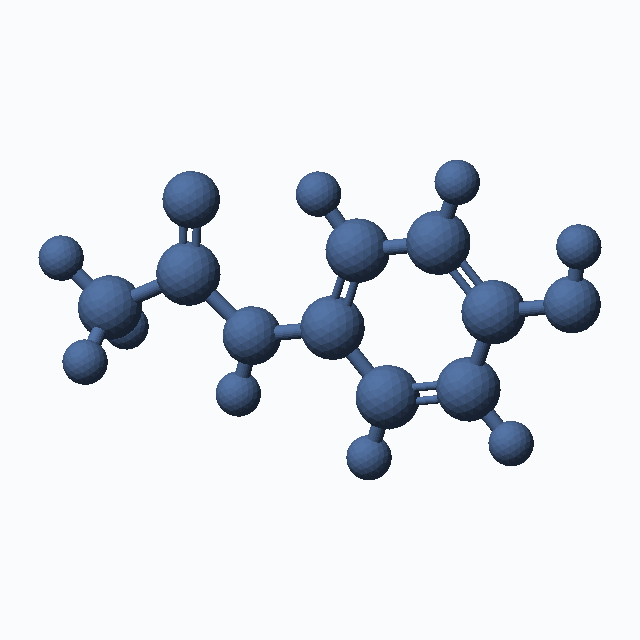 Scarica immagine
MG_106-378-790-33 · normal · 8,704 △ · 425 KB · SHA-256 e8d15833d65fe88b
Scarica il modello 3D: Acetaminophen, C8H9NO2, CAS 103-90-2 · NORMAL · 425 KB
⚠️ Il logo e il nome MolGod.org, compreso il logo in rilievo sulla base, sono il nostro marchio. Le licenze Creative Commons non coprono i marchi (§ 2(b)(2)). Senza il nostro consenso scritto non puoi usare il logo MolGod.org per contrassegnare i tuoi prodotti, nella pubblicità o in modo da suggerire il nostro sostegno.
Informazioni su Paracetamol (acetaminophen) (CAS 103-90-2)
Paracetamol (acetaminophen) (CAS 103-90-2) è un composto chimico registrato con il numero CAS 103-90-2, con formula bruta C8H9NO2, e massa molare di 151.16 g/mol.
La molecola contiene 20 atomi collegati da 20 legami chimici. Il nome sistematico IUPAC completo di questo composto è N-(4-hydroxyphenyl)acetamide. Il modello 3D interattivo qui sopra permette di visualizzare la disposizione spaziale degli atomi — puoi ruotarlo con il mouse, zoomare con la rotellina e passare tra le modalità di visualizzazione scheletro / Ball & Stick / Space Fill.
Dal punto di vista delle proprietà chimico-fisiche, il coefficiente di ripartizione logP = 0.5 (valore positivo, composto lipofilo), superficie polare PSA = 49.3 Ų, 2 donatori e 2 accettori di legami a idrogeno. Questi parametri sono fondamentali per valutare la biodisponibilità e l'interazione con le biomolecole.
I dati chimici di questo composto provengono da PubChem (NIH NLM NCBI), uno dei più grandi database chimici al mondo. Tutte le informazioni sono aggiornate automaticamente e arricchite con le traduzioni delle indicazioni di pericolo GHS conformi al Regolamento CLP (CE 1272/2008). Il modello 3D interattivo e le immagini del visualizzatore sono protetti dal diritto d’autore (© MolGod.org) — condizioni d’uso: molgod.org/copyright/.
Proprietà chimico-fisiche
| Molecular formula | C8H9NO2 |
| Molar mass | 151.16 g/mol |
| IUPAC | N-(4-hydroxyphenyl)acetamide |
| SMILES | CC(=O)NC1=CC=C(C=C1)O |
| InChIKey | RZVAJINKPMORJF-UHFFFAOYSA-N |
| logP (XLogP3) | 0.5 |
| PSA | 49.3 Ų |
| HBD / HBA | 2 / 2 |
| PubChem CID | CID 1983 ↗ |
Sicurezza GHS
Avvertenza: Attenzione
H302 — Nocivo se ingerito.
H315 — Provoca irritazione cutanea.
H319 — Provoca grave irritazione oculare.
H412 — Nocivo per gli organismi acquatici con effetti di lunga durata.
Letteratura scientifica
Related literature
6 articles · 5 open access · Sources: PubMed, OpenAlex, Semantic Scholar
📈 Cronologia delle pubblicazioni (numero di articoli: 6)
Altezza della barra = numero di articoli nell'anno. Passa il cursore su una barra per vedere i dettagli.
Data from PubMed (NIH NLM), OpenAlex (CC0), Semantic Scholar (AI2). AI Summary generated by Semantic Scholar TLDR. Articles marked with  require paid access.
Sinonimi
Fonti dei dati
- 📊 PubChem CID 1983 — NIH
- 🔬 NIST WebBook — spettroscopia
- 💊 ChEMBL — bioattività
Molecole correlate
📜 Licenza e provenienzaMolGod_License_1
- Modello
- Acetaminophen ·
103-90-2 - InChIKey
- RZVAJINKPMORJF-UHFFFAOYSA-N
- Licenza
- CC BY-SA 4.0 International
- Licenza del modello da stampare (READY TO PRINT)
- CC BY-NC-SA 4.0 International — modello con base e matite; la licenza sopra riguarda i file della molecola NORMAL ed ENGRAVED
- Attribuzione
- MolGod Scientific — Acetaminophen (CAS 103-90-2)
- Scheda di licenza e provenienza
- Acetaminophen (CAS 103-90-2) →
- Scheda molecolare MolGod
- Acetaminophen →
- Dati di origine
- PubChem CID 1983 ↗
- Informazioni sul modello
- STL generato da MolGod ·
MolGod STL Exporter build 48804cd20b0d· generato il 2026-10-14 - SHA-256 (STL)
- e8d15833d65fe88b00a99c0937d8a8c066c9b48fc0b20f5ea6390fb655955042
- MD5 (STL)
- d6120b63c977e9052eaf3694c1f28a84
- MolGod Identification Number
- MG_106-378-790-33
- Trasformazione
- Mesh a sfere e bastoncini MolGod Scientific
- Modifiche
- Convertito in una mesh molecolare triangolata; coordinate atomiche e connettività invariate.
- Wikimedia Commons
- STL · PNG

Scarica il modello, stampalo e usalo nella didattica. Quando pubblichi una foto, un materiale o un adattamento, la licenza CC BY-SA 4.0 International richiede di indicare “MolGod Scientific” come autore del modello, inserire un link all’originale e al testo della licenza, segnalare le modifiche apportate e condividere gli adattamenti con la stessa licenza. Un testo di attribuzione pronto all’uso si trova in questa sezione. Nessuna registrazione, nessun costo e nessun obbligo di recensione.
Questa nota riguarda i file della molecola NORMAL ed ENGRAVED. Il modello READY TO PRINT con base ha licenza CC BY-NC-SA 4.0 (uso non commerciale) — dettagli nella scheda READY TO PRINT. ↑
⚠️ Il logo e il nome MolGod.org, compreso il logo in rilievo sulla base, sono il nostro marchio. Le licenze Creative Commons non coprono i marchi (§ 2(b)(2)). Senza il nostro consenso scritto non puoi usare il logo MolGod.org per contrassegnare i tuoi prodotti, nella pubblicità o in modo da suggerire il nostro sostegno.
Questa licenza si applica alla mesh STL creata da MolGod, non automaticamente al materiale di origine di terzi.