Lactic Acid (CAS 50-21-5)

Lactic Acid. CAS 50-21-5.

Free, and generated automatically from the sources listed on this page. No person has reviewed it, and it describes the substance in general — not your material, your process or your intended market.

REACH 2020/878
v3 · 21.10.2026

Rubriek 9 — fysisch-chemische eigenschappen: 10 van 22 vastgesteld.

We tonen wat vaststaat en benoemen wat niet vaststaat. Indeling en identiteit zijn op elke kaart volledig; in rubriek 9 zijn openbare gegevens schaars.

ALLEEN DOCUMENTATIE EN 3D-GEPRINTE MODELLEN

Deze pagina biedt documentatie over de vermelde stof. MolGod verkoopt of levert de chemische stof zelf niet.

Wetenschap · Inkoper · Compliance

Deze pagina verkoopt de documentatie voor deze stof, niet de stof zelf. Kies het niveau dat u nodig hebt.

  1. €0Audit van het blad dat u al hebtStuur ons uw bestaande blad voor deze stof en wij vertellen u wat eraan mankeert. Eén per bedrijf. Blijkt het in orde, dan koopt u niets.Start de gratis audit →
  2. €49.99WerkversieHet volledige document van zestien rubrieken, met bronvermelding, direct na het afrekenen te downloaden. De juiste keuze zolang het papierwerk nog niet vastligt.
  3. €249.99Ondertekend bladHetzelfde document, gecontroleerd en ondertekend, uitgegeven binnen 72 uur na volledige aanlevering — voor het moment waarop een officiële instantie vraagt wie ervoor instaat.

Beschikbare documentatie voor deze stof: veiligheidsinformatieblad · CLP-etiket · analysecertificaat op aanvraag · specificatie. Talen: de officiële taal van uw doelmarkt, per blad opgesteld.

Kwaliteit, zuiverheid, fysische vorm, verpakking, minimale bestelhoeveelheid en levertijd worden niet getoond, omdat MolGod het materiaal niet levert — dat zijn gegevens over een verkoper, en op deze pagina is er geen verkoper. Ze staan in de webwinkels die wij voor leveranciers bouwen, waar iemand ervoor kan instaan.

Bekijk eerst een afgewerkt documentVolledige prijslijst →

Wat u ontvangt — en wat dit niet is

Wat u ontvangt

  • Een digitaal veiligheidsinformatieblad als PDF in de structuur met zestien rubrieken van REACH-bijlage II (Verordening 1907/2006).
  • Stofidentificatie, gevarenindeling, fysisch-chemische, toxicologische en ecologische informatie en verwijzingen naar regelgeving.
  • Indeling getoetst aan de geharmoniseerde vermelding in bijlage VI van CLP, waar die voor de stof bestaat.
  • Een versienummer, een opstellingsdatum en de bron achter elke waarde die er een heeft.
  • Levering per e-mail. Er wordt niets verzonden.

Wat dit niet is

  • Geen chemische stof, geen monster, geen enkel fysiek goed.
  • Geen certificering. In de Europese Unie bestaat geen officieel certificeringsschema voor veiligheidsinformatiebladen.
  • Geen juridische goedkeuring en geen garantie van naleving in welk rechtsgebied dan ook.
  • Geen vervanging voor uw eigen regelgevende beoordeling, noch voor het veiligheidsinformatieblad van de fabrikant of importeur van de stof die u daadwerkelijk in bezit hebt.
  • Niet afgestemd op een specifieke werkplek, een specifiek proces of een nationale bijlage, tenzij u die informatie verstrekt.

Waar het beschikbare bewijs een waarde niet onderbouwt, vermeldt het blad dat de waarde niet is vastgesteld in plaats van een schatting te geven. Een veld zonder vastgelegde bron wordt als zodanig gemarkeerd.

Wat er in het inkooppakket zit

Alles waar uw compliance officer om zal vragen, in één bestand.

  • De productpagina als pdf — het record zoals gepubliceerd, zodat wat u doorstuurt overeenkomt met wat u leest.
  • Het veiligheidsinformatieblad op uw rechtenniveau — zestien rubrieken in de volgorde die bijlage II bij REACH voorschrijft, voor deze stof, in de taal die u kiest.
  • Het CLP-etiketontwerp — gegenereerd uit dezelfde indeling als het blad, zodat de twee elkaar niet kunnen tegenspreken.
  • De specificatie, en het analysecertificaat waar batchgegevens bestaan.
  • sources.txt — elke bronvermelding met de datum waarop ze is geraadpleegd.
  • Een expliciete lijst van wat we niet konden vaststellen — velden gemarkeerd als niet beschikbaar in plaats van ingevuld met een schatting. Dit is het eerlijke deel van het document en we verstoppen het niet in een voetnoot.

Uw Europese inkoper gaat dit doorsturen naar iemand die niet bij het gesprek was. Het pakket bestaat zodat wat hij doorstuurt volledig, zelfverklarend en herleidbaar is — in plaats van vier bijlagen en een zin die begint met “Ik denk dat dit alles is”.

Over de taalversies

Hiermee wijzigt u de taal van deze pagina. Single substances. Mixtures on enquiry. One document, one language — additional languages are priced separately. Every version, including the Chinese one, is written to EU law — (EC) No 1907/2006 (REACH) Annex II and (EU) 2020/878 — and translated from it. The Chinese version is a reference translation, not a legally valid document for the Chinese market: an SDS for China must be compiled separately to GB/T 16483 and GB/T 17519.

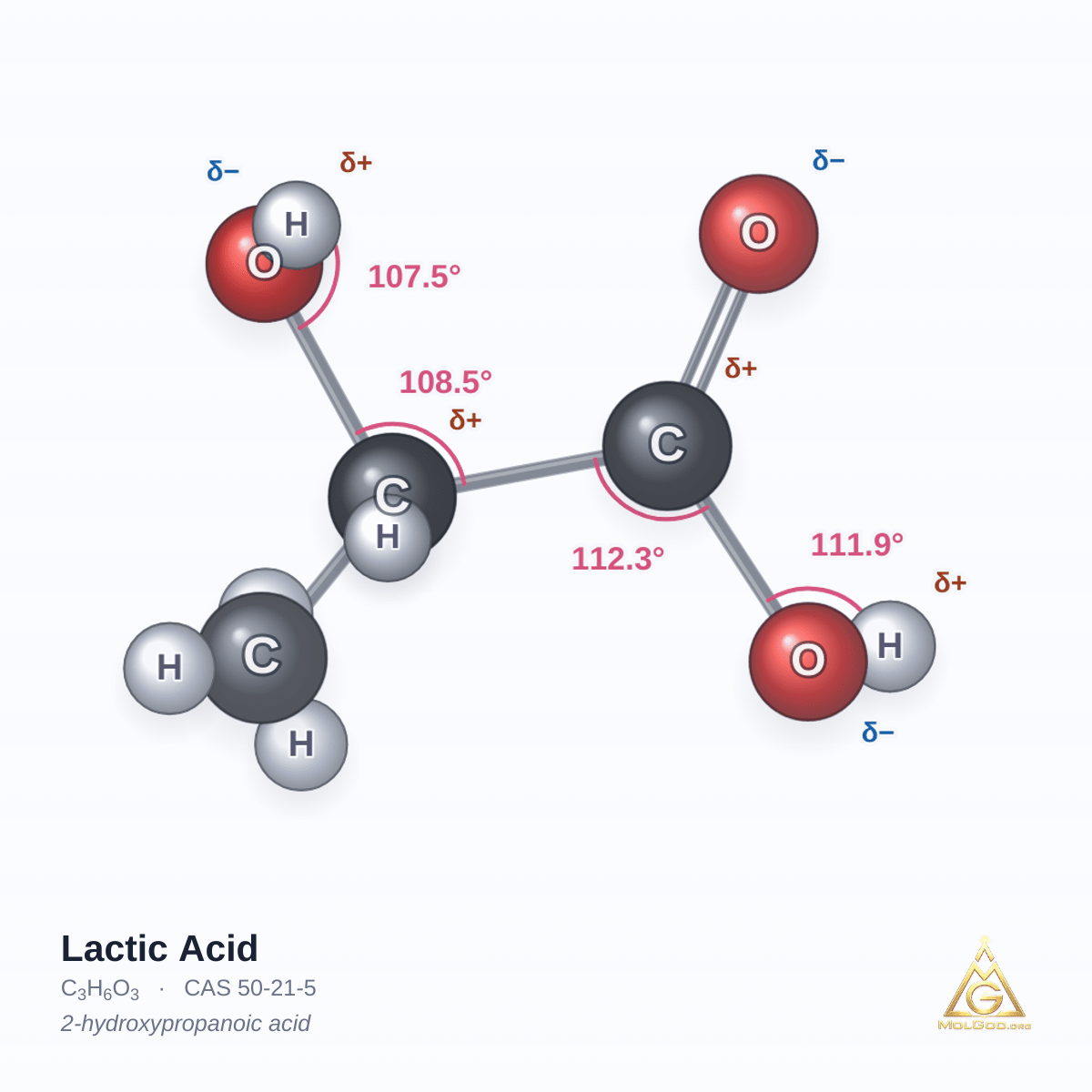
🧬 3D-molecuulvisualisator
Molecuul laden...
3D-model Lactic Acid, CAS 50-21-5, molecuulformule C3H6O3, molaire massa 90.08 g/mol

Modelweergaven

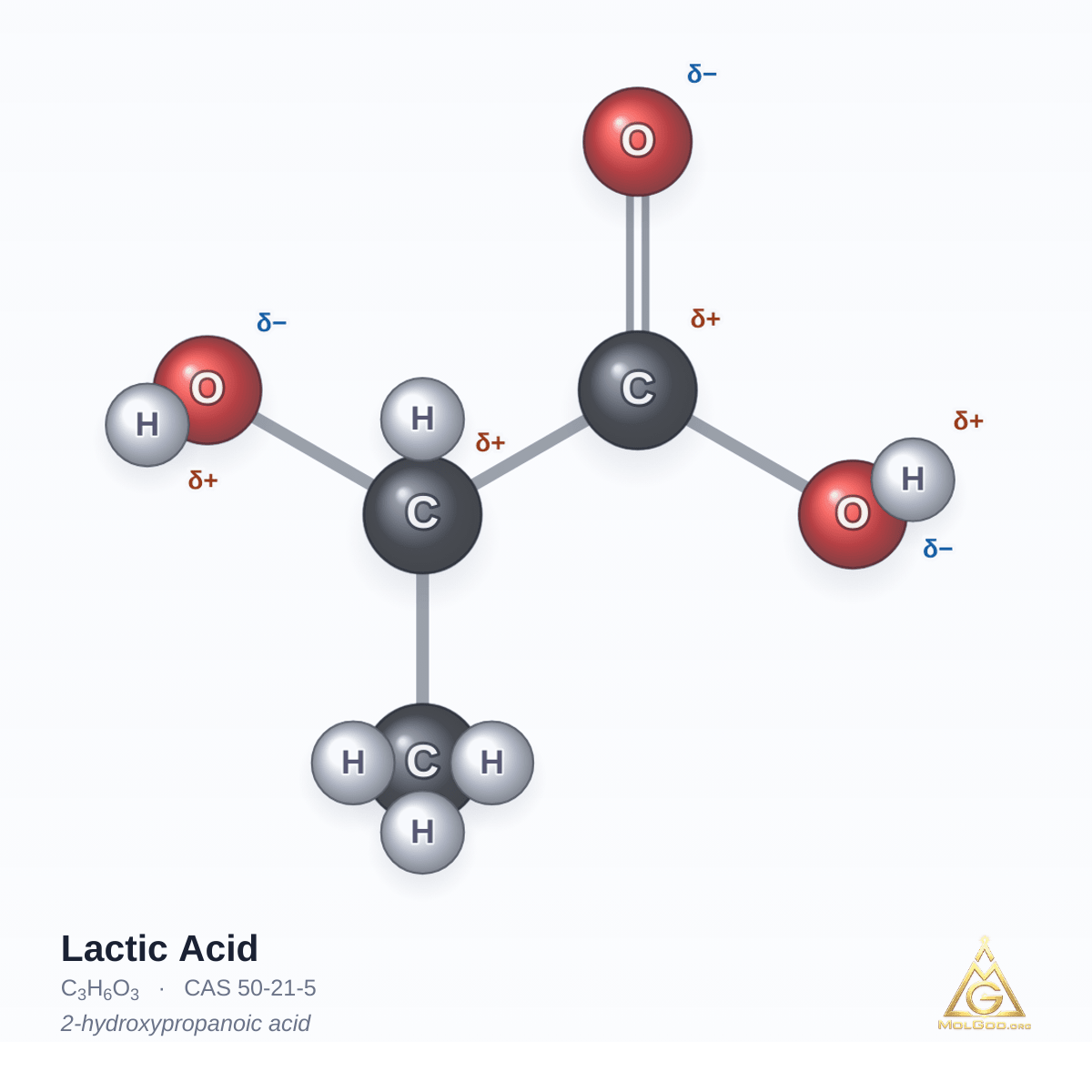
  • Lactic Acid (CAS 50-21-5) – 3D-bal-en-stokmodel, MolGod Viewer
    3D-bal-en-stokmodel
  • Lactic Acid (CAS 50-21-5) – 3D-skeletmodel, MolGod Viewer
    3D-skeletmodel
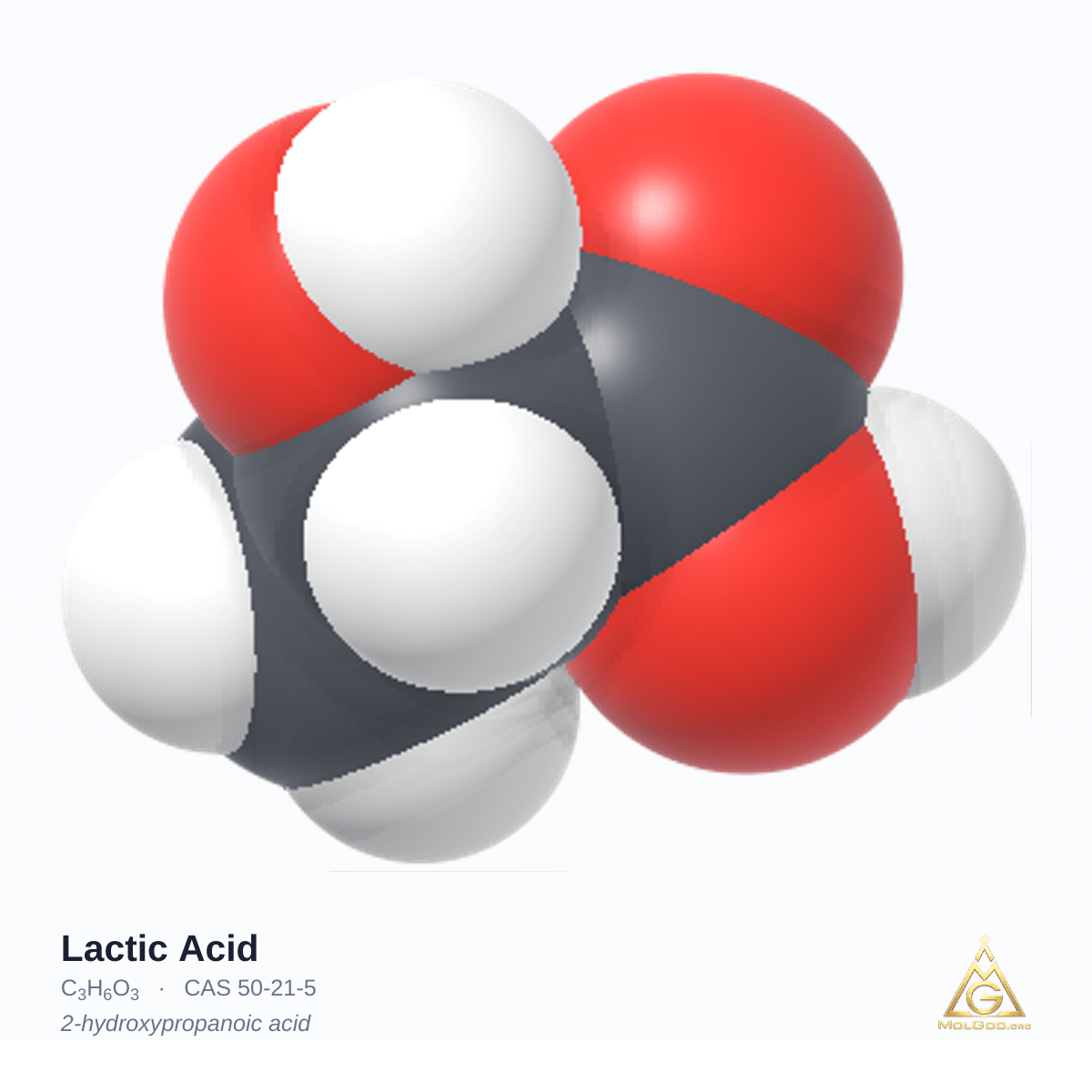
  • 3D-ruimtevullend model – rotatieanimatie
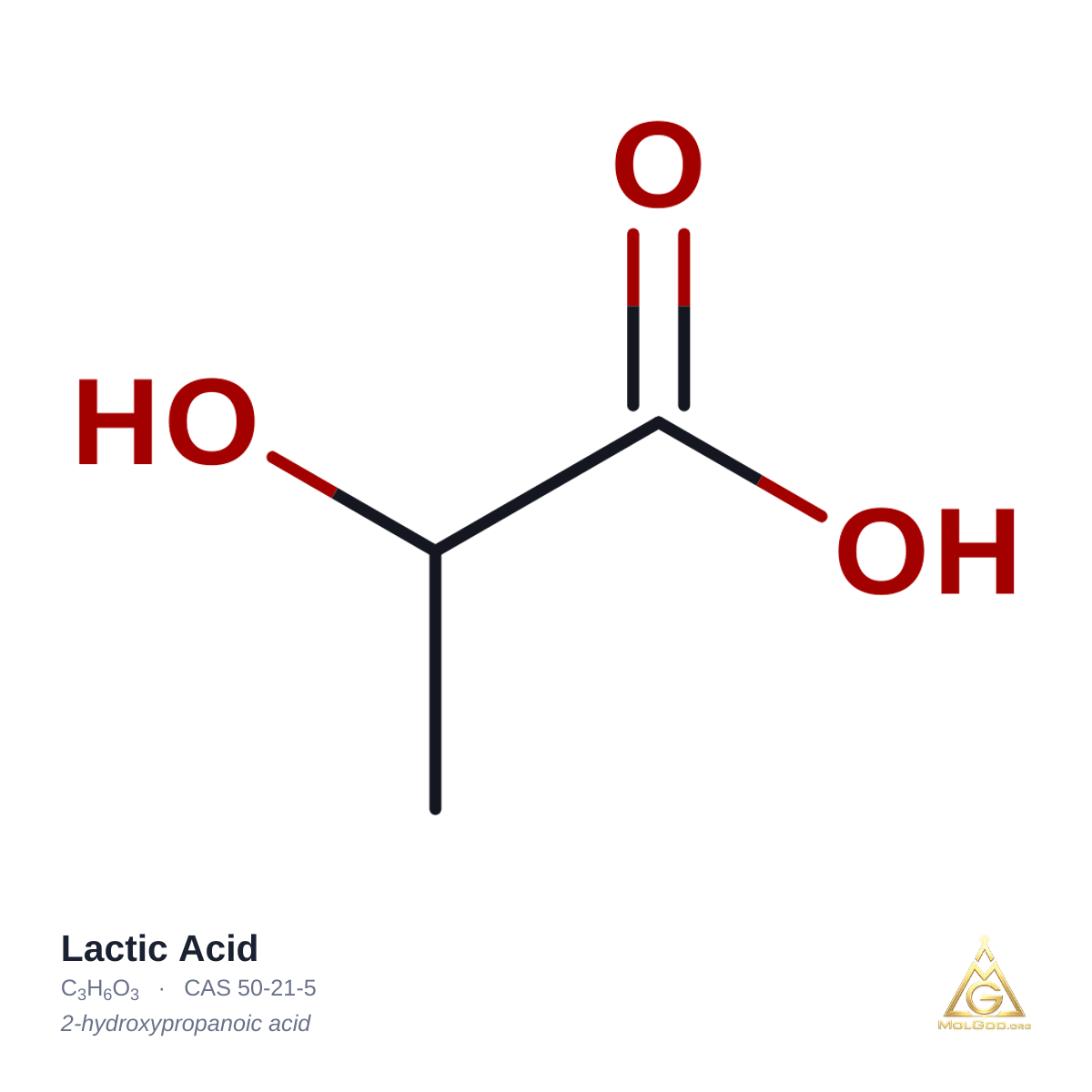
  • Lactic Acid (CAS 50-21-5) – 2D-structuur, MolGod Viewer
    2D-structuur

© 2026 MolGod.org. Alle rechten voorbehouden. · Beeldrechten

Gegevens overgenomen uit regelgevende registers en vakliteratuur, met vermelding van bron en editie. Zij vervangen niet het veiligheidsinformatieblad van de leverancier. Velden zonder vastgelegde bron zijn als zodanig gemarkeerd.
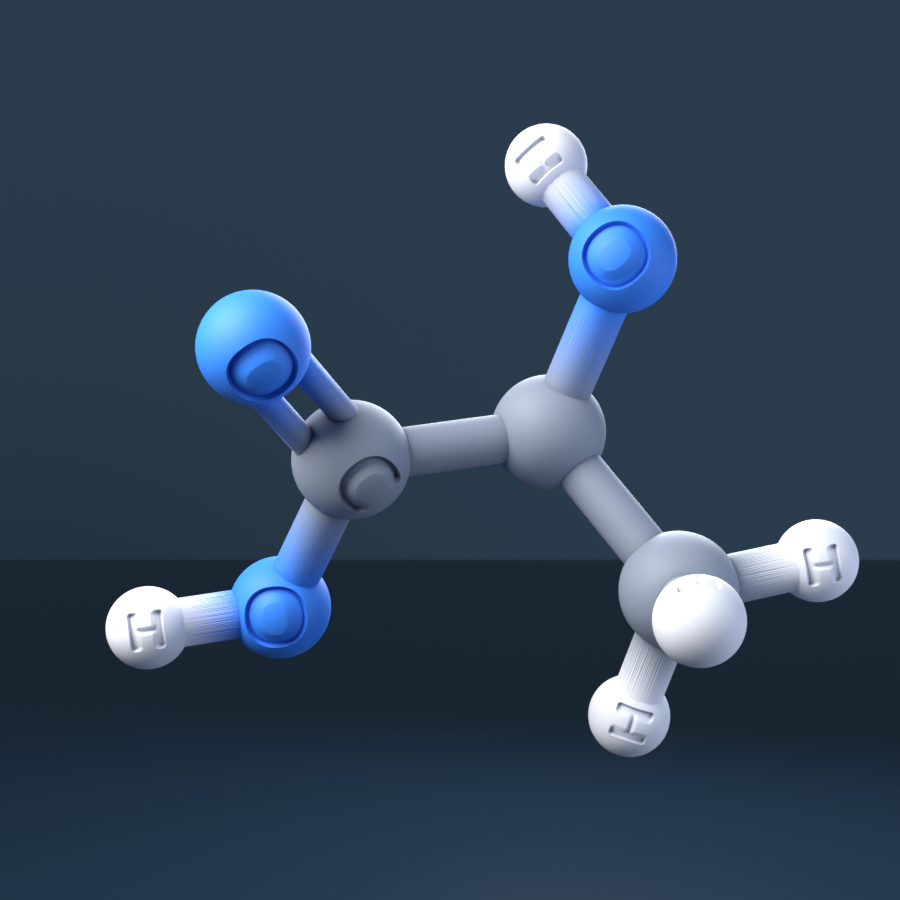
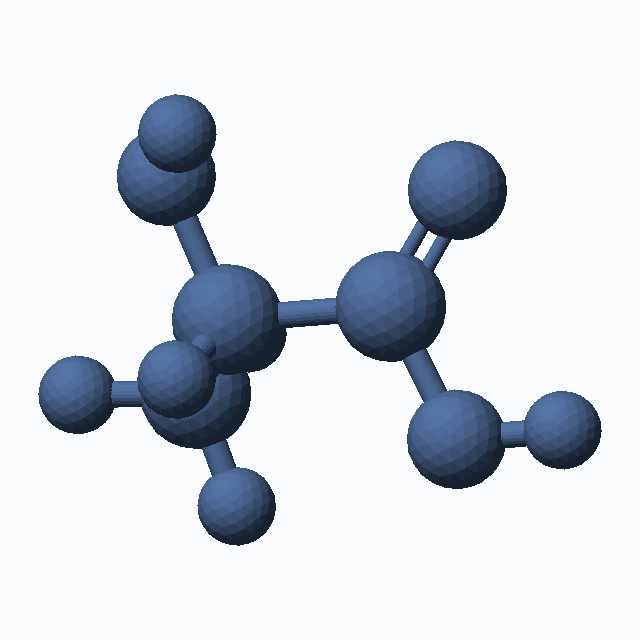
🖨️ 3D-printmodel en licentie

Een printklaar model van dit molecuul op een sokkel: draai het, zoom in en bekijk hoe het er direct uit de printer en na het verwijderen van de supports uitziet.

Voorbeeld van het 3D-printmodel — draai het met je muis of vinger; wissel: met supports / zonder supports

3D-model wordt geladen…

Sleep om te draaien; scrollwiel of twee vingers om te zoomen.

Print het zelf — gratis

130 × 130 × 96 mmPLA, 0,4 mm nozzle, lagen van 0,2 mmongeveer 125–131 g filament10 h 57 min – 15 h 46 min printtijd (afhankelijk van de printer)Gratis voor niet-commercieel gebruik, licentie CC BY-NC-SA 4.0Nog niet fysiek geprint — die van jou kan de eerste zijn
  • Licentie CC BY-NC-SA 4.0: je mag het printmodel (met voet) niet-commercieel printen, delen en bewerken — thuis, op school, aan de universiteit, in een makerspace — met naamsvermelding. CC BY-NC-SA 4.0
  • Commercieel gebruik — verkoop van prints en betaalde printdiensten — alleen met onze licentie: [email protected].
  • De molecule alleen (bestanden NORMAL en ENGRAVED) blijft onder CC BY-SA 4.0.

1. Download een bestand

Twijfel je wat je moet kiezen? Prusa MK4, MINI of Ender-3 S1 — neem de G-code daarvan. Een andere printer — het 3MF-project (PrusaSlicer) of de STL (andere slicers). Print je in een makerspace of printservice — geef het ZIP-pakket en het PDF-gegevensblad door.

Kant-en-klare G-code voor je printer — elk bestand alleen voor de printer in de naam. Laden en printen:

Andere printer? Download het 3MF-project met alle instellingen en open het in PrusaSlicer — of importeer het model in je eigen slicer.

2. Print zoals geleverd

Sokkel plat op het bed, niet draaien en niet schalen — het bestand is in millimeters. Laat de automatische supports van je slicer aan.

In je eigen slicer: organische (boom)supports met „alleen op het printbed” (on build plate only) UIT — elke boom begint op de voet (Cura: Support Placement = Everywhere). Druk na het kiezen van je printer op A (Rangschikken) zodat het model in het midden van het bed staat.

3. Werk het model af

Verwijder alleen de oranje slicer-supports. Laat alle 7 gele potloden zitten — ze horen bij het model en dragen de molecule. Knip de supports af met een zijkniptang, van boven naar beneden; niet trekken en niet draaien. Het model print in één kleur — de kleuren zie je alleen in de preview en op de afbeelding hieronder.

Wat verwijderen, wat laten zitten en hoe je de molecule optioneel van de voet losmaakt

Paneel 3 is een render, geen foto van een print — het model wordt in één kleur geprint.

Optioneel: wil je de molecule in je hand draaien? Knip als laatste stap elk geel potlood door bij de dunne hals vlak onder de bol (ongeveer 2 mm) en schuur het kleine kegeltje op de bol glad. Werk langzaam — de bindingen zijn ongeveer 2 mm dik. Deze stap hebben we nog niet met een eigen print bevestigd.

4. Laat ons je print zien

Stuur ons foto’s van je print — met de supports en nadat je ze hebt verwijderd — naar pure@molgod.org.

Deze 4 foto’s helpen ons het meest: het hele model met supports, het afgewerkte model na het verwijderen, een close-up van de dunste bindingen en een close-up van de letters op de bollen. Feedback is welkom, maar geen voorwaarde om het model te downloaden of te gebruiken.

3D-printen draait om details. Is iets niet gelukt, stuur ons dan foto’s: we helpen je en verbeteren het model op basis van je opmerkingen. Docent? Doe mee aan golf 1 van de pilot →

Geen 3D-printer?

Vraag het aan het makerspace van je school, een bibliotheek met een 3D-printer of een 3D-printservice in de buurt. Geef ze het printpakket of het technische gegevensblad (PDF) — daar staat alles in wat ze nodig hebben.

Een betaalde 3D-printdienst is commercieel gebruik en heeft onze commerciële licentie nodig: pure@molgod.org. Een schoolwerkplaats, bibliotheek of universiteit die gratis print, heeft die niet nodig.

Status: digitaal en in de slicer gecontroleerd; we hebben het nog niet fysiek geprint. Jouw print kan de eerste zijn. Printinstellingen, bestanden en licentie ↓

Lactic Acid (CAS 50-21-5), C3H6O3 - 3D ball-and-stick molecular model, engraved element symbols (C H O), MolGod STL previewAfbeelding downloaden

MG_545-115-752-92 · engraved · 150,798 △ · 7 MB · SHA-256 019bb8666da872fa

3D-model downloaden · ENGRAVED · C H O

Lactic Acid (CAS 50-21-5) - 3D model ready to print on a display base, MolGod STL previewAfbeelding downloaden

MG_545-115-752-92 · ready to print · ANT HOUSE v7 · 282,598 △ · 13 MB · SHA-256 4ed73c7c99b958a7

Digital geometry validated. Slicer-tested with the stated profile. Physical print not yet tested.

Printformaat in millimeters: importeer op 100 %, niet schalen.

3D-printinstellingen · ANT HOUSE v7 — digitale geometrie gevalideerd; slicen gecontroleerd met het onderstaande profiel (PrusaSlicer 2.8.1 · ANT HOUSE profile v4 (in the 3MF)) voor precies dit bestand; nog geen fysieke print gemaakt.
Bestandmolgod-50-21-5-ready-to-print.stl · ANT HOUSE v7
SHA-256 4ed73c7c99b958a71d93bf9d9c370ee7507cd1a346e2789745d6978df8dd1676
Gesliced op 2026-10-29 (UTC) voor deze SHA-256
GereedheidsniveauNiveau 3 van 5 — Slicer-geverifieerd (1 Gegenereerd · 2 Geometrie gevalideerd · 3 Slicer-geverifieerd · 4 Fysiek geprint · 5 Printgekwalificeerd). Ontworpen voor FDM-printen. Geometrie gevalideerd, slicen gecontroleerd met het opgegeven profiel. Er is nog geen fysieke print gemaakt.
MethodeFDM, PLA 1.75 mm
Nozzle0.4 mm (de kleinste details zijn ontworpen voor deze nozzle; gebruik geen grotere)
Laaghoogte0.2 mm
Vulling15%, 3 perimeters
SupportsJa. 7 potloodsupports (Ø 3.5 / 5 mm, zeshoekig, grafiethals Ø 1.8 mm met kelk van 45° onder het atoom, 10.0–50.7 mm lang) maken deel uit van het model — verwijder ze niet. Schakel ook de automatische supports van de slicer in: die zijn tijdelijk (ca. 18 % van het printvolume in onze run) — verwijder ze voorzichtig bij de kleinste bollen (bijv. waterstof) en dunne bindingen. In je eigen slicer: organische (boom)supports met „alleen op het printbed” (on build plate only) UIT — elke boom begint op de voet (Cura: Support Placement = Everywhere). Druk na het kiezen van je printer op A (Rangschikken) zodat het model in het midden van het bed staat.
Temperatuur3MF-profiel: 215 °C nozzle op de eerste laag, daarna 210 °C; bed 60 °C (startpunt — volg het bereik van de filamentfabrikant); onderdeelventilator vanaf laag 4. De kant-en-klare G-code gebruikt de temperaturen en ventilatorinstellingen van de printerfabrikanten (lijst: gcode/README_GCODE.txt in het pakket). Kant-en-klare G-code (Prusa MK4, Prusa MINI, Creality Ender-3 S1): spuitmond 210 °C op de 1e laag, daarna 205 °C; bed 60 °C — waarden uit de kop van elk bestand.
OriëntatiePrint zoals geleverd: voet plat op het printbed (kant met de QR-code naar beneden); niet draaien
SchaalImporteer op 100 % — het bestand is in millimeters; niet schalen (molecuulschaal 1 Å = 20.49 mm)
Totale afmetingen130.0 × 130.0 × 96.1 mm (X × Y × Z); voet Ø 130 × 20 mm
Gevalideerd2026-10-31 (UTC): geometriecontroles van dit bestand
Minimaal printbed155 × 155 mm; hoogte 102 mm
Geschatte printtijdongeveer 13 h 0 min (3MF-profiel in PrusaSlicer; tijden van de kant-en-klare G-code hierboven)
Filament (PLA)ca. 125–131 g (schatting van de slicer)

Zo wordt dit model geprint

Lactic Acid (CAS 50-21-5) direct uit de printer: oranje slicer-supports, gele potloden
Direct uit de printer: verwijder de oranje slicer-supports, de gele potloden blijven
Lactic Acid (CAS 50-21-5) afgewerkt model na het verwijderen van de slicer-supports
Afgewerkt model: wit molecuul op gele potloden, MolGod-logo in reliëf

Renders (PNG):

Lactic Acid (CAS 50-21-5) printklaar 3D-model, Vooraanzicht, gerenderd uit het MolGod-STL-bestand
Vooraanzicht
Lactic Acid (CAS 50-21-5) printklaar 3D-model, Zijaanzicht, gerenderd uit het MolGod-STL-bestand
Zijaanzicht
Lactic Acid (CAS 50-21-5) printklaar 3D-model, Driekwartaanzicht, gerenderd uit het MolGod-STL-bestand
Driekwartaanzicht
Lactic Acid (CAS 50-21-5) printklaar 3D-model, Bovenaanzicht, gerenderd uit het MolGod-STL-bestand
Bovenaanzicht
Lactic Acid (CAS 50-21-5) printklaar 3D-model, Onderaanzicht, gerenderd uit het MolGod-STL-bestand
Onderaanzicht

Voor printservices:
Technisch datablad (PDF: tekening, afmetingen, printspecificatie) · 616 KB · SHA-256 eba8d1a10c38bb99…
Printpakket (ZIP: STL, 3MF met instellingen, G-code, stapsgewijze instructies, ontwerpnotities met bronnen, afbeelding „wat verwijderen”, voorbeelden, slicerprofiel, controlerapport, QC-checklist, feedbackformulier, licentie) · 51 MB · SHA-256 56b035ca3069d121…

3D-model downloaden · READY TO PRINT · STL · 13 MB · base Ø 130 mm · single integrated solid

Lactic Acid (CAS 50-21-5), C3H6O3 - 3D ball-and-stick molecular model, MolGod STL previewAfbeelding downloaden

MG_545-115-752-92 · normal · 4,992 △ · 244 KB · SHA-256 74637ac0e0c14bbf

3D-model downloaden

Licentie en herkomst ↓

⚠️ Het logo en de naam MolGod.org, ook het verhoogde logo op de voet, zijn ons handelsmerk. Creative Commons-licenties dekken geen handelsmerken (§ 2(b)(2)). Zonder onze schriftelijke toestemming mag je het MolGod.org-logo niet gebruiken voor je eigen producten, in reclame of op een manier die onze steun suggereert.

📊 Fysisch-chemische gegevens — CAS 50-21-5
📊 Fysisch-chemische eigenschappen

Snel overzicht

Formule: C3H6O3
MW: 90.08 g/mol
CAS: 50-21-5
Geur: Bez zapachu
🔬 Geavanceerde eigenschappen

Chemische identificatoren

SMILES: CC(C(=O)O)O

Laatst bijgewerkt: 2026-09-02

Chemisch overzicht: Lactic Acid
MolecuulformuleC3H6O3[1]
Molecuulmassa90.08 g/mol[1]
LogP (lipofiliteit)-0.7[1]
IUPAC-naam2-hydroxypropanoic acid[1]
SMILESCC(C(=O)O)O[1]
InChIKeyJVTAAEKCZFNVCJ-UHFFFAOYSA-N[1]

Synoniemen: lactic acid · 2-hydroxypropanoic acid · DL-Lactic acid · 50-21-5 · 2-hydroxypropionic acid

Gegevensbronnen: PubChem (NLM/NIH)
Laatst bijgewerkt: 2026-09-03

📚 Wetenschappelijke referenties (Chicago Author-Date) (1 bronnen)
  1. PubChem. National Center for Biotechnology Information (NIH/NLM), chemical compound database. ↗ van toepassing op: Molecuulformule · Molecuulmassa · LogP (lipofiliteit) · IUPAC-naam · SMILES · InChIKey
Regelgevingsstatus van de stof
Deze stof is onderworpen aan reglementaire vereisten: beheer van gevaarlijke afvalstoffen (BDO — nationale regel, Polen). Details in de sectie "Regelgevingsstatus (REACH/ECHA/CLP)" en op de SDS. Regelgevingsinformatie — beperkt de aankoop in deze winkel niet.
🧮 Stoichiometrierekenmachine
🧪 Chemische gegevens
CAS-nummer
50-21-5
Molecuulformule
C3H6O3
Molaire massa
90.08 g/mol
IUPAC-naam (EN)
2-hydroxypropanoic acid
SMILES
CC(C(=O)O)O
InChIKey
JVTAAEKCZFNVCJ-UHFFFAOYSA-N
📡 Data sources

The data in this widget comes from the following verified scientific sources:

  • PubChem — National Center for Biotechnology Information (NCBI/NIH), USA
  • ChEMBL — European Bioinformatics Institute (EMBL-EBI), UK
  • NIST WebBook — National Institute of Standards and Technology, USA

Data is cached locally for speed — the widget also works offline.

⚗️ Physicochemical properties
Temp. topnienia
16.9
Density
1.202

Source: PubChem, NIST WebBook. Last updated: 2026-09-02

🔍 Externe identificatoren
13 van 16 ID-systemen81%
DatabaseIdentificatorActies
CAS Registry Number50-21-5Openen →
PubChem CID612[1]Openen →
InChIKeyJVTAAEKCZFNVCJ-UHFFFAOYSA-N[1]Openen →
SMILESCC(C(=O)O)O[1]
EC Number200-018-0[2]Openen →
ChEMBLCHEMBL1200559[3]Openen →
DrugBankDB04398Openen →
KEGG CompoundD00111Openen →
ChemSpider592[4]Openen →
MeSH UID (NLM)D019344Openen →
UNII (FDA)3B8D35Y7S4Openen →
NSC Number (NCI)744011Openen →
WikiData QIDQ161249Openen →

Bronnen: PubChem (NIH), Wikidata SPARQL, KEGG, ChEMBL (EBI), CompTox CTX (EPA).

📚 Wetenschappelijke referenties (Chicago Author-Date) (4 bronnen)
  1. PubChem. National Center for Biotechnology Information (NIH/NLM), chemical compound database. ↗ van toepassing op: PubChem CID · InChIKey · SMILES
  2. ECHA. EC Inventory — EINECS, ELINCS, NLP and List Numbers assigned under REACH. Helsinki: European Chemicals Agency. ↗ van toepassing op: EC Number
  3. ChEMBL. European Bioinformatics Institute (EMBL-EBI), bioactivity database. ↗ van toepassing op: ChEMBL
  4. ChemSpider. Royal Society of Chemistry, chemical structure database. ↗ van toepassing op: ChemSpider
📡 Spectroscopie — CAS 50-21-5
📊 Spectra (NMR, IR, MS, UV-Vis) (1)

Beschikbare spectrumtypen: IR

IR-spectrum (KBr, 4000-400 cm⁻¹)

440 datapunten · Bron: NIST WebBook · NIST ↗ · 📥 JCAMP-DX
🎓 Gids voor spectruminterpretatie (voor studenten)
Hoe lees je een IR-spectrum
  • 3200-3600 cm⁻¹ — O-H-rekvibratie (brede piek = waterstofbrug)
  • 2850-3000 cm⁻¹ — C-H-rekvibratie (sp³)
  • 1650-1750 cm⁻¹ — C=O-rekvibratie (ketonen, aldehyden, esters)
  • 1400-1600 cm⁻¹ — trillingen van de aromatische ring
  • 1000-1300 cm⁻¹ — C-O-rekvibratie (ethers, alcoholen)
  • Geen absorptie = geen functionele groep → vergelijk met een referentie

Bronnen: LibreTexts ↗, Silverstein (Spectrometric ID) ↗

📚 Wetenschappelijke referenties (Chicago Author-Date) (7 bronnen)
  1. National Institute of Standards and Technology. 2024. "NIST Chemistry WebBook, SRD 69." Gaithersburg, MD: NIST. Accessed 2025-01-01. ↗
  2. Spectral Database for Organic Structure Determination (SDBS). 2024. National Institute of Advanced Industrial Science and Technology (AIST), Japan. Accessed 2025-01-01. ↗
  3. Ulrich, Eldon L., Hideo Akutsu, John F. Doreleijers, Yoko Harano, Yannis E. Ioannidis, Jundong Lin, Miron Livny, et al. 2008. "BioMagResBank." Nucleic Acids Research 36 (D1): D402–D408. [DOI ↗]
  4. Horai, Hisayuki, Masanori Arita, Shigehiko Kanaya, Yoshito Nihei, Tasuku Ikeda, Kazuhiro Suwa, Yuya Ojima, et al. 2010. "MassBank: A Public Repository for Sharing Mass Spectral Data for Life Sciences." Journal of Mass Spectrometry 45 (7): 703–714. [DOI ↗]
  5. Linstrom, P.J., and W.G. Mallard, eds. 2024. NIST Chemistry WebBook, NIST Standard Reference Database Number 69. Gaithersburg, MD: National Institute of Standards and Technology. ↗
  6. McDonald, M. Shane, Mike McAvoy, and Ajit Bhalerao. 1988. "JCAMP-DX: A Standard Form for Exchange of Infrared Spectra in Computer Readable Form." Applied Spectroscopy 42 (1): 151–162. [DOI ↗]
  7. PubChem. 2024. "PubChem Compound Database." National Library of Medicine, National Institutes of Health. Accessed 2025-01-01. ↗
Structurele eigenschappen
ParameterWaardeEenheid
MolecuulformuleC3H6O3
Molaire massa90.08g/mol
Exacte massa90.031694049Da
Monoisotopische massa90.031694049Da
Topologisch polair oppervlak (TPSA)57.5000Ų
XLogP3-0.7000
Complexiteitsindex59.1
Waterstofbrugdonoren2
Waterstofbrugacceptoren3
Roteerbare bindingen1
Zware atomen6
Stereocentra (atomen)1
Stereocentra (bindingen)0
3D-volume68ų
Aantal 3D-conformeren4
RMSD van het conformeermodel0.4000Å
Effectieve 3D-rotoren1
Waterstofbrugacceptoren (3D)3
Waterstofbrugdonoren (3D)1
Ringen (3D)0
Hydrofobe centra (3D)0
Sterisch quadrupool 3D (X/Y/Z)1.93 / 1.31 / 0.68Ų

Bron: Door PubChem berekende eigenschappen, CID 612

❓ Veelgestelde vragen (7)
What is Lactic Acid?
Lactic Acid (CAS 50-21-5) is a chemical compound with the molecular formula C3H6O3 and a molecular weight of 90.08 g/mol. The chemical data comes from PubChem (National Institutes of Health, USA).
Nuttig?
What is the CAS number of Lactic Acid?
The CAS number for Lactic Acid is 50-21-5. A CAS Registry Number is the standard identifier for a chemical substance in scientific literature and in trade.
Nuttig?
What is the chemical formula of Lactic Acid?
The molecular formula of Lactic Acid is C3H6O3. Its molecular weight is 90.08 g/mol.
Nuttig?
What is the melting point of Lactic Acid?
The melting point of Lactic Acid is 16.9.
Nuttig?
What is the density of Lactic Acid?
The density of Lactic Acid is 1.202.
Nuttig?
Is Lactic Acid hazardous?
Lactic Acid has no harmonised EU classification (CLP Annex VI). The supplier's self-classification (not legally binding) lists: H315, H318, H314. Read the safety data sheet before use and follow the handling precautions it states.
Nuttig?
How should Lactic Acid be stored?
Lactic Acid should be stored as its safety data sheet directs — typically in a dry, cool, well-ventilated place, away from heat and from materials it is incompatible with.
Nuttig?
➕ Stel een vraag voor
Structuurbestanden downloaden

Moleculaire structuurbestanden uit de PubChem-database (NIH). Compatibel met programma's: Avogadro, PyMOL, Jmol, ChemDraw.

Bron: PubChem, National Library of Medicine (NIH). CID: 612

🔄 Omrekenaar voor concentratie-eenheden LIVE

Voer de concentratie Lactic Acid in een willekeurige eenheid in — de rest wordt automatisch berekend.

MW: 90.08 g/mol · IUPAC Gold Book ↗

⚗️ Conversieformules + citaten (per formule)
ConversieFormuleNauwkeurigheidBron
% (w/v) ↔ molarityc (mol/L) = (% × 10) / MW±0.5% rel. when density ≈ 1.0 g/mLIUPAC (2019)
millimolar ↔ molarc (mol/L) = mM × 10⁻³ExactCohen ER, Cvitaš T, Frey JG, Holmström B, Kuchitsu K, Marquardt R, Mills I, Pavese F, Quack M, Stohner J, Strauss HL, Takami M, Thor AJ (2007)
molarity (mol/L)c = n/V = (m/MW)/V±0.1% (depends on MW precision)IUPAC (2019)
parts per million (mg/L) ↔ molarityc (mol/L) = ppm / (1000 × MW); equivalently ppm = mg/L for dilute aqueous±1% (density-independent for dilute solutions)IUPAC (2019)
mg/mL ↔ molarityc (mol/L) = (mg/mL × 1000) / MW / 1000 = mg/mL / MW × 1±0.2%Cohen ER, Cvitaš T, Frey JG, Holmström B, Kuchitsu K, Marquardt R, Mills I, Pavese F, Quack M, Stohner J, Strauss HL, Takami M, Thor AJ (2007)
g/L ↔ molarityc (mol/L) = (g/L) / MW±0.1% (depends on MW precision)Cohen ER, Cvitaš T, Frey JG, Holmström B, Kuchitsu K, Marquardt R, Mills I, Pavese F, Quack M, Stohner J, Strauss HL, Takami M, Thor AJ (2007)
mmol/L ↔ molarityc (mol/L) = mmol/L × 10⁻³ExactCohen ER, Cvitaš T, Frey JG, Holmström B, Kuchitsu K, Marquardt R, Mills I, Pavese F, Quack M, Stohner J, Strauss HL, Takami M, Thor AJ (2007)
Celsius ↔ KelvinT(K) = t(°C) + 273.15±0.01 K (ITS-90 scale)BIPM (Bureau International des Poids et Mesures) (2019)
Celsius ↔ FahrenheitT(°F) = T(°C) × 9/5 + 32±0.1 °FThompson A, Taylor BN (2008)
density-corrected % ↔ molarityc (mol/L) = (%w/w × ρ × 10) / MW, ρ in g/mL±0.1% when ρ known to 3 decimalsCohen ER, Cvitaš T, Frey JG, Holmström B, Kuchitsu K, Marquardt R, Mills I, Pavese F, Quack M, Stohner J, Strauss HL, Takami M, Thor AJ (2007)
📚 Bibliografie (8 gezaghebbende bronnen)
  1. Thompson A, Taylor BN (2008). Guide for the Use of the International System of Units (SI). NIST Special Publication 811 · DOI: 10.6028/NIST.SP.811e2008
    → Primary SI standard for US scientific usage
  2. Cohen ER, Cvitaš T, Frey JG, Holmström B, Kuchitsu K, Marquardt R, Mills I, Pavese F, Quack M, Stohner J, Strauss HL, Takami M, Thor AJ (2007). Quantities, Units and Symbols in Physical Chemistry — The IUPAC Green Book. RSC Publishing, 3rd ed. · DOI: 10.1039/9781847557889 · ISBN: 978-0-85404-433-7
    → Canonical IUPAC guide for chemistry quantities/units
  3. BIPM (Bureau International des Poids et Mesures) (2019). The International System of Units (SI), 9th edition. BIPM · ↗
    → International SI definitions (incl. redefined kilogram 2019)
  4. ISO/IEC (2022). Quantities and units — Part 1: General. International Organization for Standardization — ISO 80000-1:2022 · ↗
    → General rules for physical quantities and units
  5. ISO/IEC (2019). Quantities and units — Part 9: Physical chemistry and molecular physics. International Organization for Standardization — ISO 80000-9:2019 · ↗
    → Concentration / molality / amount-of-substance conventions
  6. Tiesinga E, Mohr PJ, Newell DB, Taylor BN (2021). CODATA recommended values of the fundamental physical constants: 2018. Rev. Mod. Phys. 93(2):025010 · DOI: 10.1103/RevModPhys.93.025010
    → Avogadro, gas constant, molar volume (2019 SI revision)
  7. IUPAC (2019). Compendium of Chemical Terminology — the IUPAC Gold Book (online). IUPAC · DOI: 10.1351/goldbook
    → Definitions of mass fraction, molality, normality, ppm, activity
  8. Mills IM, Cvitaš T, Homann K, Kallay N, Kuchitsu K (1988). Quantities, Units and Symbols in Physical Chemistry. Blackwell Scientific Publications, 1st ed. · ISBN: 0-632-01773-5
    → Historical predecessor of IUPAC Green Book
Vergelijkbare moleculaire structuren

Vergelijkbare structuren worden geladen...

🧪 Wizard voor het bereiden van oplossingen WIZARD
① Selecteer concentratie
② Doelvolume
③ Oplosmiddel

Berekeningen volgens: IUPAC Gold Book ↗, Merck ↗

Computationele chemie

Moleculaire descriptoren

ParameterWaardeEenheid
XLogP3 (lipofiliteit)-0.70
hydrofiel (geeft de voorkeur aan de waterfase)
Topologisch polair oppervlak (TPSA)57.50Ų
lage polariteit, goede penetratie van de bloed-hersenbarrière
Complexiteitsindex59.1
Formele lading0
neutraal molecuul

Regel van Lipinski (Rule of Five)

CriteriumWaardeRegelStatus
Molaire massa90.08 g/mol<= 500✓
XLogP3-0.70<= 5✓
Waterstofbrugdonoren2<= 5✓
Waterstofbrugacceptoren3<= 10✓

De verbinding voldoet aan de regel van Lipinski — mogelijk goede orale biobeschikbaarheid.

3D-farmacofoorkenmerken

ParameterWaardeEenheid
Waterstofbrugacceptoren (3D)3
Waterstofbrugdonoren (3D)1
Ringen (3D)0
Hydrofobe centra (3D)0
Anionische centra (3D)1
Kationische centra (3D)0

Vorm en volume

ParameterWaardeEenheid
3D-volume68.00ų
Roteerbare bindingen1
Zware atomen6

De TPSA-interpretaties en de regel van Lipinski zijn empirische regels voor orale geneesmiddelen met een laag molecuulgewicht (Lipinski 1997, Veber 2002, Kelder 1999). Ze vormen geen beoordeling van de absorptie of toxiciteit van deze stof — veiligheidsgegevens staan in het veiligheidsinformatieblad.

Bron: Door PubChem berekende eigenschappen, CID 612

🛡️ Veiligheid — CAS 50-21-5
Mededeling over gegevensbeperkingen. De veiligheidsinformatie op deze pagina is uitsluitend ter informatie en vervangt geen volledig veiligheidsinformatieblad (SDS). Raadpleeg vóór gebruik van het product het actuele veiligheidsinformatieblad van de fabrikant en de GHS/CLP-richtlijnen. De CLP-indeling geldt voor de zuivere bulkstof, niet voor commerciële formuleringen.

GHS/CLP-indeling — Verordening (EG) nr. 1272/2008 + UN GHS Rev. 9 (2021).
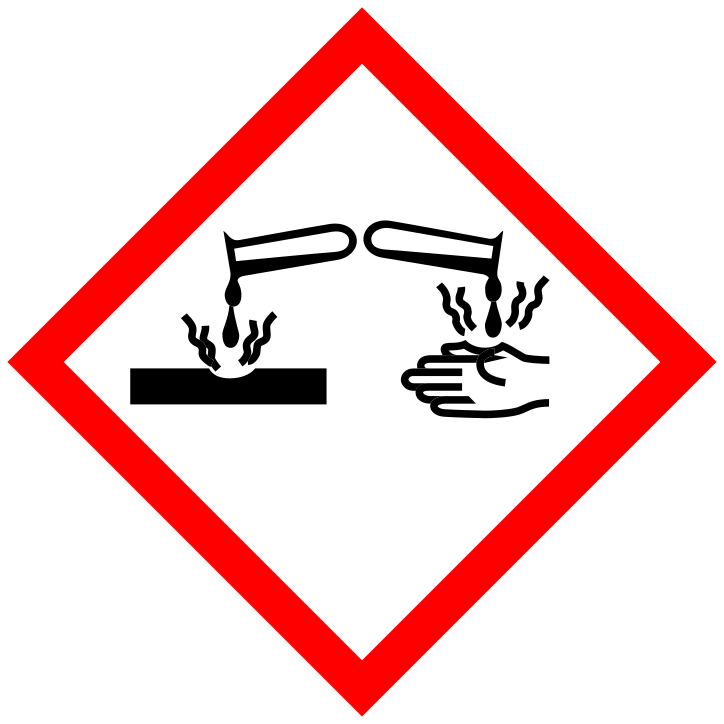
⚠️ Gevaar (Danger)
GHS05 — Bijtend
GHS05 Bijtend
GHS07 — Irriterend / schadelijk
GHS07 Irriterend / schadelijk

🚨 Gevarenaanduidingen (H)

  • H315 — Veroorzaakt huidirritatie.
  • H318 — Veroorzaakt ernstig oogletsel.
  • H314 — Veroorzaakt ernstige brandwonden en oogletsel.

🛡 Voorzorgsmaatregelen (P)

  • P260 — Stof/rook/gas/nevel/damp/spuitnevel niet inademen.
  • P264 — Na het werken met dit product … grondig wassen.

⚠ Indeling op basis van een consensus van bronnen (PubChem / kennisgevingen van leveranciers) — niet geverifieerd tegen de geharmoniseerde indeling in bijlage VI (CLP). De omvang van de gevaren kan ruimer zijn dan de officiële indeling; verifieer vóór gebruik aan de hand van het actuele veiligheidsinformatieblad van de leverancier.

Vertalingen: CLP-verordening (EG) 1272/2008, Bijlage III en IV. Gegevens: PubChem/NLM.

📚 Geconsolideerde wetenschappelijke referenties — Chicago Author-Date 10 bronnen

Referenties verzameld uit alle tabbladen van de Safety Hub. CAS: 50-21-5 · PubChem ↗

  1. Parlament Europejski i Rada UE. 2008. "Regulation (EC) nr 1272/2008 w sprawie klasyfikacji, oznakowania i pakowania substancji (CLP)." Dz.Urz. UE L 353. [↗] GHS, Regelgeving
  2. United Nations Economic Commission for Europe (UNECE). 2021. "Globally Harmonized System of Classification and Labelling of Chemicals (GHS), Ninth Revised Edition." United Nations, Geneva. [↗] GHS
  3. Goldfrank, Lewis R., Robert S. Hoffman, Mary Ann Howland, et al.. 2019. "Goldfrank's Toxicologic Emergencies, 11th ed.." McGraw-Hill Education, New York. ISBN 978-1-25-985961-8. Eerste hulp, Toxicologie
  4. National Institute for Occupational Safety and Health (NIOSH). 2023. "NIOSH Pocket Guide to Chemical Hazards (DHHS Publ. 2005-149)." U.S. Department of Health and Human Services / CDC, Cincinnati, OH. [↗] Eerste hulp, PBM, Toxicologie
  5. European Committee for Standardization (CEN). 2016. "EN 374-1:2016 — Protective gloves against dangerous chemicals and micro-organisms." CEN, Brussels. [↗] PBM
  6. UNECE. 2023. "European Agreement Concerning the International Carriage of Dangerous Goods by Road (ADR 2025)." United Nations, Geneva. [↗] Verwijdering, Regelgeving
  7. National Fire Protection Association (NFPA). 2022. "NFPA 400 — Hazardous Materials Code." NFPA, Quincy, MA. [↗] Opslag
  8. Urben, P.G. (ed.). 2017. "Bretherick's Handbook of Reactive Chemical Hazards, 8th ed.." Butterworth-Heinemann / Elsevier, Oxford. [↗] Opslag
  9. Ministerstwo Klimatu i Środowiska RP. 2023. "Baza danych o produktach i opakowaniach oraz o gospodarce odpadami (BDO)." Ministerstwo Klimatu i Środowiska, Warszawa. Nationale regels — Polen [↗] Verwijdering
  10. International Agency for Research on Cancer (IARC / WHO). 2024. "IARC Monographs on the Identification of Carcinogenic Hazards to Humans — List of Classifications." WHO, Lyon. [↗] Toxicologie

Tabbladen met eigen referenties (Emergency, PPE, Storage, Waste) bevatten aanvullende bibliografische vermeldingen binnen hun respectieve secties.

📈 Analytische statistiek (t-test · RSD · Grubbs · Q-Dixon) ICH Q2

Plak een reeks herhaalde metingen (CSV of één getal per regel). De calculator berekent het gemiddelde, de standaardafwijking en 95% CI, en detecteert uitschieters (Grubbs + Dixon Q).

Scheidingsteken: komma, spatie, tab, nieuwe regel. Minimaal 3 metingen.
📐 Statistische formules
  • x̄ = Σxᵢ / n — rekenkundig gemiddelde
  • s² = Σ(xᵢ - x̄)² / (n-1) — steekproefvariantie
  • s = √s² — standaardafwijking
  • RSD% = (s / x̄) × 100% — relatieve standaardafwijking
  • CI₉₅ = x̄ ± t(0.05, n-1) × s / √n — Student's t
  • G = |xᵢ - x̄| / s — Grubbs-test
  • Q = |xsuspect - xnearest| / |xmax - xmin| — Dixon Q-test

Bron: ICH Q2(R2) Validation of Analytical Procedures · ICH PDF ↗

🧪 Bufferrecept-calculator UNIEK

Kies een buffer uit de lijst van 20 populaire systemen → voer de streef-pH in → ontvang een exact recept met de af te wegen massa's.

Stap 1: Kies een buffersysteem

📜 Receptgeschiedenis (laatste 10)
Farmacologische status

Lek zatwierdzony (Faza 4)

Fase I
Fase II
Fase III
Goedgekeurd

Toegelaten voor het in de handel brengen door de regelgevende autoriteiten.

ChEMBL CHEMBL1200559 ↗

🚚 Transportclassificatie (ADR / IATA / IMDG)

UN 3265 — controleer de vervoersklasse in ADR 2025 (tabel A). Rubriek 14 van het blad vermeldt een UN-nummer, maar zonder bevestigde ADR-klasse.

Bron: Karta SDS sek.14 (UN bez potwierdzonej klasy)
📅 Project Planner — Lab experiment manager NIEUW

Plan uw volledige laboratoriumproject: voeg experimenten toe met reagentia, replicaten en duur. U ontvangt een Gantt-diagram, een boodschappenlijst (met links naar de winkel!), een budget met 10% marge en een GHS-risicomatrix.

🧪 Oplosbaarheid en compatibiliteit met oplosmiddelen
Molecuul
Lactic Acid
Formule
C3H6O3
logP (XLogP3)
-0.70
Massa (g/mol)
90.08
Polariteit
Hydrofiel (polair)

⚠️ GC-schatting (Hoftyzer–Van Krevelen). Geen HSP-literatuurgegevens voor deze CAS — nauwkeurigheid ±2 MPa½. Experimenteel verifiëren.

Tabel met oplosmiddelcompatibiliteit niet beschikbaar voor deze stof.
De Hansen-parameters vallen buiten het bereik van de methode, dus de afstand Ra kan niet worden berekend, en de database bevat geen oplosbaarheidsmeting om die te vervangen. In plaats van elf beoordelingen zonder onderbouwing tonen we er geen. Baseer de keuze van het oplosmiddel op het veiligheidsinformatieblad en op experimentele gegevens.
📚 Wetenschappelijke referenties voor oplosmiddelen (Chicago Author-Date) — klik om uit te vouwen

11 oplosmiddelen · 54 volledige bronvermeldingen (NIST/CRC/IARC/Hansen/Reichardt/Smallwood/Wypych/Armarego/Snyder/GESTIS) — hieronder.

Water (H₂O)
  1. NIST — NIST Chemistry WebBook — Water (CAS 7732-18-5)
  2. CRC — CRC Handbook of Chemistry and Physics, 104th ed., Sec. 8 (Properties of Water)
  3. IAPWS — IAPWS Release on Static Dielectric Constant of Water
  4. Reichardt 2011 — Solvents and Solvent Effects in Organic Chemistry
  5. GESTIS — GESTIS Substance Database — Water
Ethanol (EtOH)
  1. NIST — NIST Chemistry WebBook — Ethanol (CAS 64-17-5)
  2. CRC — CRC Handbook — Ethanol physical constants
  3. Snyder & Kirkland — Modern Liquid Chromatography — Ethanol eluotropic
  4. Smallwood — Handbook of Organic Solvent Properties — Ethanol
  5. GESTIS — GESTIS Substance Database — Ethanol
Methanol (MeOH)
  1. NIST — NIST Chemistry WebBook — Methanol (CAS 67-56-1)
  2. CRC — CRC Handbook — Methanol physical constants
  3. Snyder & Kirkland — Modern Liquid Chromatography — MeOH eluotropic, eo=0.95
  4. GESTIS — GESTIS Substance Database — Methanol
Acetone
  1. NIST — NIST Chemistry WebBook — Acetone (CAS 67-64-1)
  2. CRC — CRC Handbook — Acetone physical & thermodynamic constants
  3. Hansen 2007 — Hansen Solubility Parameters — Acetone (dD=15.5, dP=10.4, dH=7.0)
  4. Smallwood — Handbook of Organic Solvent Properties — Acetone
  5. GESTIS — GESTIS Substance Database — Acetone
Acetonitrile (ACN)
  1. NIST — NIST Chemistry WebBook — Acetonitrile (CAS 75-05-8)
  2. CRC — CRC Handbook — Acetonitrile constants
  3. Snyder & Kirkland — Modern Liquid Chromatography — ACN gold-standard HPLC eluent
  4. Reichardt 2011 — Solvents and Solvent Effects — ACN dipolar aprotic
  5. GESTIS — GESTIS Substance Database — Acetonitrile
DMSO
  1. NIST — NIST Chemistry WebBook — DMSO (CAS 67-68-5)
  2. Wypych 2019 — Handbook of Solvents Vol. 1 — DMSO comprehensive properties
  3. Hansen 2007 — HSP — DMSO (dD=18.4, dP=16.4, dH=10.2)
  4. Reichardt 2011 — Solvents and Solvent Effects — DMSO E_T(30)=45.1, dipolar aprotic
  5. GESTIS — GESTIS Substance Database — DMSO
THF
  1. NIST — NIST Chemistry WebBook — THF (CAS 109-99-9)
  2. Armarego 2009 — Purification of Laboratory Chemicals — THF drying & peroxide test
  3. Hansen 2007 — Hansen Solubility Parameters — THF (dD=16.8, dP=5.7, dH=8.0)
  4. Smallwood — Handbook of Organic Solvent Properties — THF
  5. GESTIS — GESTIS Substance Database — Tetrahydrofuran
DCM (CH₂Cl₂)
  1. NIST — NIST Chemistry WebBook — Dichloromethane (CAS 75-09-2)
  2. IARC 71 — IARC Monograph 71 — DCM (Group 2A carcinogen)
  3. Hansen 2007 — Hansen Solubility Parameters — DCM (dD=18.2, dP=6.3, dH=6.1)
  4. Reichardt 2011 — Solvents and Solvent Effects — DCM polarity index
  5. GESTIS — GESTIS Substance Database — Dichloromethane
Chloroform (CHCl₃)
  1. NIST — NIST Chemistry WebBook — Chloroform (CAS 67-66-3)
  2. IARC 73 — IARC Monograph 73 — Chloroform (Group 2B carcinogen)
  3. Hansen 2007 — Hansen Solubility Parameters — CHCl3 (dD=17.8, dP=3.1, dH=5.7)
  4. Reichardt 2011 — Solvents and Solvent Effects — CHCl3 H-bond donor strength
  5. GESTIS — GESTIS Substance Database — Chloroform
n-Hexane
  1. NIST — NIST Chemistry WebBook — n-Hexane (CAS 110-54-3)
  2. ATSDR n-Hexane — ATSDR Toxicological Profile for n-Hexane — perifere neuropathie (n-hexaan is GEEN IARC-carcinogeen)
  3. Hansen 2007 — Hansen Solubility Parameters — n-Hexane (dD=14.9, dP=0, dH=0)
  4. Snyder & Kirkland — Modern Liquid Chromatography — n-Hexane NP standard, eo=0.00
  5. GESTIS — GESTIS Substance Database — n-Hexane
Toluene
  1. NIST — NIST Chemistry WebBook — Toluene (CAS 108-88-3)
  2. IARC 71 — IARC Monograph 71 — Toluene
  3. Hansen 2007 — Hansen Solubility Parameters — Toluene (dD=18.0, dP=1.4, dH=2.0)
  4. Smallwood — Handbook of Organic Solvent Properties — Toluene
  5. GESTIS — GESTIS Substance Database — Toluene
Oplosbaarheidstheorie (toegepast bij de voorspelling van compatibiliteit):
  1. Yalkowsky, Samuel H., and Shri C. Valvani. 1980. "Solubility and Partitioning I: Solubility of Nonelectrolytes in Water." Journal of Pharmaceutical Sciences 69 (8): 912–922. https://doi.org/10.1002/jps.2600690814 — General Solubility Equation (GSE): logS = 0.5 − logP − 0.01(MP−25).
  2. Hansen, Charles M. 2007. Hansen Solubility Parameters: A User's Handbook. 2nd ed. CRC Press. https://doi.org/10.1201/9781420006834 — HSP-triplet (dD, dP, dH) + Ra-formule.
  3. Stefanis, E., and C. Panayiotou. 2008. "Prediction of Hansen Solubility Parameters with a New Group-Contribution Method." Int J Thermophys 29: 568–585. https://doi.org/10.1007/s10765-008-0415-z
  4. Reichardt, Christian, and Thomas Welton. 2011. Solvents and Solvent Effects in Organic Chemistry. 4th ed. Wiley-VCH. https://doi.org/10.1002/9783527632220 — E_T(30) polarity scale, solvatochromism.
  5. Snyder, Lloyd R., Joseph J. Kirkland, and John W. Dolan. 2010. Introduction to Modern Liquid Chromatography. 3rd ed. Wiley. https://doi.org/10.1002/9780470508183 — Eluotropic series, polarity index.
  6. Van Krevelen, D. W., and K. Te Nijenhuis. 2009. Properties of Polymers. 4th ed. Elsevier. https://doi.org/10.1016/B978-0-08-054819-7.X0001-5 — Hoftyzer–Van Krevelen group contribution for dD/dP/dH from SMILES.
  7. Marcus, Yizhak. 1998. The Properties of Solvents. Wiley Series in Solution Chemistry, Vol. 4. ISBN 9780471983699 — Volledige tabellarische set van 250+ oplosmiddelen (ε, μ, doniciteit, acceptorgetallen).
  8. PubChem Compound Database — CAS 50-21-5 lookup ↗ — logP (XLogP3), water solubility experimental + predicted.

Volledige bibliografie in het accordeon REFERENTIES (onderaan de pagina) — Chicago Manual of Style 17th ed., Author-Date.

⚗️ Controleer de reactiecompatibiliteit
1 0 0
Gezondheid: 1/4
Ontvlambaarheid: 0/4
Reactiviteit: 0/4
Volgens NFPA 704 / berekend uit H-codes

Controleer of Lactic Acid compatibel is met een ander reagens

📦 Opslagcompatibiliteitsmatrix
Zuren Basen Oxidatoren Ontvlambaar Giftig Gazy
Zuren ✓ ✗ ✗ ✗ ⚠ ✗
Basen ✗ ✓ ⚠ ⚠ ⚠ ⚠
Oxidatoren ✗ ⚠ ✓ ✗ ⚠ ✗
Ontvlambaar ✗ ⚠ ✗ ✓ ⚠ ✗
Giftig ⚠ ⚠ ⚠ ⚠ ✓ ⚠
Gazy ✗ ⚠ ✗ ✗ ⚠ ✓
✓ Samen te bewaren · ⚠ Voorzichtig · ✗ NIET samen bewaren · OSHA Chemical Segregation ↗

Compatibiliteitsgegevens uit: Bretherick's Handbook (7th ed.) ↗, GESTIS ↗, ECHA REACH ↗, NFPA 704 ↗

🧮 Laboratoriumcalculators (8)
Verdunning (C₁V₁=C₂V₂)
Molariteit (M=n/V)
pH-buffer (Henderson-Hasselbalch)
Beer-Lambert (A=εcl)
Massa → Mol
Concentratie % → M
ppm → mg/L
Temperatuur C↔F↔K

Geverifieerde formules: IUPAC Gold Book ↗, DOI ↗

📊 Spectroscopische spectradatabases
📋 Generator van laboratoriumprotocollen

Protocol gegenereerd op basis van: GHS SDS, Aldrich Lab Guide ↗

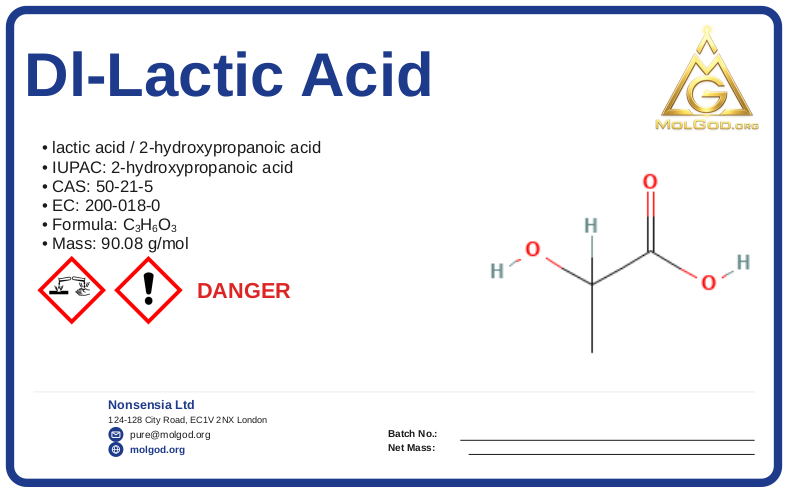
🏷️ Etikettengenerator (QR)
Dl-Lactic Acid• lactic acid / 2-hydroxypropanoic acid• IUPAC: 2-hydroxypropanoic acid• CAS: 50-21-5• EC: 200-018-0• Formule: C3H6O3• Massa: 90.08 g/molGEVAARNonsensia Ltd124-128 City Road, EC1V 2NX Londonpure@molgod.orgmolgod.orgBatchnr.: Nettogewicht:
🧪 Assistent voor bereiding van oplossingen (Smart Prep)

Voer in wat u wilt bereiden — ik genereer een SOP

Voorbeelden hieronder — klik om in te voegen:
Voorgedefinieerde recepten:

Waarom deze pagina controleerbaar is

Identiteit

CAS, EC en molecuulformule, herleid in de identificatiesystemen die een inkoper gebruikt. Het aantal herleide systemen wordt getoond, zodat u ziet hoe goed deze stof is gekarakteriseerd in plaats van het aan te nemen.

Gegevens

Elke fysisch-chemische waarde vermeldt de bron waaruit ze afkomstig is en de datum waarop die bron is geraadpleegd. Open er gerust een.

Indeling

Getoetst aan de geharmoniseerde vermelding, waar die bestaat, met vermelding van het indexnummer. Zelfindeling wordt apart weergegeven en gemarkeerd.

Regelgeving

Status voor inventarissen, beperkingen, autorisatie en de kandidaatslijst, elk afzonderlijk vermeld. Waar een status niet is vastgesteld, zegt deze pagina dat — ze stelt nooit dat er geen beperkingen gelden.

Documentatie

Welke documenten er zijn, op welk controleniveau, in welke talen en wanneer elk ervan is uitgegeven.

Leverancier

Wie dit verkoopt en wat die over zichzelf heeft gepubliceerd.

Niets op deze pagina is een certificering. Het is een record dat u kunt auditen.

Two guarantees, both with their limits stated

The Gap Report Guarantee

If the available evidence cannot support a defensible document for your CAS number and product specification, we will not invent the missing values. You receive a documented gap report and choose: a refund, store credit, or the report on its own.

A visible gap is worth more than a plausible number, because the plausible number is the one that fails when somebody checks it.

The Re-issue Promise

If a signed card is rejected by an authority or by a customer’s compliance officer on one of the points we checked and reported as passed, we re-issue it corrected at no charge and credit the original fee.

This covers the checks we performed and named. It does not cover registration status, tonnage, or your role in the supply chain — those are not ours to hold, and a guarantee that pretended otherwise would be worth nothing.

Lactic Acid — CAS 50-21-5. Prepared from the supplier’s public catalogue; not verified against their internal data.

⚗️ Ionisatie als functie van de pH (Henderson-Hasselbalch)

Type: Zuur · pKa: 3.86

024681012140%50%100%% geïoniseerd% niet-geïoniseerdpH
pH% geïoniseerd% niet-geïoniseerd
00.0 %100.0 %
21.4 %98.6 %
458.0 %42.0 %
699.3 %0.7 %
8100.0 %0.0 %
10100.0 %0.0 %
12100.0 %0.0 %
14100.0 %0.0 %
Bronnen voor deze stof (8)
  • CRC Handbook 91st ed.
    Lide, David R., ed. 2010. CRC Handbook of Chemistry and Physics. 91st ed. Boca Raton, FL: CRC Press.
  • CRC Handbook 105th ed.
    Haynes, William M., David R. Lide, and Thomas J. Bruno, eds. 2024. CRC Handbook of Chemistry and Physics. 105th ed. Boca Raton, FL: CRC Press.
  • NIST WebBook — link
    Linstrom, Peter J., and William G. Mallard, eds. 2024. NIST Chemistry WebBook. NIST Standard Reference Database Number 69. Gaithersburg, MD: National Institute of Standards and Technology.
  • PubChem CID 612 — link
    Kim, Sunghwan, Jie Chen, Tiejun Cheng, Asta Gindulyte, Jia He, Siqian He, Qingliang Li, et al. 2023. "PubChem 2023 update." Nucleic Acids Research 51 (D1): D1373-D1380. PubChem CID 612.
  • DrugBank DB04398 — link
    Knox, Craig, Mike Wilson, Christen M. Klinger, Mark Franklin, Eponine Oler, Alex Wilson, Allison Pon, et al. 2024. "DrugBank 6.0: the DrugBank Knowledgebase for 2024." Nucleic Acids Research 52 (D1): D1265-D1275. DrugBank ID DB04398.
  • KEGG COMPOUND C00186 — link
    Kanehisa, Minoru, Miho Furumichi, Yoko Sato, Masayuki Kawashima, and Mari Ishiguro-Watanabe. 2023. "KEGG for taxonomy-based analysis of pathways and genomes." Nucleic Acids Research 51 (D1): D587-D592.
  • IUPAC
    Serjeant, E. P., and Boyd Dempsey. 1979. Ionisation Constants of Organic Acids in Aqueous Solution. IUPAC Chemical Data Series No. 23. Oxford: Pergamon Press.
Methodebibliografie (Chicago)
  • Henderson, L. J. 1908. "Concerning the Relationship between the Strength of Acids and Their Capacity to Preserve Neutrality." American Journal of Physiology 21 (4): 173-179.
  • Hasselbalch, K. A. 1917. "Die Berechnung der Wasserstoffzahl des Blutes aus der freien und gebundenen Kohlensäure desselben." Biochemische Zeitschrift 78: 112-144.
  • Po, Henry N., and N. M. Senozan. 2001. "The Henderson-Hasselbalch Equation: Its History and Limitations." Journal of Chemical Education 78 (11): 1499-1503.
  • Avdeef, Alex. 2012. "Absorption and Drug Development: Solubility, Permeability, and Charge State." 2nd ed. Wiley.
  • Avdeef, Alex. 2007. "Solubility of sparingly-soluble ionizable drugs." Advanced Drug Delivery Reviews 59 (7): 568-590.
  • Volgyi, Gergely, et al. 2007. "Potentiometric and spectrophotometric pKa determination of water-insoluble compounds." Analytica Chimica Acta 583 (2): 418-428.
  • Fini, Adamo, Giuseppe Fazio, and Giuseppina Feroci. 1997. "Solubility and solubilization properties of non-steroidal anti-inflammatory drugs." Pharmaceutica Acta Helvetiae 70 (4): 305-318.
  • Mauger, John W., Anthony N. Paruta, and Robert J. Gerraughty. 1972. "Solubilities of sulfadiazine, sulfisomidine, and sulfadimethoxine." Journal of Pharmaceutical Sciences 61 (1): 94-97.
  • Lyman, Warren J., William F. Reehl, and David H. Rosenblatt. 1990. "Handbook of Chemical Property Estimation Methods." American Chemical Society.
  • Marcus, Yizhak. 1998. "The Properties of Solvents." Wiley.
  • Serjeant, E. P., and Boyd Dempsey. 1979. Ionisation Constants of Organic Acids in Aqueous Solution. IUPAC Chemical Data Series No. 23. Oxford: Pergamon Press.
  • Perrin, Douglas D. 1965. Dissociation Constants of Organic Bases in Aqueous Solution. IUPAC. London: Butterworths.
  • Goldberg, Robert N., Nand Kishore, and Rebecca Lennen. 2002. "Thermodynamic Quantities for the Ionization Reactions of Buffers." Journal of Physical and Chemical Reference Data 31 (2): 231-370.
  • Rumble, John R., Thomas J. Bruno, Maria J. Doa, and Donald R. Burgess, eds. 2024. CRC Handbook of Chemistry and Physics. 105th ed. Boca Raton, FL: CRC Press.
  • Lide, David R., ed. 2010. CRC Handbook of Chemistry and Physics. 91st ed. Boca Raton, FL: CRC Press.
  • Kim, Sunghwan, Jie Chen, Tiejun Cheng, Asta Gindulyte, Jia He, Siqian He, Qingliang Li, et al. 2023. "PubChem 2023 update." Nucleic Acids Research 51 (D1): D1373-D1380.
  • Knox, Craig, Mike Wilson, Christen M. Klinger, Mark Franklin, Eponine Oler, Alex Wilson, Allison Pon, et al. 2024. "DrugBank 6.0: the DrugBank Knowledgebase for 2024." Nucleic Acids Research 52 (D1): D1265-D1275.
  • Zdrazil, Barbara, Eloy Felix, Fiona Hunter, Emma J. Manners, James Blackshaw, Sybilla Corbett, Marleen de Veij, et al. 2024. "The ChEMBL Database in 2023." Nucleic Acids Research 52 (D1): D1180-D1192.
  • Kanehisa, Minoru, Miho Furumichi, Yoko Sato, Masayuki Kawashima, and Mari Ishiguro-Watanabe. 2023. "KEGG for taxonomy-based analysis of pathways and genomes." Nucleic Acids Research 51 (D1): D587-D592.
  • Linstrom, Peter J., and William G. Mallard, eds. 2024. NIST Chemistry WebBook. NIST Standard Reference Database Number 69. Gaithersburg, MD: National Institute of Standards and Technology.
  • Nelson, David L., and Michael M. Cox. 2017. Lehninger Principles of Biochemistry. 7th ed. New York: W. H. Freeman.
📄 Analysecertificaten (CoA) CAS 50-21-5 geen

Geen certificaten voor dit product in de database.

📚 Wetenschappelijke referenties (Chicago Author-Date) — klik om uit te klappen

Standaarden voor batchbeheer en laboratoriumcertificering — 13 onafhankelijke bronnen (ICH Q1/Q3/Q6/Q7/Q10 + ISO 17025 + WHO TRS + 21 CFR 211 + EMA + USP + Ph.Eur. + PIC/S + IPEC-PQG).

  1. International Council for Harmonisation (ICH). 2000. "Q7 Good Manufacturing Practice Guide for Active Pharmaceutical Ingredients." ICH Expert Working Group. [link ↗] — GMP for APIs — adopted by EMA, FDA, MHLW
  2. International Organization for Standardization. 2017. "ISO/IEC 17025:2017 General requirements for the competence of testing and calibration laboratories." ISO. [link ↗] — Lab accreditation standard underpinning every CoA
  3. World Health Organization. 2010. "WHO Good Manufacturing Practices for Pharmaceutical Products: Main Principles (WHO Technical Report Series No. 957, Annex 3)." WHO Press. [link ↗] — WHO TRS No. 957 — global reference for GMP
  4. International Council for Harmonisation (ICH). 2003. "ICH Q1A(R2): Stability Testing of New Drug Substances and Products." International Council for Harmonisation. [link ↗] — Source for batch shelf-life and retest dating
  5. International Council for Harmonisation (ICH). 2006. "ICH Q3A(R2): Impurities in New Drug Substances." ICH. [link ↗]
  6. International Council for Harmonisation (ICH). 1999. "ICH Q6A: Specifications for New Drug Substances and Products." ICH. [link ↗] — CoA acceptance-criteria specification standard
  7. International Council for Harmonisation (ICH). 2008. "ICH Q10: Pharmaceutical Quality System." ICH. [link ↗]
  8. U.S. Food and Drug Administration. 2024. "21 CFR Part 211: Current Good Manufacturing Practice for Finished Pharmaceuticals." US Code of Federal Regulations. [link ↗] — US legal mandate (Subpart J — Records and Reports)
  9. European Medicines Agency. 2014. "Guideline on Process Validation for Finished Products — Information and Data to Be Provided EMA/CHMP/CVMP/QWP/BWP/70278/2012." European Medicines Agency. [link ↗]
  10. United States Pharmacopeial Convention. 2024. "United States Pharmacopeia and National Formulary, USP 47-NF 42." USP. [link ↗]
  11. European Pharmacopoeia Commission. 2024. "European Pharmacopoeia 11th Edition." Council of Europe — EDQM. [link ↗]
  12. Pharmaceutical Inspection Co-operation Scheme (PIC/S). 2021. "Guide to Good Manufacturing Practice for Medicinal Products PE 009-15." PIC/S Secretariat, Geneva. [link ↗] — Cross-recognized GMP for 54 inspectorates worldwide
  13. International Pharmaceutical Excipients Council (IPEC) and Pharmaceutical Quality Group (PQG). 2017. "Joint IPEC-PQG Good Manufacturing Practices Guide for Pharmaceutical Excipients." IPEC-Americas. [link ↗] — Excipient-grade CoA standard for non-API ingredients
☣️ Toxiciteit (LD50 / LC50) GHS Cat 5 — Zeer laag
LD50
3543 mg/kg[1][2]
Soort / blootstellingsroute
Rat / oraal
Indeling
Slightly toxic[3][4]
GHS-schaal (acute toxiciteit, oraal, mg/kg lg):
Cat 1 (≤5)
Cat 2 (5–50)
Cat 3 (50–300)
Cat 4 (300–2000)
Cat 5 (2000–5000)

Bron: RTECS OD2800000; ECHA Brief Profile Lactic Acid 2023 (2023). CAS 50-21-5.

LD50/LC50-gegevens zijn uitsluitend indicatief; zij vervangen niet het veiligheidsinformatieblad (SDS) noch een deskundige toxicologische beoordeling. GHS-classificatie voor de orale route (mg/kg bw) volgens UN GHS, 10e rev. 2023, Annex 1 §3.1.1.

Bibliografie (Chicago)
  1. NIOSH. Registry of Toxic Effects of Chemical Substances (RTECS). Cincinnati: NIOSH.
  2. ECHA. European Chemicals Agency — harmonised classification inventory (CLP Annex VI).
  3. United Nations. 2023. "Globally Harmonized System of Classification and Labelling of Chemicals (GHS)." 10th rev. ed. New York: UN.
  4. Hodge, Harold C., and James H. Sterner. 1949. "Tabulation of toxicity classes." American Industrial Hygiene Association Quarterly 10 (4): 93-96.
Verdere bronnen (methodologie, niet rechtstreeks geciteerd):
  • U.S. EPA. 2024. "ChemView." https://chemview.epa.gov/.
  • Lipnick, Robert L., et al. 1995. "Comparison of the up-and-down, conventional LD50, and fixed-dose acute toxicity procedures." Food and Chemical Toxicology 33 (3): 223-231.
  • ATSDR. 2024. "Toxicological Profiles." Agency for Toxic Substances and Disease Registry. https://www.atsdr.cdc.gov/.
  • Hayes, Wallace, and Claire L. Kruger, eds. 2014. "Hayes' Principles and Methods of Toxicology." 6th ed. CRC Press.
  • Lewis, Richard J. 2012. "Sax's Dangerous Properties of Industrial Materials." 12th ed. Wiley.
  • IARC. 2024. "Monographs on the Evaluation of Carcinogenic Risks to Humans." International Agency for Research on Cancer (classification criteria for carcinogenicity: IARC Group 1/2A/2B).
  • Pohanish, Richard P. 2017. "Sittig's Handbook of Toxic and Hazardous Chemicals and Carcinogens." 7th ed. Elsevier.
  • Bingham, Eula, Barbara Cohrssen, and Charles H. Powell, eds. 2012. "Patty's Toxicology." 6th ed. Wiley.
  • WHO. 2023. "Recommended Classification of Pesticides by Hazard." World Health Organization (zgodne z UN GHS Annex 1 §3.1.1).
Gegevens van PubChemBron: PubChem (NIH) · ChEMBL
📤 Voeg dit molecuul in op uw site

Heeft u een blog, forum of wetenschappelijke dienst? Voeg het interactieve 3D-molecuul in op uw website — elke lezer ziet het,a poniżej ma link do pełnego rekordu molekuły na MolGod.org.

🔗 HTML-iframe-code (het eenvoudigst — werkt overal)

Kopieer en plak in de HTML-editor van uw site:

Pas width en height aan je lay-out aan.

⚙ WordPress Shortcode (voor andere winkels met MOL-GOD)

🌐 Directe link (voor e-mails, chats, LinkedIn, Twitter)

LinkedIn Twitter/X Facebook
QR code CAS 50-21-5

📱 QR code (voor het afdrukken op flyers / etiketten / catalogi)

Plaats het in een productcatalogus, op een fleslabel of een flyer. De klant scant het — ziet het 3D-molecuul op zijn telefoon, met een link naar uw winkel.

⬇ PNG downloaden

🖼 Open Graph image (voor social-media-metatags)

Wanneer u de link deelt, haalt Facebook/LinkedIn/Discord automatisch het afbeeldingsvoorbeeld op:

Preview
📋 Licentie: De embed behoudt een backlink naar MolGod (vereist — de winkel is de gegevensbron). Chemische gegevens zijn afkomstig van PubChem (CC0 — publiek domein). De embed is GRATIS voor educatief, commercieel en hobbygebruik.
📚 REFERENTIES (Verzamelde bibliografie, Chicago Author-Date) 77 items

Alle wetenschappelijke bronnen die in de accordeons hierboven voor CAS 50-21-5 worden geciteerd.Formaat: Chicago Manual of Style 17e ed., Author-Date-systeem.

🗄️ Wetenschappelijke databanken

  1. NIST. n.d. NIST Chemistry WebBook: CAS 50-21-5. Gaithersburg, MD: National Institute of Standards and Technology. https://webbook.nist.gov/cgi/cbook.cgi?ID=50-21-5.
  2. AIST. n.d. Spectral Database for Organic Compounds (SDBS): CAS 50-21-5. Tsukuba, Japan: National Institute of Advanced Industrial Science and Technology. https://sdbs.db.aist.go.jp/.
  3. Linstrom, Peter J., and William G. Mallard, eds. n.d. NIST Chemistry WebBook: NIST Standard Reference Database Number 69. Gaithersburg, MD: National Institute of Standards and Technology. https://doi.org/10.18434/T4D303.
  4. PubChem. n.d. PubChem Compound Summary: CAS 50-21-5. Bethesda, MD: National Center for Biotechnology Information (NCBI), National Library of Medicine. https://pubchem.ncbi.nlm.nih.gov/#query=50-21-5.

📐 Standaarden / Richtlijnen

  1. ICH. 2003. "Stability Testing of New Drug Substances and Products: Q1A(R2)." Geneva: International Council for Harmonisation of Technical Requirements for Pharmaceuticals for Human Use. https://database.ich.org/sites/default/files/Q1A%28R2%29%20Guideline.pdf.
  2. National Fire Protection Association (NFPA). 2024. "NFPA 30: Flammable and Combustible Liquids Code." NFPA, Quincy, MA. https://www.nfpa.org/codes-and-standards/all-codes-and-standards/list-of-codes-and-standards/detail?code=30.
  3. Occupational Safety and Health Administration (OSHA). 2023. "29 CFR 1910.106 — Flammable Liquids." U.S. Department of Labor, Federal Register. https://www.osha.gov/laws-regs/regulations/standardnumber/1910/1910.106.
  4. European Chemicals Agency (ECHA). 2024. "Annex VI to Regulation (EC) No 1272/2008 (CLP) — Harmonised Classification and Labelling." ECHA, Helsinki / Official Journal of the European Union. https://echa.europa.eu/regulations/clp/clp-classification.
  5. European Committee for Standardization (CEN). 2016. "EN 374-1:2016 — Protective gloves against dangerous chemicals and micro-organisms — Part 1: Terminology and performance requirements for chemical risks." CEN, Brussels. https://standards.cencenelec.eu/dyn/www/f?p=205:110:::::FSP_PROJECT,FSP_ORG_ID:38536,6080&cs=1B0DAA8B85DF42E4A2C70E5D71F0BFA32.
  6. European Committee for Standardization (CEN). 2001. "EN 166:2001 — Personal eye-protection — Specifications." CEN, Brussels. https://standards.cencenelec.eu/dyn/www/f?p=CEN:110:0::::FSP_PROJECT:6541&cs=1F1A4E0A78C4DB6A28DBE2E8C29D89DCF.
  7. European Committee for Standardization (CEN). 2009. "EN 14605:2005+A1:2009 — Protective clothing against liquid chemicals — Performance requirements for clothing with liquid-tight (Type 3) or spray-tight (Type 4) connections." CEN, Brussels. https://standards.cencenelec.eu/dyn/www/f?p=CEN:110:0::::FSP_PROJECT:21581&cs=1A04A2D3C7CC58E9E6CB58D55F7EBFB7E.
  8. National Institute for Occupational Safety and Health (NIOSH). 2017. "Recommendations for Chemical Protective Clothing: A Companion to the NIOSH Pocket Guide." U.S. Department of Health & Human Services / CDC. https://www.cdc.gov/niosh/ncpc/default.html.
  9. Occupational Safety and Health Administration (OSHA). 2011. "Personal Protective Equipment — General requirements." U.S. Department of Labor — 29 CFR 1910.132. https://www.osha.gov/laws-regs/regulations/standardnumber/1910/1910.132.

📖 Boeken

  1. Hansen, Charles M. 2007. Hansen Solubility Parameters: A User's Handbook, 2nd ed.. Boca Raton, FL: CRC Press. https://www.routledge.com/Hansen-Solubility-Parameters-A-Users-Handbook/Hansen/p/book/9780849372483.
  2. Barton, Allan F. M. 1991. CRC Handbook of Solubility Parameters and Other Cohesion Parameters: 2nd ed.. Boca Raton, FL: CRC Press. https://www.routledge.com/CRC-Handbook-of-Solubility-Parameters-and-Other-Cohesion-Parameters/Barton/p/book/9780849301766.
  3. Connors, Kenneth A., Gordon L. Amidon, and Valentino J. Stella. 1986. Chemical Stability of Pharmaceuticals: A Handbook for Pharmacists, 2nd ed.. New York: Wiley. https://openlibrary.org/isbn/9780471879558.
  4. Rumble, John R., ed. 2019. CRC Handbook of Chemistry and Physics: 100th Edition. Boca Raton, FL: CRC Press. https://hbcp.chemnetbase.com/.
  5. Urben, Peter G. 2017. Bretherick's Handbook of Reactive Chemical Hazards, 8th Edition. Academic Press / Elsevier, Oxford. https://www.sciencedirect.com/book/9780081010594.

📄 Wetenschappelijke artikelen (peer-reviewed)

  1. Stefanis, Emmanuel, and Costas Panayiotou. 2008. "Prediction of Hansen Solubility Parameters with a New Group-Contribution Method." International Journal of Thermophysics 29: 568-585. https://doi.org/10.1007/s10765-008-0415-z.
  2. Stoll, Vincent S., and John S. Blanchard. 1990. "Buffers: Principles and Practice: In Methods in Enzymology, vol. 182." San Diego: Academic Press. https://doi.org/10.1016/0076-6879(90)82008-P.

🌐 Websites

  1. ECHA. 2023. "Guidance on the Application of the CLP Criteria." European Chemicals Agency. https://echa.europa.eu/guidance-documents/guidance-on-clp.
  2. European Parliament. 2006. "Regulation (EC) No 1907/2006 (REACH)." Official Journal of the European Union L 396: 1–849.
  3. ECHA. 2023. "Candidate List of Substances of Very High Concern for Authorisation." European Chemicals Agency. https://echa.europa.eu/candidate-list-table.
  4. European Parliament. 2008. "Regulation (EC) No 1272/2008 on Classification, Labelling and Packaging of Substances and Mixtures (CLP)." Official Journal of the European Union L 353: 1–1355.
  5. ECHA. 2017. "Guidance on the Compilation of Safety Data Sheets." Version 3.1. European Chemicals Agency. ECHA-17-G-01-EN. https://echa.europa.eu/documents/10162/23047722/sds_en.pdf.
  6. ECHA. 2022. "Restrictions Under REACH — Annex XVII." European Chemicals Agency. https://echa.europa.eu/substances-restricted-under-reach.
  7. United Nations. 2021. Globally Harmonized System of Classification and Labelling of Chemicals (GHS). 9th revised ed. ST/SG/AC.10/30/Rev.9. New York and Geneva: United Nations. https://unece.org/ghs-rev9-2021.
  8. ECHA. 2020. "Understanding REACH." European Chemicals Agency. https://echa.europa.eu/regulations/reach/understanding-reach.
  9. United States Pharmacopeial Convention. 2024. "USP <621> Chromatography." In United States Pharmacopeia and National Formulary, USP 47-NF 42. Rockville, MD: USP. https://www.uspnf.com/.
  10. European Pharmacopoeia Commission. 2024. "2.2.46 Chromatographic Separation Techniques." In European Pharmacopoeia, 11th ed. Strasbourg: Council of Europe — EDQM. https://www.edqm.eu/en/european-pharmacopoeia-ph-eur-11th-edition.
  11. International Council for Harmonisation (ICH). 2022. "ICH Q2(R2): Validation of Analytical Procedures." International Council for Harmonisation. https://database.ich.org/sites/default/files/ICH_Q2%28R2%29_Guideline_2022_1130.pdf.
  12. International Council for Harmonisation (ICH). 1996. "ICH Q3A: Impurities in New Drug Substances." International Council for Harmonisation. https://database.ich.org/sites/default/files/Q3A%28R2%29%20Guideline.pdf.
  13. International Organization for Standardization. 2017. "ISO/IEC 17025:2017 General Requirements for the Competence of Testing and Calibration Laboratories." Geneva: ISO. https://www.iso.org/standard/66912.html.
  14. Kolthoff, Izaak Maurits, and Philip J. Elving, eds. 1978. Treatise on Analytical Chemistry, Part I: Theory and Practice. 2nd ed. New York: Wiley-Interscience.
  15. Skoog, Douglas A., F. James Holler, and Stanley R. Crouch. 2018. Principles of Instrumental Analysis. 7th ed. Boston: Cengage Learning.
  16. Christian, Gary D., Purnendu K. Dasgupta, and Kevin A. Schug. 2014. Analytical Chemistry. 7th ed. Hoboken, NJ: Wiley.
  17. EURACHEM/CITAC. 2012. "Quantifying Uncertainty in Analytical Measurement." 3rd ed. EURACHEM/CITAC Guide CG 4. https://www.eurachem.org/images/stories/Guides/pdf/QUAM2012_P1.pdf.
  18. International Organization for Standardization. 1994. "ISO 5725-2:1994 Accuracy (Trueness and Precision) of Measurement Methods and Results — Part 2: Basic Method for the Determination of Repeatability and Reproducibility of a Standard Measurement Method." Geneva: ISO. https://www.iso.org/standard/11834.html.
  19. Heckert, N. A., and J. J. Filliben. 2003. "NIST/SEMATECH e-Handbook of Statistical Methods." NIST Handbook 151. Gaithersburg, MD: National Institute of Standards and Technology. https://www.itl.nist.gov/div898/handbook/.
  20. Grubbs, Frank E. 1950. "Sample Criteria for Testing Outlying Observations." Annals of Mathematical Statistics 21 (1): 27–58.
  21. Dixon, Wilfrid J. 1950. "Analysis of Extreme Values." Annals of Mathematical Statistics 21 (4): 488–506.
  22. Snedecor, George W., and William G. Cochran. 1989. Statistical Methods. 8th ed. Ames, IA: Iowa State University Press.
  23. Student [William Sealy Gosset]. 1908. "The Probable Error of a Mean." Biometrika 6 (1): 1–25.
  24. International Organization for Standardization. 2005. "ISO 3534-1:2006 Statistics — Vocabulary and Symbols — Part 1: General Statistical Terms and Terms Used in Probability." Geneva: ISO. https://www.iso.org/standard/40145.html.
  25. Thompson, Michael, Stephen L. R. Ellison, and Roger Wood. 2002. "Harmonized Guidelines for Single-Laboratory Validation of Methods of Analysis." Pure and Applied Chemistry 74 (5): 835–855.
  26. United Nations Economic Commission for Europe. 2024. European Agreement Concerning the International Carriage of Dangerous Goods by Road (ADR), Applicable as from 1 January 2025 (ECE/TRANS/352). Geneva: UNECE. https://unece.org/transport/dangerous-goods/adr-2025-edition.
  27. International Air Transport Association. 2026. Dangerous Goods Regulations (DGR). 67th ed. Montreal: IATA. https://www.iata.org/en/programs/cargo/dgr/.
  28. International Maritime Organization. 2024. International Maritime Dangerous Goods (IMDG) Code, 2024 Edition (Amendment 42-24). London: IMO. https://www.imo.org/en/OurWork/Safety/Pages/DangerousGoods-default.aspx.
  29. United Nations. 2025. Recommendations on the Transport of Dangerous Goods: Model Regulations (Orange Book). 24th revised ed. ST/SG/AC.10/1/Rev.24. New York and Geneva: United Nations. https://unece.org/transport/dangerous-goods/un-model-regulations.
  30. International Civil Aviation Organization. 2025. Technical Instructions for the Safe Transport of Dangerous Goods by Air (Doc 9284). 2025–2026 ed. Montreal: ICAO. https://www.icao.int/safety/DangerousGoods/Pages/technical-instructions.aspx.
  31. European Commission. 2014. "Commission Decision 2014/955/EU on the list of waste pursuant to Directive 2008/98/EC." Official Journal of the European Union. https://eur-lex.europa.eu/legal-content/EN/TXT/?uri=CELEX:32014D0955.
  32. Ministerstwo Klimatu i Środowiska Rzeczypospolitej Polskiej. 2020. "Rozporządzenie Ministra Klimatu z dnia 2 stycznia 2020 r. w sprawie katalogu odpadów." Dziennik Ustaw RP 2020 poz. 10. https://isap.sejm.gov.pl/isap.nsf/DocDetails.xsp?id=WDU20200000010. Nationale regels — Polen
  33. Główny Inspektorat Ochrony Środowiska (GIOŚ). 2024. "Baza Danych O Odpadach (BDO) — System rejestracji firm utylizacyjnych." Ministerstwo Klimatu i Środowiska. https://bdo.mos.gov.pl/. Nationale regels — Polen
  34. Polska — Sejm RP. 2012. "Ustawa z dnia 14 grudnia 2012 r. o odpadach." Dz.U. 2013 poz. 21 (z późn. zm.). https://isap.sejm.gov.pl/isap.nsf/DocDetails.xsp?id=WDU20130000021. Nationale regels — Polen
  35. Furr, A. Keith, ed.. 2000. "CRC Handbook of Laboratory Safety." CRC Press.
  36. Pohanish, Richard P.. 2017. "Sittig's Handbook of Toxic and Hazardous Chemicals and Carcinogens." Elsevier.
  37. Lewis, Richard J.. 2012. "Sax's Dangerous Properties of Industrial Materials." Wiley.
  38. NIOSH. 2024. "Pocket Guide to Chemical Hazards." U.S. Department of Health and Human Services. https://www.cdc.gov/niosh/npg/.
  39. OSHA. 2024. "Occupational Chemical Database — Hazardous Waste Operations (HAZWOPER)." Occupational Safety and Health Administration. https://www.osha.gov/chemicaldata.
  40. European Parliament and Council. 2008. "Directive 2008/98/EC on waste (Waste Framework Directive)." Official Journal of the European Union L 312/3. https://eur-lex.europa.eu/legal-content/EN/TXT/?uri=CELEX:32008L0098.
  41. European Parliament and Council. 2009. "Regulation (EC) No 1272/2008 (CLP) on classification, labelling and packaging of substances and mixtures." Official Journal of the European Union L 353. https://eur-lex.europa.eu/legal-content/EN/TXT/?uri=CELEX:32008R1272.
  42. United Nations Economic Commission for Europe (UNECE). 2023. "European Agreement concerning the International Carriage of Dangerous Goods by Road (ADR 2025)." UNECE. https://unece.org/transport/standards/transport/dangerous-goods/adr-2025.
  43. IPCS INCHEM. 2024. "International Programme on Chemical Safety — Waste Management Guidelines." WHO/UNEP/ILO. https://www.inchem.org/.
  44. European Parliament and Council. 2006. "Regulation (EC) No 1013/2006 on Shipments of Waste." Official Journal of the European Union L 190: 1–98. https://eur-lex.europa.eu/legal-content/EN/TXT/?uri=CELEX:32006R1013.
  45. International Council for Harmonisation (ICH). 2000. "Q7 Good Manufacturing Practice Guide for Active Pharmaceutical Ingredients." ICH Expert Working Group. https://database.ich.org/sites/default/files/Q7%20Guideline.pdf.
  46. International Organization for Standardization. 2017. "ISO/IEC 17025:2017 General requirements for the competence of testing and calibration laboratories." ISO. https://www.iso.org/standard/66912.html.
  47. World Health Organization. 2010. "WHO Good Manufacturing Practices for Pharmaceutical Products: Main Principles (WHO Technical Report Series No. 957, Annex 3)." WHO Press. https://www.who.int/publications/m/item/trs957-annex3.
  48. International Council for Harmonisation (ICH). 2003. "ICH Q1A(R2): Stability Testing of New Drug Substances and Products." International Council for Harmonisation. https://database.ich.org/sites/default/files/Q1A%28R2%29%20Guideline.pdf.
  49. International Council for Harmonisation (ICH). 2006. "ICH Q3A(R2): Impurities in New Drug Substances." ICH. https://database.ich.org/sites/default/files/Q3A%28R2%29%20Guideline.pdf.
  50. International Council for Harmonisation (ICH). 1999. "ICH Q6A: Specifications for New Drug Substances and Products." ICH. https://database.ich.org/sites/default/files/Q6A%20Guideline.pdf.
  51. International Council for Harmonisation (ICH). 2008. "ICH Q10: Pharmaceutical Quality System." ICH. https://database.ich.org/sites/default/files/Q10%20Guideline.pdf.
  52. U.S. Food and Drug Administration. 2024. "21 CFR Part 211: Current Good Manufacturing Practice for Finished Pharmaceuticals." US Code of Federal Regulations. https://www.ecfr.gov/current/title-21/chapter-I/subchapter-C/part-211.
  53. European Medicines Agency. 2014. "Guideline on Process Validation for Finished Products — Information and Data to Be Provided EMA/CHMP/CVMP/QWP/BWP/70278/2012." European Medicines Agency. https://www.ema.europa.eu/en/documents/scientific-guideline/guideline-process-validation-finished-products-information-data-be-provided-regulatory-submissions-revision-1_en.pdf.
  54. United States Pharmacopeial Convention. 2024. "United States Pharmacopeia and National Formulary, USP 47-NF 42." USP. https://www.uspnf.com/.
  55. European Pharmacopoeia Commission. 2024. "European Pharmacopoeia 11th Edition." Council of Europe — EDQM. https://www.edqm.eu/en/european-pharmacopoeia-ph-eur-11th-edition.
  56. Pharmaceutical Inspection Co-operation Scheme (PIC/S). 2021. "Guide to Good Manufacturing Practice for Medicinal Products PE 009-15." PIC/S Secretariat, Geneva. https://picscheme.org/en/publications.
  57. International Pharmaceutical Excipients Council (IPEC) and Pharmaceutical Quality Group (PQG). 2017. "Joint IPEC-PQG Good Manufacturing Practices Guide for Pharmaceutical Excipients." IPEC-Americas. https://ipecamericas.org/sites/default/files/IPECPQGGMPGuide2017.pdf.
📥 BibTeX downloaden📥 RIS downloadenImporteren in Zotero/Mendeley/EndNote/Papers.
📜 Licentie en herkomst
COMPUTED — PubChem3D · 3D conformer computed by PubChem using OMEGA; not an experimental structure.
Model
Lactic Acid · 50-21-5
InChIKey
JVTAAEKCZFNVCJ-UHFFFAOYSA-N
Licentie
CC BY-SA 4.0 International
Licentie van het printmodel (READY TO PRINT)
CC BY-NC-SA 4.0 International — model met voet en potloden; de licentie hierboven geldt voor de moleculebestanden NORMAL en ENGRAVED
Naamsvermelding
MolGod Scientific — Lactic Acid (CAS 50-21-5)
Licentie- en herkomstrecord
Lactic Acid (CAS 50-21-5) →
MolGod-molecuulrecord
Lactic Acid →
Brongegevens
PubChem CID 612 ↗
Modelinformatie
STL gegenereerd door MolGod · MolGod STL Exporter build 48804cd20b0d · gegenereerd op 2026-10-14
SHA-256 (STL)
74637ac0e0c14bbf36bebde3aef52c007ed5b6c0f3e4c014570d17cdeb54ddb5
MD5 (STL)
109d9ceaf792c7aca2f82b432f801e34
MolGod Identification Number
MG_545-115-752-92
Transformatie
MolGod Scientific bal-en-staafmodel
Wijzigingen
Omgezet naar een getrianguleerd moleculair mesh; atoomcoördinaten en connectiviteit ongewijzigd.
Wikimedia Commons
nog niet gepubliceerd
Gratis molecuulmodel om te printen
Download het model, print het en gebruik het in het onderwijs. Als je een foto, lesmateriaal of bewerking publiceert, vereist de licentie CC BY-SA 4.0 International dat je „MolGod Scientific” vermeldt als maker van het model, linkt naar het origineel en naar de licentietekst, aangeeft wat je hebt gewijzigd en bewerkingen onder dezelfde licentie deelt. Een kant-en-klare naamsvermelding vind je in deze sectie. Geen registratie, geen kosten en geen verplichting om een beoordeling te geven.
Deze tekst geldt voor de moleculebestanden NORMAL en ENGRAVED. Het READY TO PRINT-model met voet valt onder CC BY-NC-SA 4.0 (niet-commercieel gebruik) — details in het tabblad READY TO PRINT. ↑

⚠️ Het logo en de naam MolGod.org, ook het verhoogde logo op de voet, zijn ons handelsmerk. Creative Commons-licenties dekken geen handelsmerken (§ 2(b)(2)). Zonder onze schriftelijke toestemming mag je het MolGod.org-logo niet gebruiken voor je eigen producten, in reclame of op een manier die onze steun suggereert.

Deze licentie geldt voor de door MolGod gemaakte STL-mesh, niet automatisch voor bronmateriaal van derden.