
2,3-epoxypropan-1-ol (CAS 556-52-5)

Glycidol

CAS 556-52-5  ·  C3H6O2  ·  MW 74.08 g/mol

Molekül wird geladen...
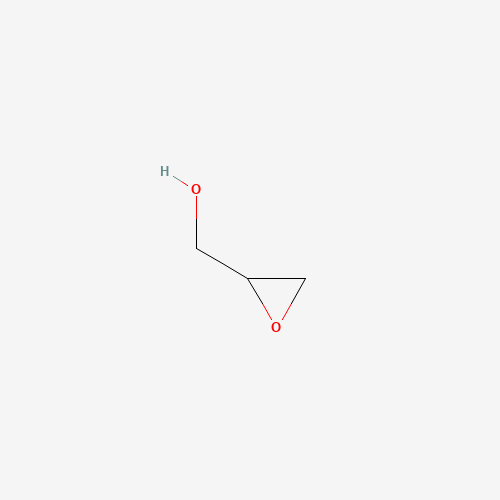
3D-Modell Glycidol, CAS 556-52-5, Summenformel C3H6O2, molare Masse 74.08 g/mol
Über 2,3-epoxypropan-1-ol (CAS 556-52-5)

2,3-epoxypropan-1-ol (CAS 556-52-5) ist eine chemische Verbindung, registriert unter der Nummer CAS 556-52-5, mit der Summenformel C3H6O2, und einer Molmasse von 74.08 g/mol.

Das Molekül enthält 11 Atome, verbunden durch 11 chemische Bindungen. Der vollständige systematische IUPAC-Name dieser Verbindung lautet oxiran-2-ylmethanol. Das interaktive 3D-Modell oben zeigt die räumliche Anordnung der Atome — Sie können es mit der Maus drehen, mit dem Scrollrad zoomen und zwischen den Darstellungsmodi Skelett / Ball & Stick / Space Fill wechseln.

Hinsichtlich der physikalisch-chemischen Eigenschaften der Verteilungskoeffizient logP = -0.9 (negativer Wert, hydrophile Verbindung), polare Oberfläche PSA = 32.8 Ų, 1 Donatoren und 2 Wasserstoffbrücken-Akzeptoren. Diese Parameter sind entscheidend für die Beurteilung der Bioverfügbarkeit und der Wechselwirkung mit Biomolekülen.

Die chemischen Daten für diese Verbindung stammen aus PubChem (NIH NLM NCBI), einer der größten chemischen Datenbanken der Welt. Alle Informationen werden automatisch aktualisiert und um GHS-Gefahrenhinweise gemäß der CLP-Verordnung (EG 1272/2008) ergänzt. Das obige Widget darf für Bildungs-, Forschungs- und kommerzielle Zwecke verwendet werden.

Physikalisch-chemische Eigenschaften
Molecular formulaC3H6O2
Masa molowa74.08 g/mol
IUPACoxiran-2-ylmethanol
SMILESC1C(O1)CO
InChIKeyCTKINSOISVBQLD-UHFFFAOYSA-N
logP (XLogP3)-0.9
PSA32.8 Ų
HBD / HBA1 / 2
PubChem CIDCID 11164 ↗
GHS-Sicherheit

Signal word: Danger

GHS06
GHS06
GHS07
GHS07
GHS08
GHS08

H350 — Może powodować raka

H341 — Podejrzewa się, że powoduje wady genetyczne

? — H360F

H331 — Działa toksycznie w następstwie wdychania

H312 — Działa szkodliwie w kontakcie ze skórą

H302 — Działa szkodliwie po połknięciu

H335 — Może powodować podrażnienie dróg oddechowych

H315 — Działa drażniąco na skórę

H319 — Działa drażniąco na oczy

Wissenschaftliche Literatur

Related literature

10 articles · 1 open access · Sources: PubMed, OpenAlex, Semantic Scholar

Filtry:Eksport:📄 BibTeX📑 RIS📋 EndNote🔧 CSL-JSON

📈 Publication timeline (10 articles)

2000: 1 articles20002002: 1 articles2004: 1 articles2007: 1 articles2011: 2 articles20112017: 1 articles2023: 1 articles2024: 1 articles2025: 1 articles2025

Bar height = number of articles per year. Hover dla szczegółów.

(2000) · IARC monographs on the evaluation of carcinogenic risks to humans
Review$ PaywallPubMed ↗
National Toxicology Program (2011) · Report on carcinogens : carcinogen profiles
$ PaywallPubMed ↗
National Toxicology Program (2002) · Report on carcinogens : carcinogen profiles
$ PaywallPubMed ↗

Dane z PubMed (NIH NLM), OpenAlex (CC0), Semantic Scholar (AI2). AI Summary wygenerowane przez Semantic Scholar TLDR. Artykuły z ikoną wymagają płatnego dostępu.

Synonyme
GLYCIDOL · 556-52-5 · oxiran-2-ylmethanol · Oxiranemethanol · 2,3-Epoxy-1-propanol · Glycide · 1-Propanol, 2,3-epoxy- · Epihydrin alcohol · Oxiranylmethanol · 2-(Hydroxymethyl)oxirane · Glycidyl alcohol · 2,3-Epoxypropanol · 3-Hydroxypropylene oxide · 2-Oxiranemethanol · Epoxypropyl alcohol
Datenquellen
Im Shop kaufen
Verwandte Moleküle
—
📜 Lizenz und ProvenienzMolGod_License_1
Modell
Glycidol · 556-52-5
Lizenz
CC BY 4.0 International (Quellenrechte ungeklärt — noch nicht erteilt)
Namensnennung
MolGod Scientific
Lizenz- und Provenienzeintrag
Glycidol (CAS 556-52-5) →
MolGod-Moleküleintrag
Glycidol →
Quelldaten
PubChem CID 11164 ↗
SHA-256 (STL)
8335de553891cd0e58526dbca75368c603fa9d6ff3bddaaa9b94321cc57a22d7
Wikimedia Commons
noch nicht veröffentlicht
📄 3D-Modell herunterladen (224 KB)

This licence applies to the MolGod-created STL mesh, not automatically to third-party source material.