🖨️ Modèle à imprimer en 3D et licencePREDICTED MODEL · NOT VERIFIEDMolGod_Print3D_1
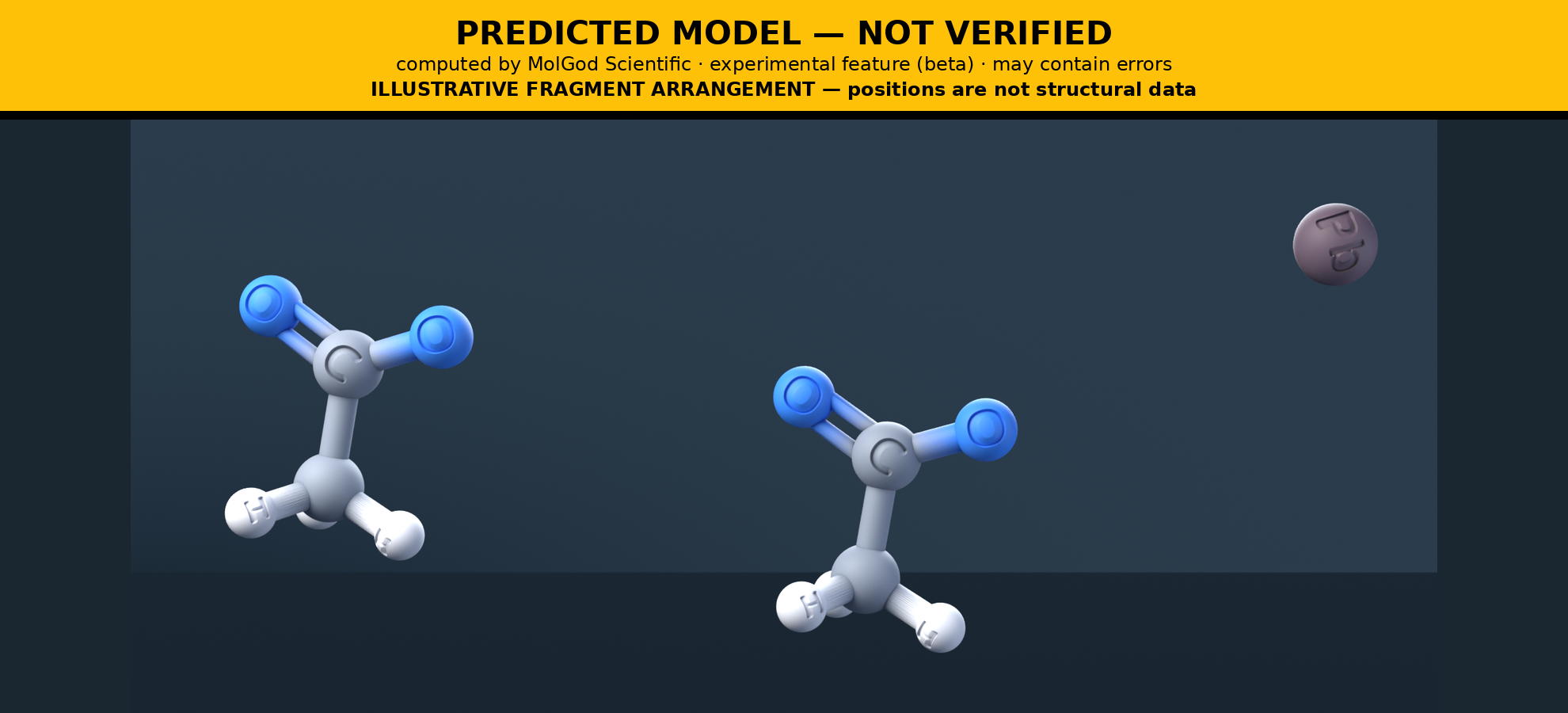
PREDICTED MODEL — NOT VERIFIED computed by MolGod Scientific · experimental feature (beta) · may contain errors ILLUSTRATIVE FRAGMENT ARRANGEMENT — relative positions are not structural data
No source 3-D conformer was available to MolGod for this substance. MolGod Scientific computed this geometry from the structural formula with RDKit 2026.03.6 (ETKDGv3 conformer generation, MMFF94 force-field optimisation; lowest-energy converged conformer of a fixed-seed set). It is not a measured structure, it does not come from PubChem, and it has not been compared with experimental data. It shows one possible conformation.
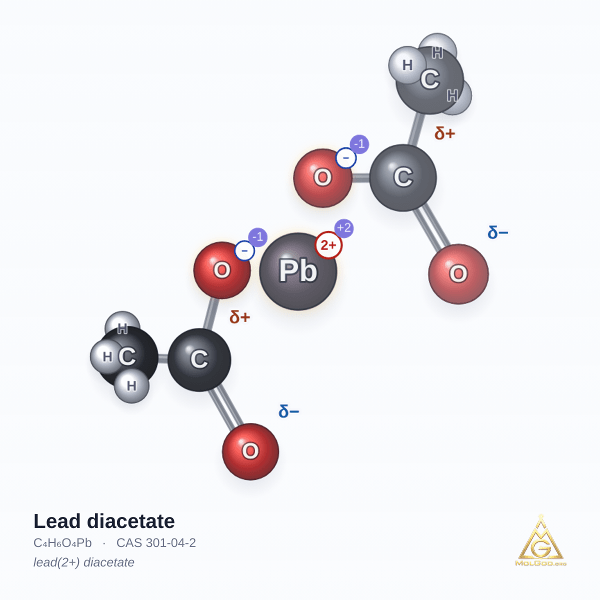
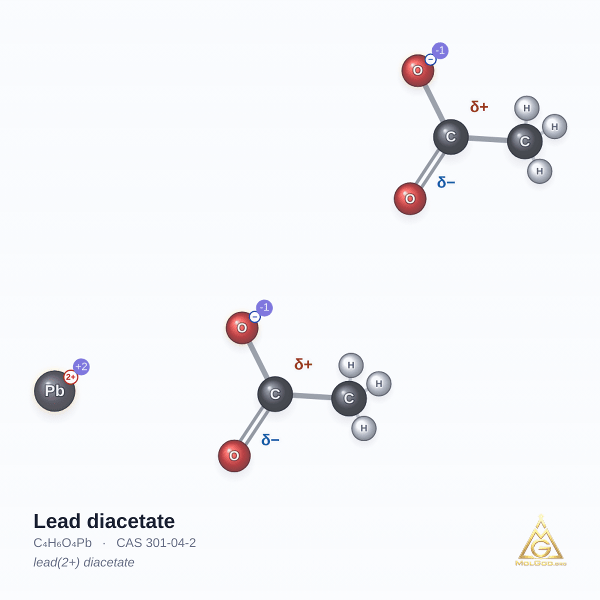
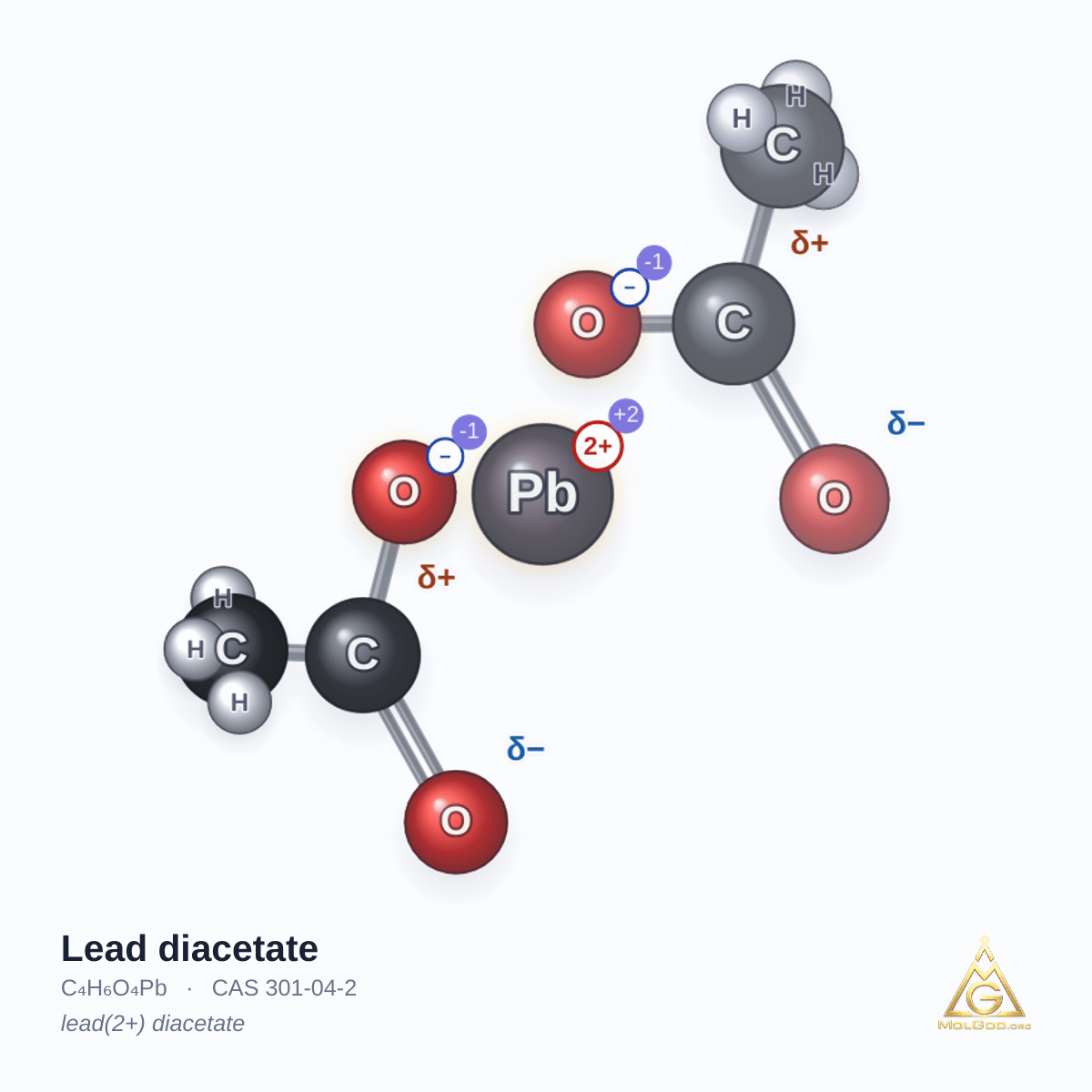
This substance consists of 3 separate components (for example ions). Each component was computed separately; they are arranged radially around a layout anchor for visualisation only (at least 3.0 Å apart). Their relative positions are not a crystal structure, coordination geometry, ionic contacts or any experimentally determined arrangement.
Methods and references
RDKit: Open-source cheminformatics, version 2026.03.6. Zenodo. doi:10.5281/zenodo.22140358 (all versions: doi:10.5281/zenodo.591637)
Riniker S, Landrum GA. Better Informed Distance Geometry: Using What We Know To Improve Conformation Generation. J. Chem. Inf. Model. 2015, 55, 2562-2574. doi:10.1021/acs.jcim.5b00654
Wang S, Witek J, Landrum GA, Riniker S. Improving Conformer Generation for Small Rings and Macrocycles Based on Distance Geometry and Experimental Torsional-Angle Preferences. J. Chem. Inf. Model. 2020, 60, 2044-2058. doi:10.1021/acs.jcim.0c00025
Halgren TA. Merck molecular force field. I. Basis, form, scope, parameterization, and performance of MMFF94. J. Comput. Chem. 1996, 17, 490-519. doi:10.1002/(SICI)1096-987X(199604)17:5/6<490::AID-JCC1>3.0.CO;2-P
Tosco P, Stiefl N, Landrum G. Bringing the MMFF force field to the RDKit: implementation and validation. J. Cheminform. 2014, 6, 37. doi:10.1186/s13321-014-0037-3
Heller SR, McNaught A, Pletnev I, Stein S, Tchekhovskoi D. InChI, the IUPAC International Chemical Identifier. J. Cheminform. 2015, 7, 23. doi:10.1186/s13321-015-0068-4
Bolton EE, Kim S, Bryant SH. PubChem3D: Conformer generation. J. Cheminform. 2011, 3, 4. doi:10.1186/1758-2946-3-4 (cited for contrast: no source 3-D conformer was available to MolGod for this record)
⚠️ Le nom et le logo MolGod.org, y compris le logo en relief sur le socle, sont notre marque. La licence CC BY-SA 4.0 ne couvre pas les marques (section 2(b)(2)). Sans notre autorisation écrite, le logo MolGod.org ne peut pas servir à marquer vos propres produits, ni être utilisé dans la publicité ou d’une manière suggérant notre caution.
À propos de Lead di(acetate) (CAS 301-04-2)
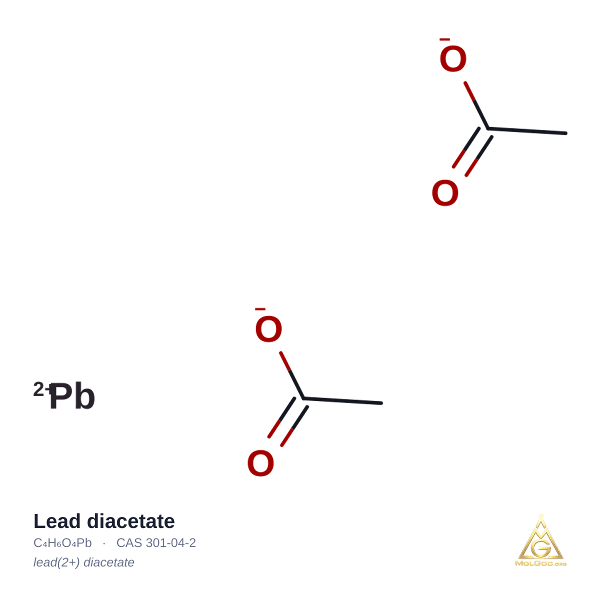
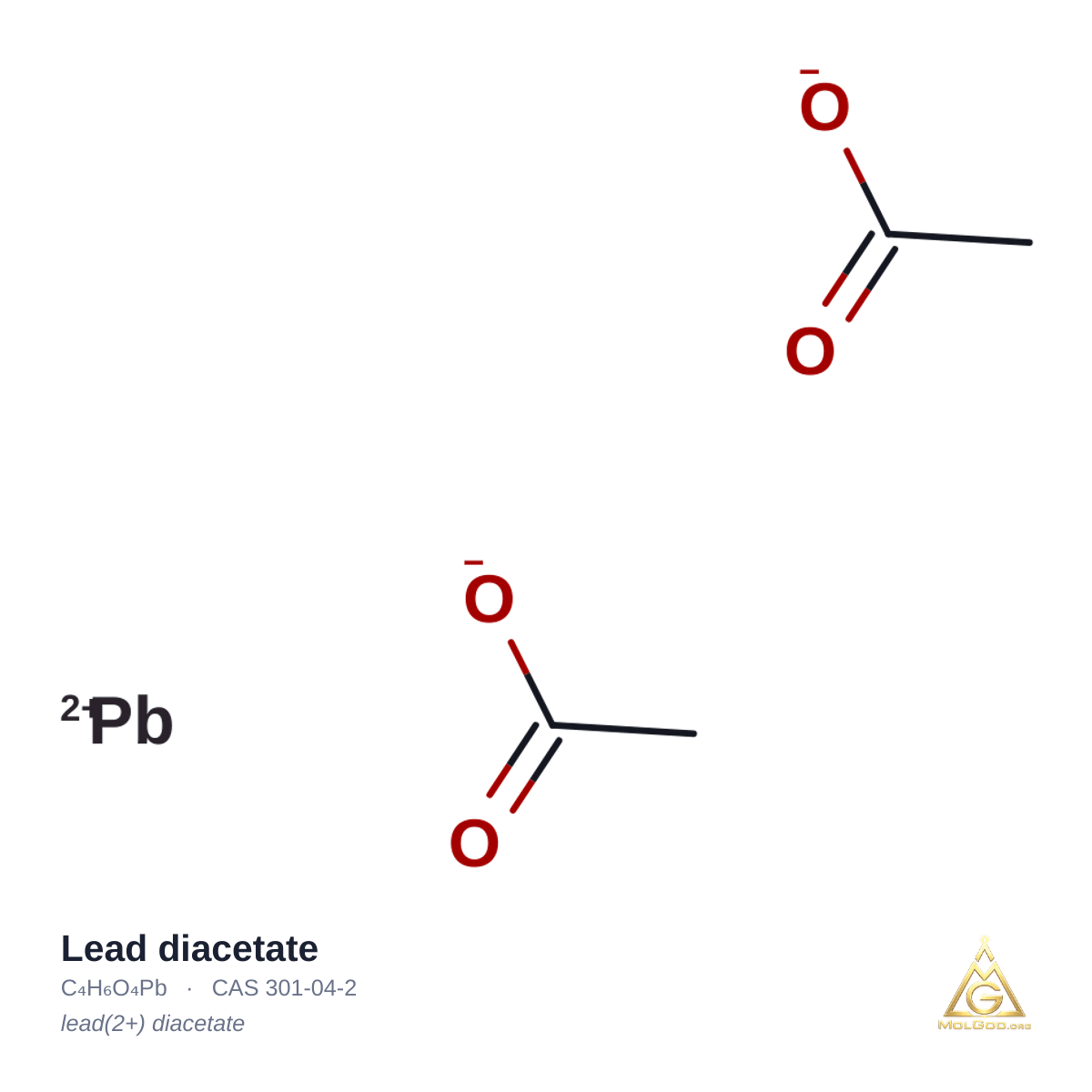
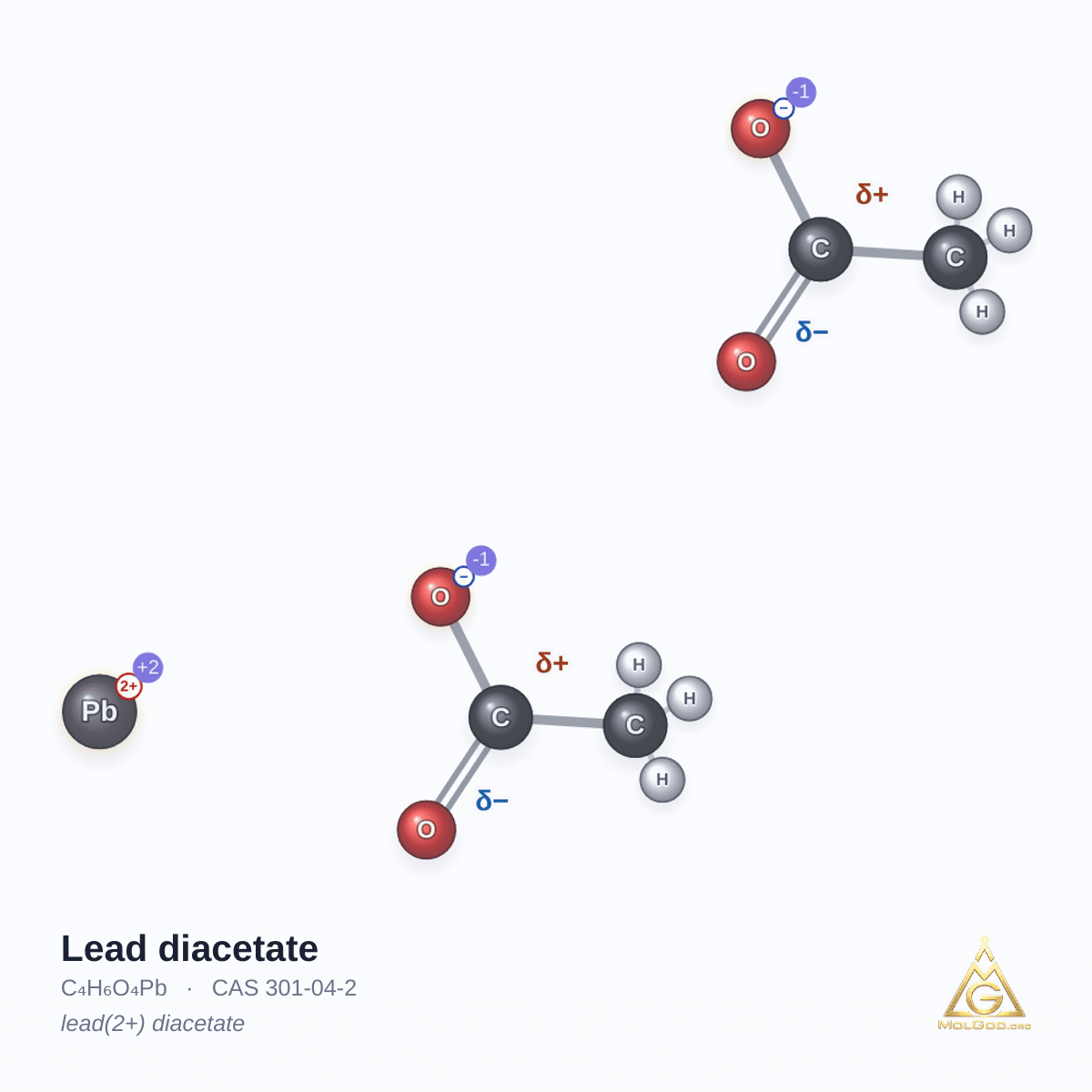
Lead di(acetate) (CAS 301-04-2) est un composé chimique enregistré sous le numéro CAS 301-04-2, de formule brute C₄H₆O₄Pb, et de masse molaire 325 g/mol.
La molécule contient 15 atomes reliés par 12 liaisons chimiques. Le nom systématique IUPAC complet de ce composé est lead(2+) diacetate. Le modèle 3D interactif ci-dessus permet de visualiser l'arrangement spatial des atomes — vous pouvez le faire pivoter à la souris, zoomer avec la molette et basculer entre les modes de visualisation squelette / Ball & Stick / Space Fill.
Du point de vue des propriétés physico-chimiques, surface polaire PSA = 80.3 Ų, 0 donneurs et 4 accepteurs de liaisons hydrogène. Ces paramètres sont essentiels pour évaluer la biodisponibilité et l'interaction avec les biomolécules.
Data from PubMed (NIH NLM), OpenAlex (CC0), Semantic Scholar (AI2). AI Summary generated by Semantic Scholar TLDR. Articles marked with require paid access.
Synonymes
301-04-2 · Lead(II) acetate · Lead diacetate · Lead di(acetate) · lead(2+) diacetate · Acetate de plomb · Acetic acid lead(2+) salt · Acetic acid, lead(2 +) salt · Pb(CH3COO)2 · RefChem:55457 · DTXCID00208948 · CHEBI:31767 · Plumbous acetate · Salt of saturn · Sugar of lead
📜 Licence et provenancePREDICTED MODEL · NOT VERIFIEDMolGod_License_1
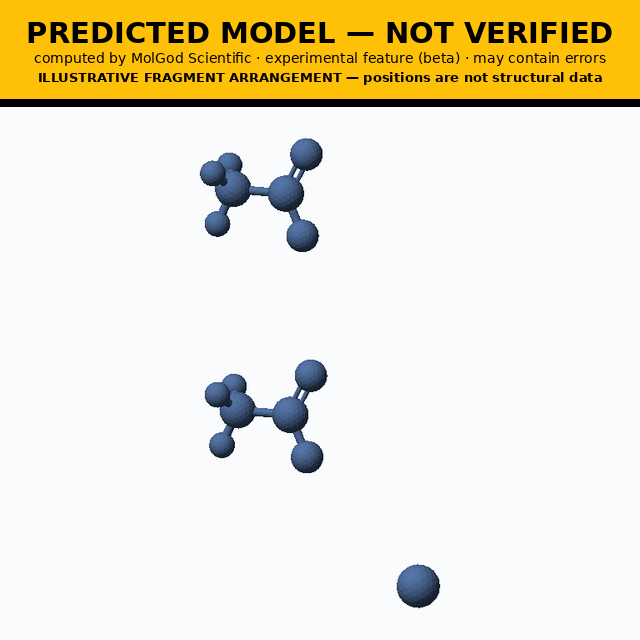
PREDICTED MODEL — NOT VERIFIED computed by MolGod Scientific · experimental feature (beta) · may contain errors ILLUSTRATIVE FRAGMENT ARRANGEMENT — relative positions are not structural data
No source 3-D conformer was available to MolGod for this substance. MolGod Scientific computed this geometry from the structural formula with RDKit 2026.03.6 (ETKDGv3 conformer generation, MMFF94 force-field optimisation; lowest-energy converged conformer of a fixed-seed set). It is not a measured structure, it does not come from PubChem, and it has not been compared with experimental data. It shows one possible conformation.
This substance consists of 3 separate components (for example ions). Each component was computed separately; they are arranged radially around a layout anchor for visualisation only (at least 3.0 Å apart). Their relative positions are not a crystal structure, coordination geometry, ionic contacts or any experimentally determined arrangement.
Methods and references
RDKit: Open-source cheminformatics, version 2026.03.6. Zenodo. doi:10.5281/zenodo.22140358 (all versions: doi:10.5281/zenodo.591637)
Riniker S, Landrum GA. Better Informed Distance Geometry: Using What We Know To Improve Conformation Generation. J. Chem. Inf. Model. 2015, 55, 2562-2574. doi:10.1021/acs.jcim.5b00654
Wang S, Witek J, Landrum GA, Riniker S. Improving Conformer Generation for Small Rings and Macrocycles Based on Distance Geometry and Experimental Torsional-Angle Preferences. J. Chem. Inf. Model. 2020, 60, 2044-2058. doi:10.1021/acs.jcim.0c00025
Halgren TA. Merck molecular force field. I. Basis, form, scope, parameterization, and performance of MMFF94. J. Comput. Chem. 1996, 17, 490-519. doi:10.1002/(SICI)1096-987X(199604)17:5/6<490::AID-JCC1>3.0.CO;2-P
Tosco P, Stiefl N, Landrum G. Bringing the MMFF force field to the RDKit: implementation and validation. J. Cheminform. 2014, 6, 37. doi:10.1186/s13321-014-0037-3
Heller SR, McNaught A, Pletnev I, Stein S, Tchekhovskoi D. InChI, the IUPAC International Chemical Identifier. J. Cheminform. 2015, 7, 23. doi:10.1186/s13321-015-0068-4
Bolton EE, Kim S, Bryant SH. PubChem3D: Conformer generation. J. Cheminform. 2011, 3, 4. doi:10.1186/1758-2946-3-4 (cited for contrast: no source 3-D conformer was available to MolGod for this record)
Modèle de molécule gratuit à imprimer Téléchargez le modèle, imprimez-le et utilisez-le dans l’enseignement. Lorsque vous publiez une photo, un support ou une adaptation, la licence CC BY-SA 4.0 International exige de citer « MolGod Scientific » comme auteur du modèle, d’indiquer un lien vers l’original et vers le texte de la licence, de signaler les modifications apportées et de partager les adaptations sous la même licence. Un texte d’attribution prêt à l’emploi figure dans cette section. Sans inscription, sans frais et sans obligation de laisser un avis.
Cette licence s'applique au maillage STL créé par MolGod, et non automatiquement aux matériaux sources de tiers.


 require paid access.