
Capsaicin (CAS 404-86-4)
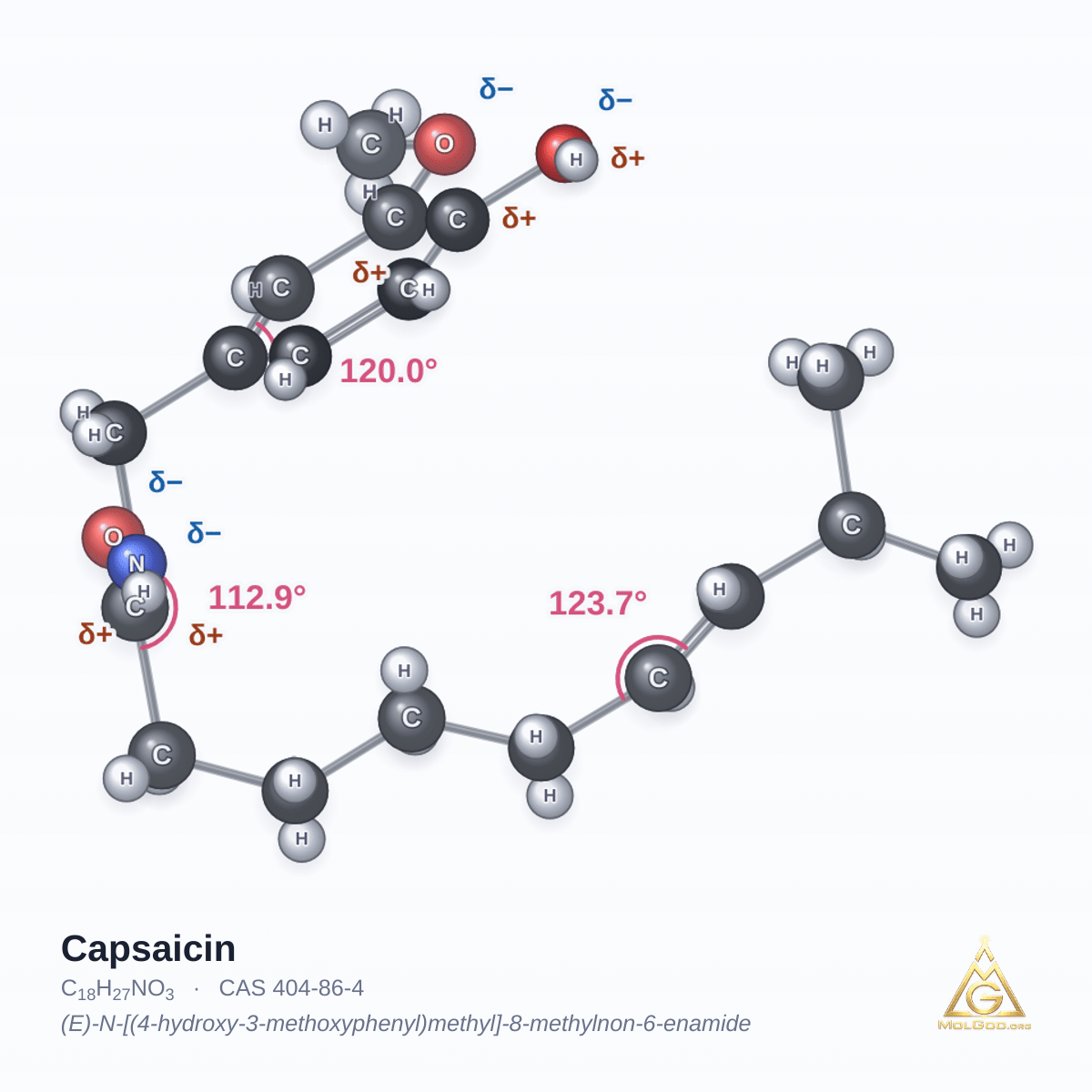
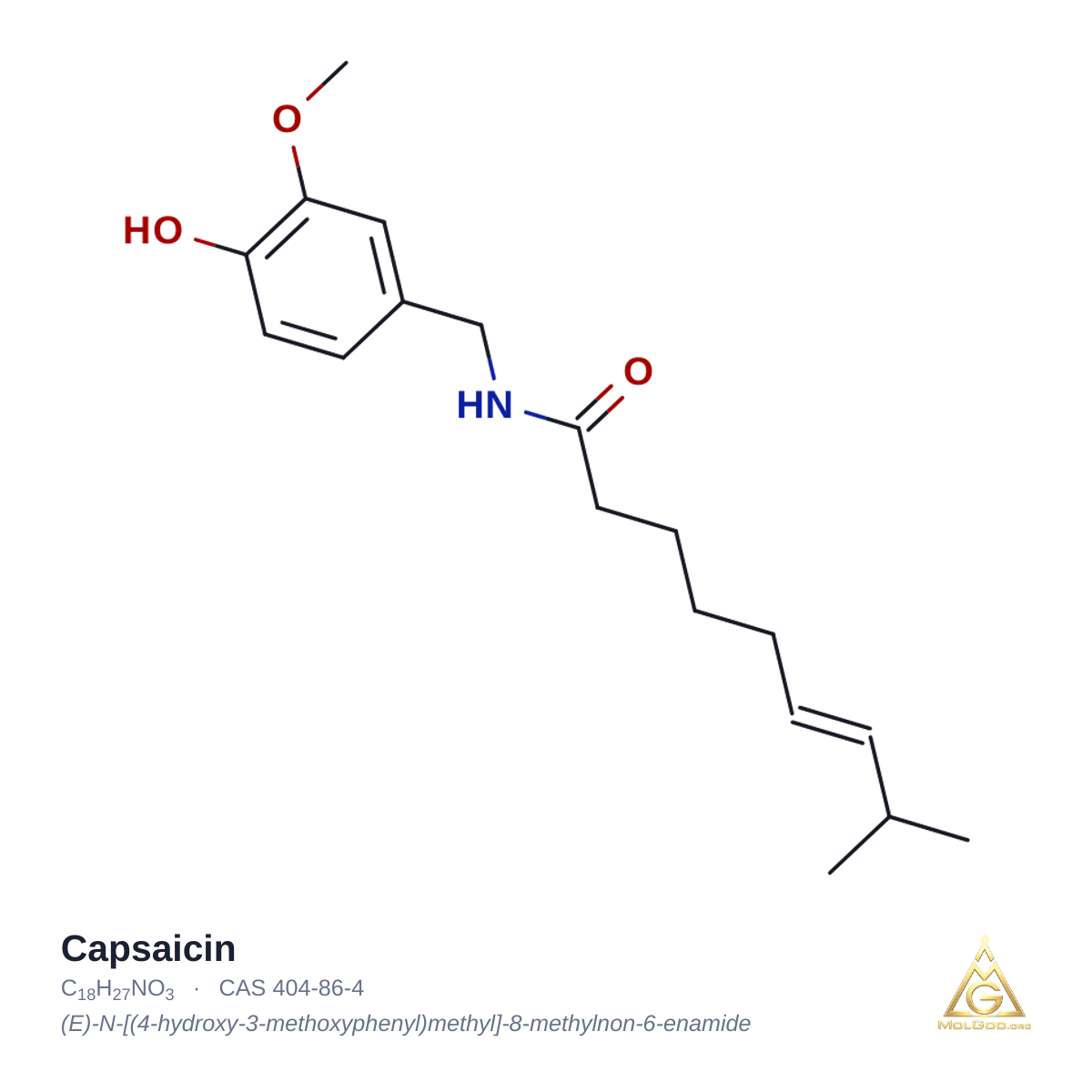
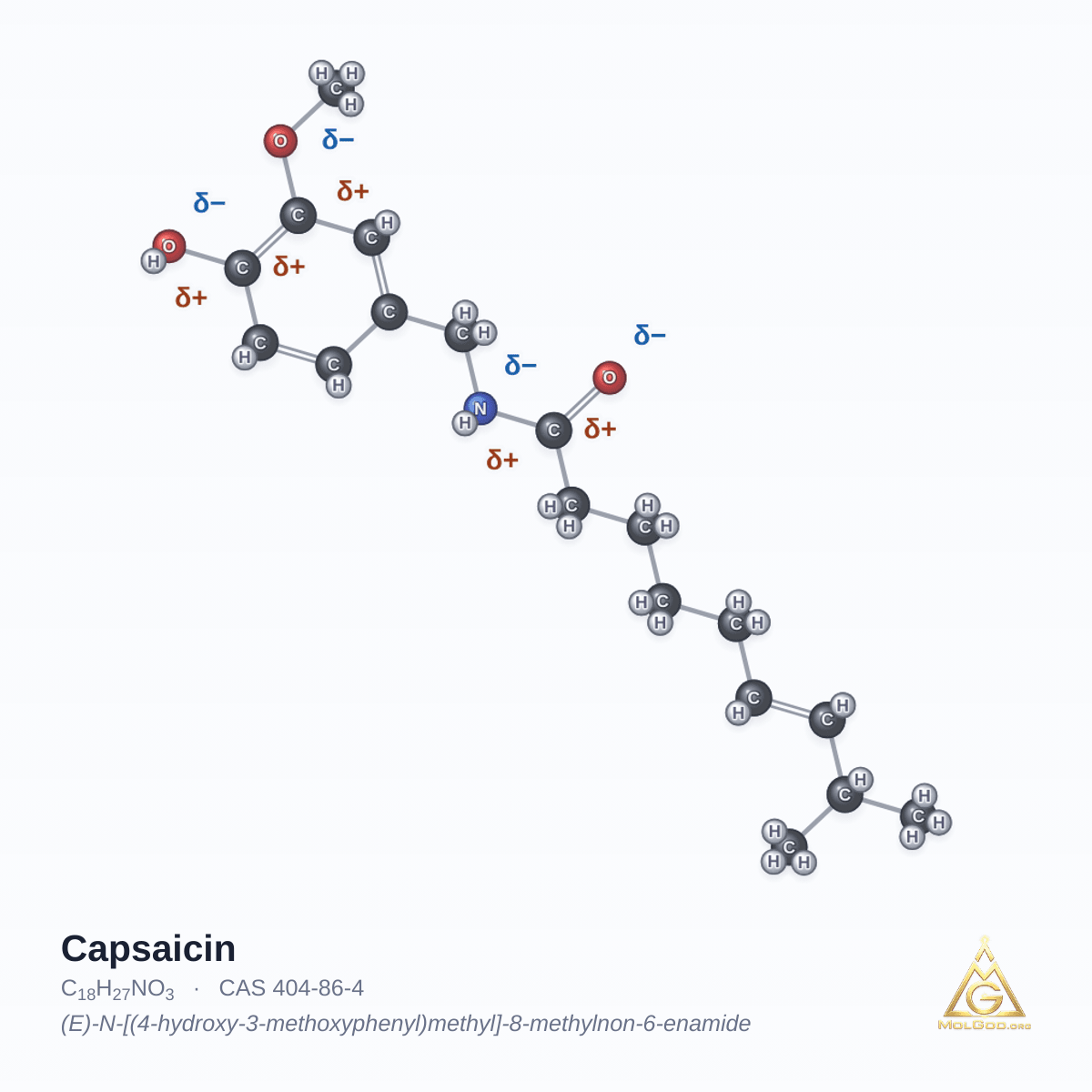
Capsaicin
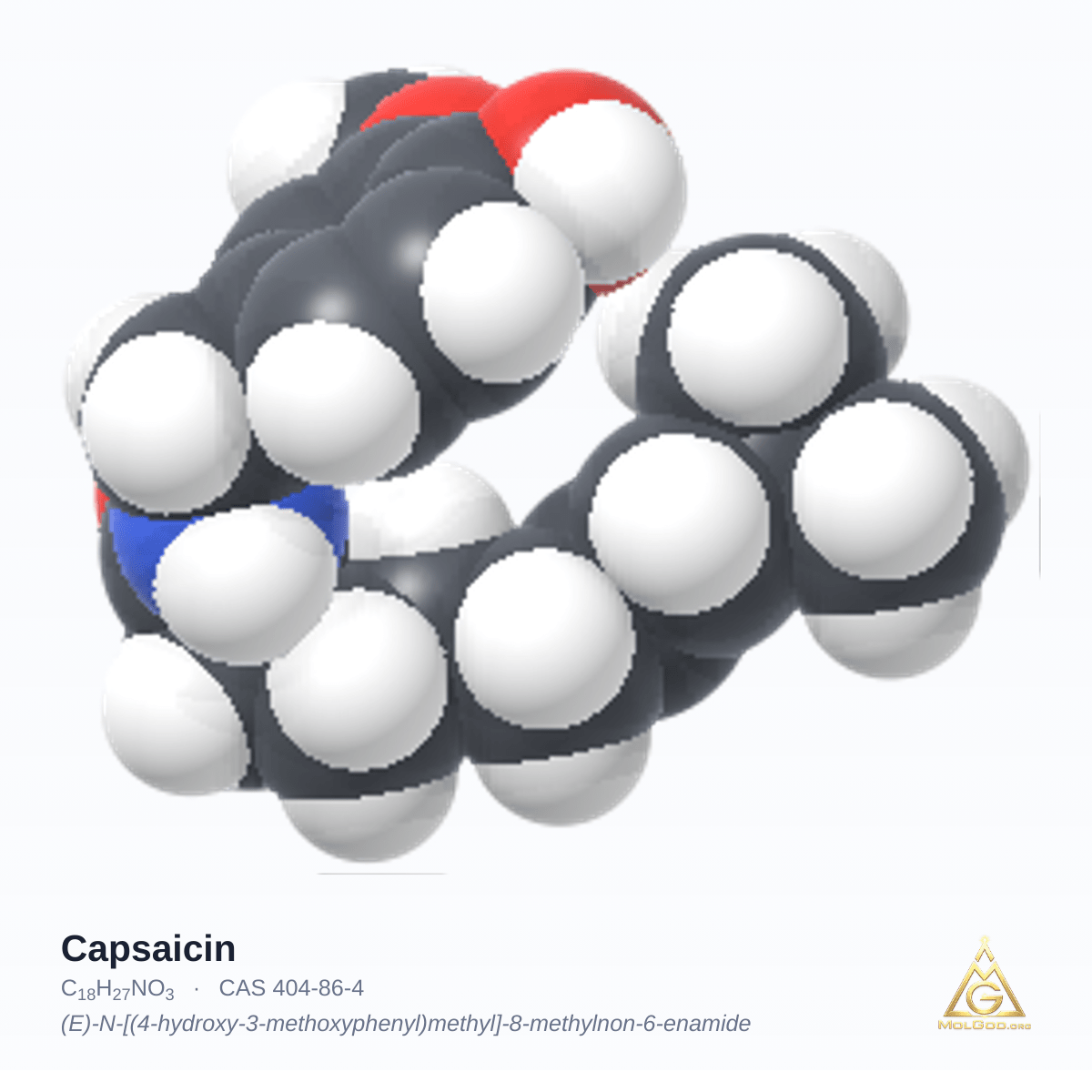
CAS 404-86-4 · C18H27NO3 · MW 305.4 g/mol
Capsaicin (CAS 404-86-4) — full MolGod record →
Safety data sheet with all sections: GHS classification, transport, regulatory status, spectra, 3D model and literature.
Safety data sheet with all sections: GHS classification, transport, regulatory status, spectra, 3D model and literature.
Full record: Capsaicin (CAS 404-86-4) — Safety Data Sheet →
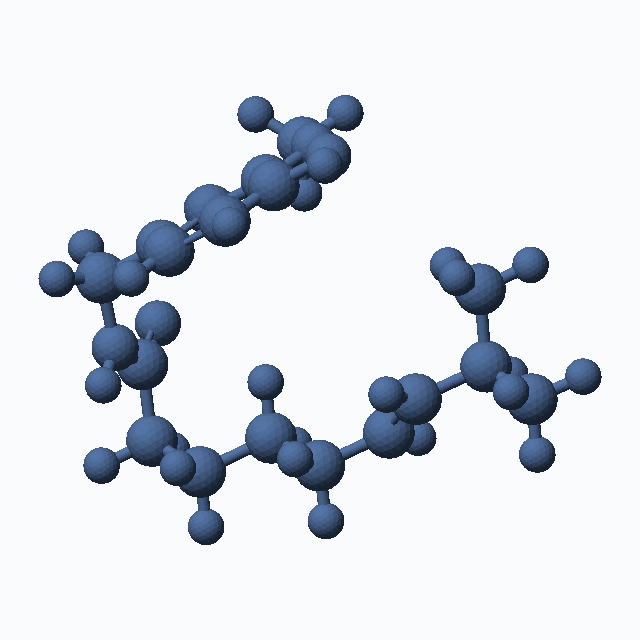
正在加载分子...

模型视图
© 2026 MolGod.org。保留所有权利。 · 图片版权
科学文献
Related literature
8 articles · 4 open access · Sources: PubMed, OpenAlex, Semantic Scholar
📈 发表时间线(文章数:8)
柱高 = 当年的文章数量。将鼠标悬停在柱上可查看详情。

H. Sumano-López, Lilia Gutiérrez-Olvera, Rita Aguilera-Jiménez et al. (2007) · Arzneimittelforschung
AI Summary
Results revealed that capsaicin increased ciprofloxacin bioavailability by approximately 70% in groups receiving preparations containing Capsaicin at a rate of 0.01, 0.1 and 0.5%.
Results revealed that capsaicin increased ciprofloxacin bioavailability by approximately 70% in groups receiving preparations containing Capsaicin at a rate of 0.01, 0.1 and 0.5%.
Xiao-Yu Chen, Xun Sun, Ke Ren et al. (2010) · Arzneimittelforschung
AI Summary
The present results indicate the potential of utilizing HP-β-CD to improve the subcutaneous absorption and bioavailability of capsaicin.
The present results indicate the potential of utilizing HP-β-CD to improve the subcutaneous absorption and bioavailability of capsaicin.
R. Wolf, C. Huschka, K. Raith et al. (1999)
AI Summary
An HPLC electrospray mass spectrometric method for the specific and sensitive quantification of Capsaicin and Dihydrocapsaicin in extracts from human skin is presented and the fragmentation pattern in the positive mode is explained.
An HPLC electrospray mass spectrometric method for the specific and sensitive quantification of Capsaicin and Dihydrocapsaicin in extracts from human skin is presented and the fragmentation pattern in the positive mode is explained.
Wang J, Zhang L, Zheng K (2024) · Clinical reviews in allergy & immunology
Yu H, Chen J, Wang F et al. (2025) · Advanced science (Weinheim, Baden-Wurttemberg, Germany)
🔓
Wang Y, Wu Z, Yuan J et al. (2025) · Nature communications
Li Y, Wang H, Zhang D et al. (2026) · Nature communications
Gan J, Sun L, Tang W et al. (2025) · Journal of nanobiotechnology
Data from PubMed (NIH NLM), OpenAlex (CC0), Semantic Scholar (AI2). AI Summary generated by Semantic Scholar TLDR. Articles marked with require paid access.
