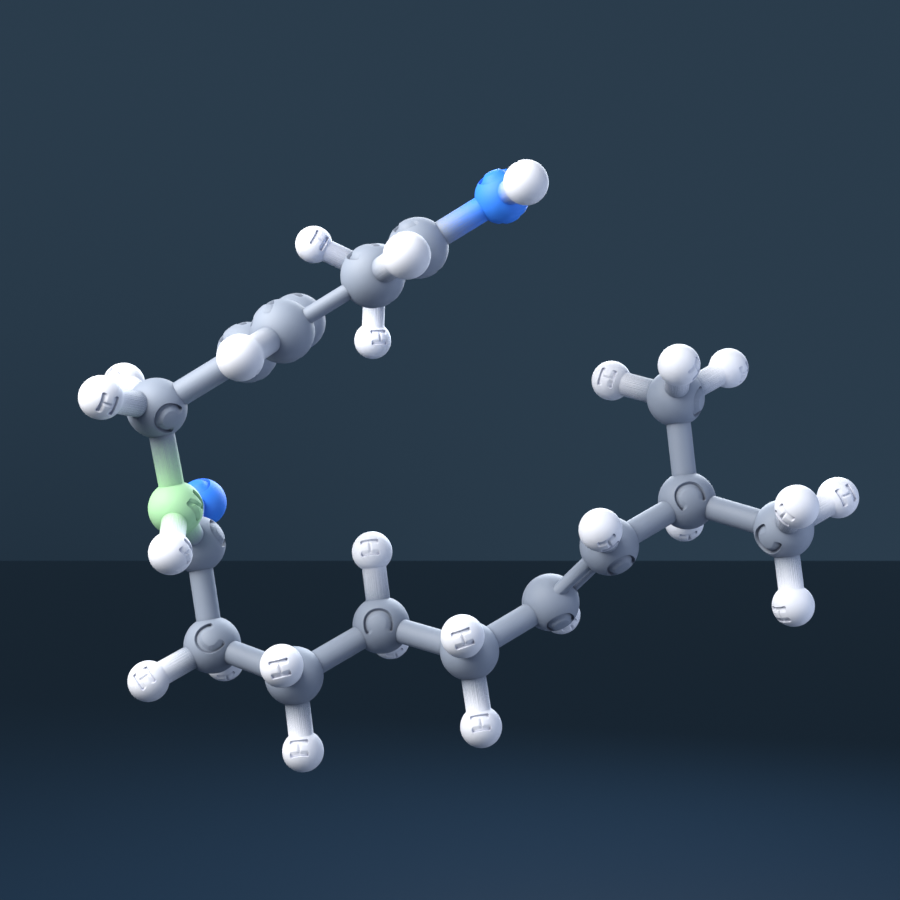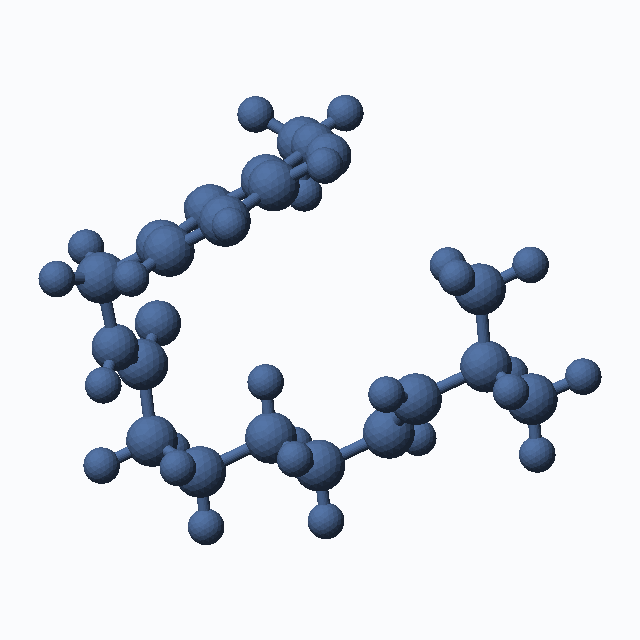
Capsaicin (CAS 404-86-4)
Capsaicin
CAS 404-86-4 · C18H27NO3 · MW 305.4 g/mol
Caricamento molecola...

Letteratura scientifica
Related literature
8 articles · 4 open access · Sources: PubMed, OpenAlex, Semantic Scholar
📈 Publication timeline (8 articles)
Bar height = number of articles per year. Hover dla szczegółów.

H. Sumano-López, Lilia Gutiérrez-Olvera, Rita Aguilera-Jiménez et al. (2007) · Arzneimittelforschung
AI Summary
Results revealed that capsaicin increased ciprofloxacin bioavailability by approximately 70% in groups receiving preparations containing Capsaicin at a rate of 0.01, 0.1 and 0.5%.
Results revealed that capsaicin increased ciprofloxacin bioavailability by approximately 70% in groups receiving preparations containing Capsaicin at a rate of 0.01, 0.1 and 0.5%.
Xiao-Yu Chen, Xun Sun, Ke Ren et al. (2010) · Arzneimittelforschung
AI Summary
The present results indicate the potential of utilizing HP-β-CD to improve the subcutaneous absorption and bioavailability of capsaicin.
The present results indicate the potential of utilizing HP-β-CD to improve the subcutaneous absorption and bioavailability of capsaicin.
R. Wolf, C. Huschka, K. Raith et al. (1999)
AI Summary
An HPLC electrospray mass spectrometric method for the specific and sensitive quantification of Capsaicin and Dihydrocapsaicin in extracts from human skin is presented and the fragmentation pattern in the positive mode is explained.
An HPLC electrospray mass spectrometric method for the specific and sensitive quantification of Capsaicin and Dihydrocapsaicin in extracts from human skin is presented and the fragmentation pattern in the positive mode is explained.
Wang J, Zhang L, Zheng K (2024) · Clinical reviews in allergy & immunology
Yu H, Chen J, Wang F et al. (2025) · Advanced science (Weinheim, Baden-Wurttemberg, Germany)
🔓
Wang Y, Wu Z, Yuan J et al. (2025) · Nature communications
Li Y, Wang H, Zhang D et al. (2026) · Nature communications
Gan J, Sun L, Tang W et al. (2025) · Journal of nanobiotechnology
Dane z PubMed (NIH NLM), OpenAlex (CC0), Semantic Scholar (AI2). AI Summary wygenerowane przez Semantic Scholar TLDR. Artykuły z ikoną wymagają płatnego dostępu.