🖨️ 3D-printmodel en licentiePREDICTED MODEL · NOT VERIFIEDMolGod_Print3D_1
PREDICTED MODEL — NOT VERIFIED computed by MolGod Scientific · experimental feature (beta) · may contain errors ILLUSTRATIVE FRAGMENT ARRANGEMENT — relative positions are not structural data
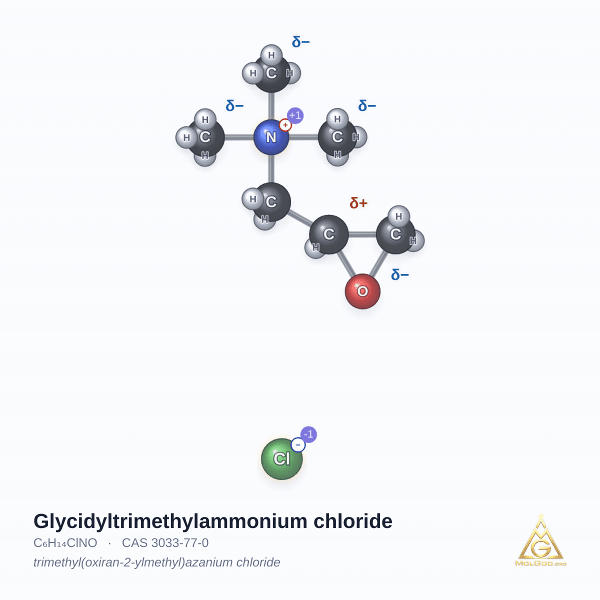
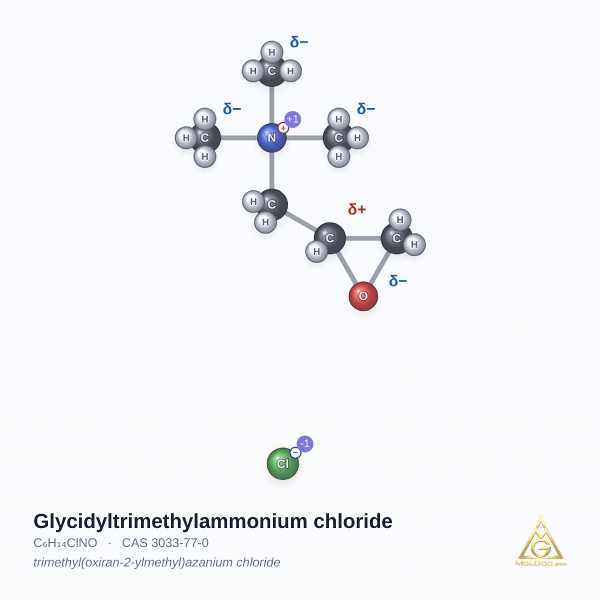
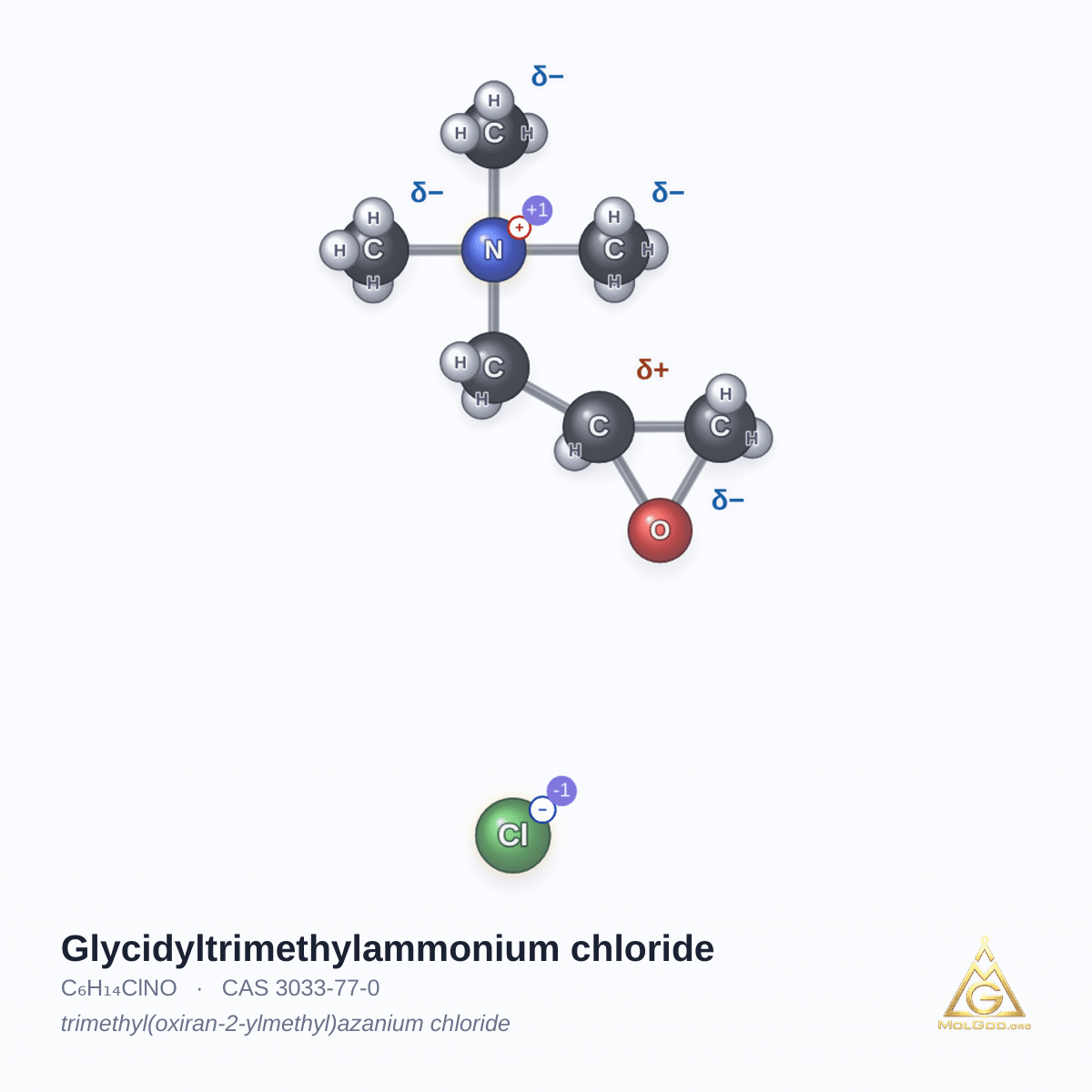
No source 3-D conformer was available to MolGod for this substance. MolGod Scientific computed this geometry from the structural formula with RDKit 2026.03.6 (ETKDGv3 conformer generation, MMFF94 force-field optimisation; lowest-energy converged conformer of a fixed-seed set). It is not a measured structure, it does not come from PubChem, and it has not been compared with experimental data. It shows one possible conformation.
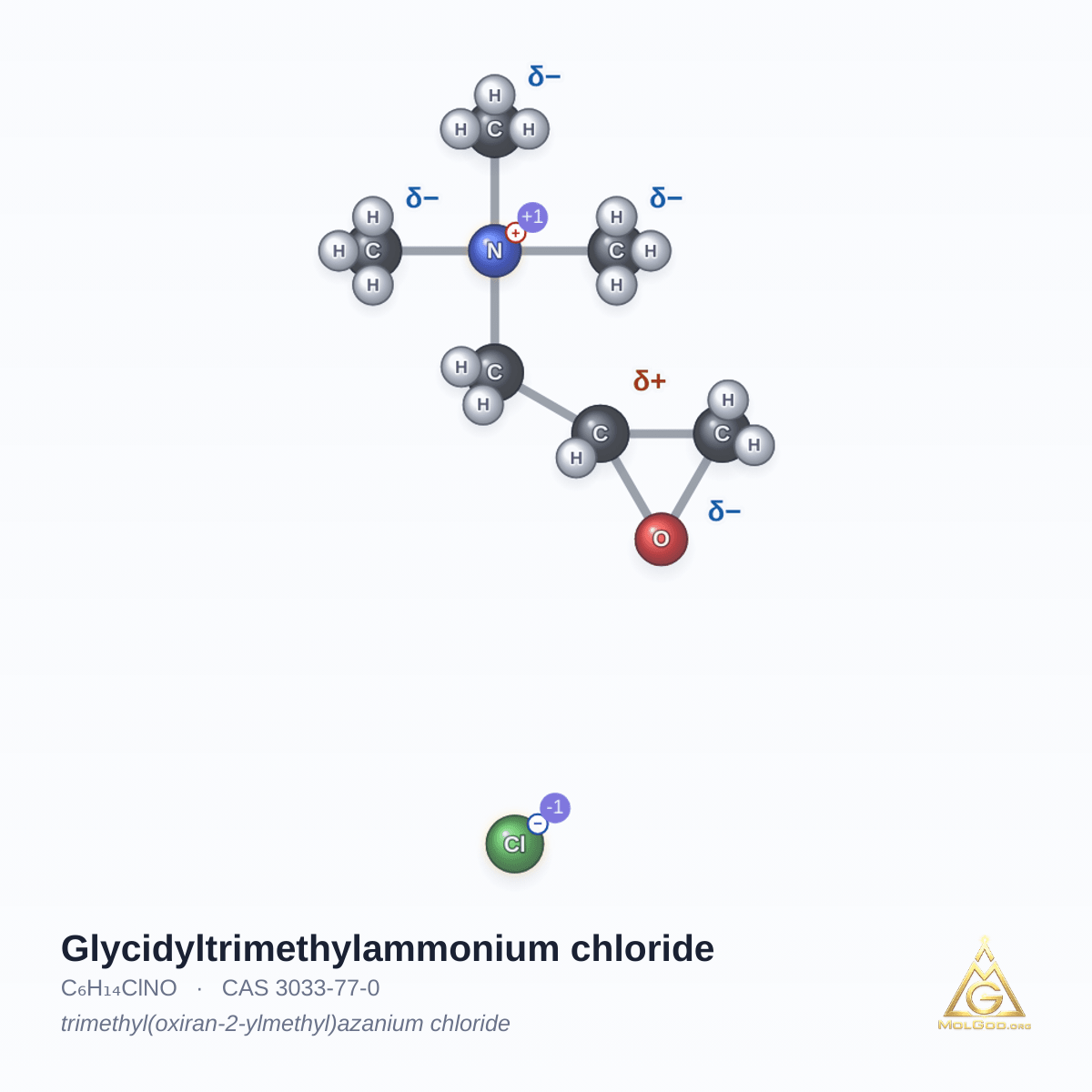
This substance consists of 2 separate components (for example ions). Each component was computed separately; they are arranged radially around a layout anchor for visualisation only (at least 3.0 Å apart). Their relative positions are not a crystal structure, coordination geometry, ionic contacts or any experimentally determined arrangement.
1 stereo element(s) undefined in the source record (1 stereocentre(s), 0 double-bond E/Z) were assigned arbitrarily; the model shows one stereoisomer only, which may not be the naturally occurring or commercial form.
Methods and references
RDKit: Open-source cheminformatics, version 2026.03.6. Zenodo. doi:10.5281/zenodo.22140358 (all versions: doi:10.5281/zenodo.591637)
Riniker S, Landrum GA. Better Informed Distance Geometry: Using What We Know To Improve Conformation Generation. J. Chem. Inf. Model. 2015, 55, 2562-2574. doi:10.1021/acs.jcim.5b00654
Wang S, Witek J, Landrum GA, Riniker S. Improving Conformer Generation for Small Rings and Macrocycles Based on Distance Geometry and Experimental Torsional-Angle Preferences. J. Chem. Inf. Model. 2020, 60, 2044-2058. doi:10.1021/acs.jcim.0c00025
Halgren TA. Merck molecular force field. I. Basis, form, scope, parameterization, and performance of MMFF94. J. Comput. Chem. 1996, 17, 490-519. doi:10.1002/(SICI)1096-987X(199604)17:5/6<490::AID-JCC1>3.0.CO;2-P
Tosco P, Stiefl N, Landrum G. Bringing the MMFF force field to the RDKit: implementation and validation. J. Cheminform. 2014, 6, 37. doi:10.1186/s13321-014-0037-3
Heller SR, McNaught A, Pletnev I, Stein S, Tchekhovskoi D. InChI, the IUPAC International Chemical Identifier. J. Cheminform. 2015, 7, 23. doi:10.1186/s13321-015-0068-4
Bolton EE, Kim S, Bryant SH. PubChem3D: Conformer generation. J. Cheminform. 2011, 3, 4. doi:10.1186/1758-2946-3-4 (cited for contrast: no source 3-D conformer was available to MolGod for this record)
⚠️ De naam en het logo MolGod.org, ook het verhoogde logo op de sokkel, zijn ons handelsmerk. De licentie CC BY-SA 4.0 dekt geen handelsmerken (sectie 2(b)(2)). Zonder onze schriftelijke toestemming mag het logo MolGod.org niet worden gebruikt om eigen producten te merken, in reclame of op een manier die onze steun suggereert.
Over 2,3-epoxypropyltrimethylammonium chloride (CAS 3033-77-0)
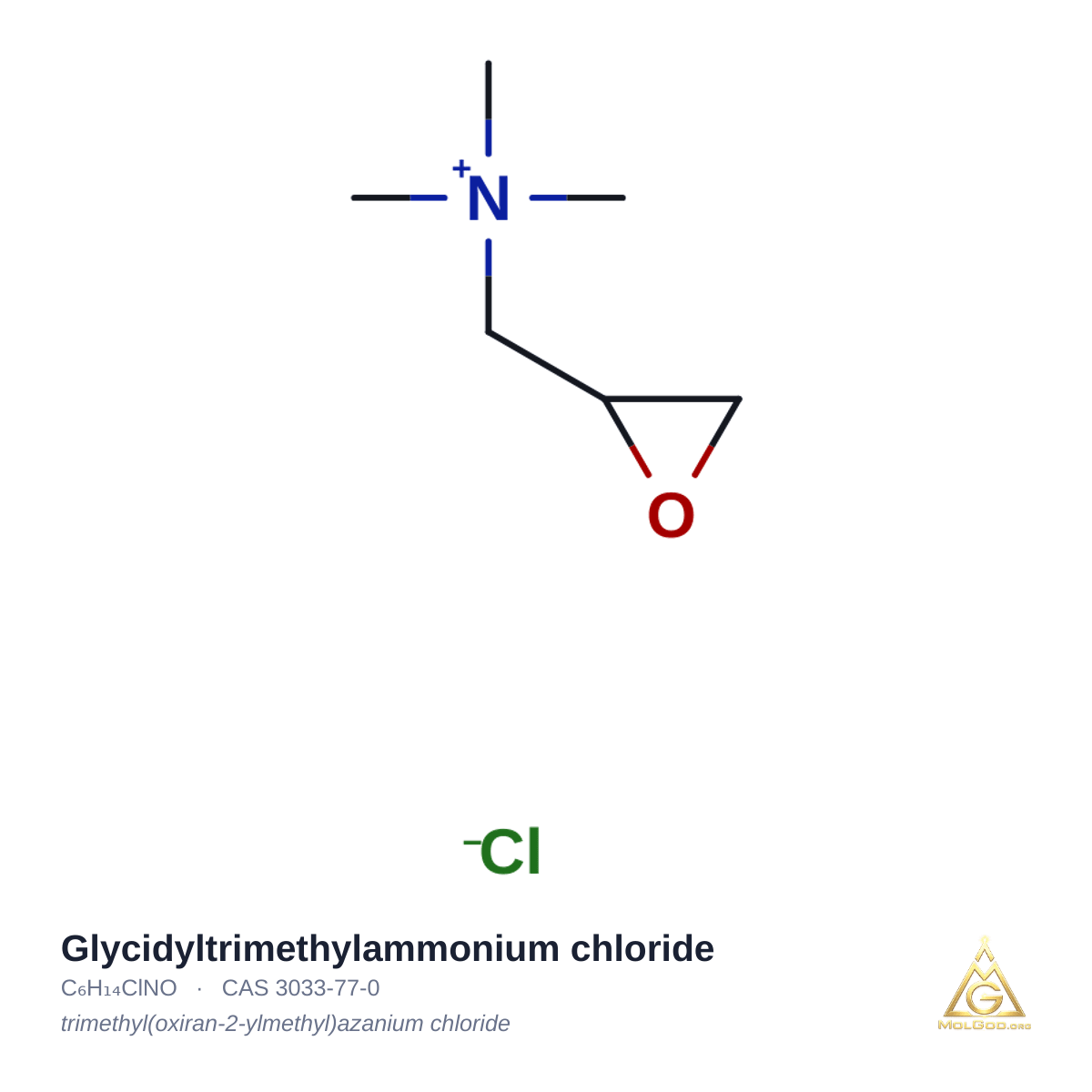
2,3-epoxypropyltrimethylammonium chloride (CAS 3033-77-0) is een chemische verbinding, geregistreerd onder nummer CAS 3033-77-0, met de brutoformule C₆H₁₄ClNO, en een molaire massa van 151.63 g/mol.
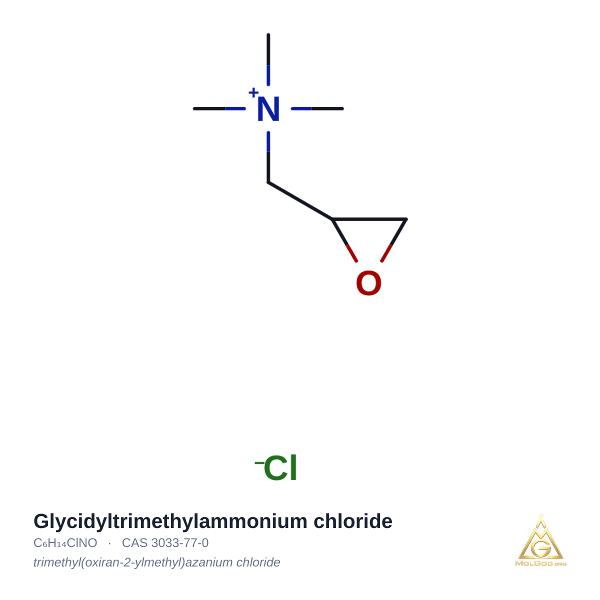
Het molecuul bevat 23 atomen verbonden door 22 chemische bindingen. De volledige systematische IUPAC-naam van deze verbinding is trimethyl(oxiran-2-ylmethyl)azanium chloride. Het interactieve 3D-model hierboven toont de ruimtelijke rangschikking van de atomen — u kunt het met de muis draaien, met het scrollwiel inzoomen en schakelen tussen de weergavemodi skelet / Ball & Stick / Space Fill.
Wat de fysisch-chemische eigenschappen betreft, polair oppervlak PSA = 12.5 Ų, 0 donoren en 2 waterstofbrugacceptoren. Deze parameters zijn cruciaal bij de beoordeling van de biobeschikbaarheid en de interactie met biomoleculen.
Data from PubMed (NIH NLM), OpenAlex (CC0), Semantic Scholar (AI2). AI Summary generated by Semantic Scholar TLDR. Articles marked with require paid access.
📜 Licentie en herkomstPREDICTED MODEL · NOT VERIFIEDMolGod_License_1
PREDICTED MODEL — NOT VERIFIED computed by MolGod Scientific · experimental feature (beta) · may contain errors ILLUSTRATIVE FRAGMENT ARRANGEMENT — relative positions are not structural data
No source 3-D conformer was available to MolGod for this substance. MolGod Scientific computed this geometry from the structural formula with RDKit 2026.03.6 (ETKDGv3 conformer generation, MMFF94 force-field optimisation; lowest-energy converged conformer of a fixed-seed set). It is not a measured structure, it does not come from PubChem, and it has not been compared with experimental data. It shows one possible conformation.
This substance consists of 2 separate components (for example ions). Each component was computed separately; they are arranged radially around a layout anchor for visualisation only (at least 3.0 Å apart). Their relative positions are not a crystal structure, coordination geometry, ionic contacts or any experimentally determined arrangement.
1 stereo element(s) undefined in the source record (1 stereocentre(s), 0 double-bond E/Z) were assigned arbitrarily; the model shows one stereoisomer only, which may not be the naturally occurring or commercial form.
Methods and references
RDKit: Open-source cheminformatics, version 2026.03.6. Zenodo. doi:10.5281/zenodo.22140358 (all versions: doi:10.5281/zenodo.591637)
Riniker S, Landrum GA. Better Informed Distance Geometry: Using What We Know To Improve Conformation Generation. J. Chem. Inf. Model. 2015, 55, 2562-2574. doi:10.1021/acs.jcim.5b00654
Wang S, Witek J, Landrum GA, Riniker S. Improving Conformer Generation for Small Rings and Macrocycles Based on Distance Geometry and Experimental Torsional-Angle Preferences. J. Chem. Inf. Model. 2020, 60, 2044-2058. doi:10.1021/acs.jcim.0c00025
Halgren TA. Merck molecular force field. I. Basis, form, scope, parameterization, and performance of MMFF94. J. Comput. Chem. 1996, 17, 490-519. doi:10.1002/(SICI)1096-987X(199604)17:5/6<490::AID-JCC1>3.0.CO;2-P
Tosco P, Stiefl N, Landrum G. Bringing the MMFF force field to the RDKit: implementation and validation. J. Cheminform. 2014, 6, 37. doi:10.1186/s13321-014-0037-3
Heller SR, McNaught A, Pletnev I, Stein S, Tchekhovskoi D. InChI, the IUPAC International Chemical Identifier. J. Cheminform. 2015, 7, 23. doi:10.1186/s13321-015-0068-4
Bolton EE, Kim S, Bryant SH. PubChem3D: Conformer generation. J. Cheminform. 2011, 3, 4. doi:10.1186/1758-2946-3-4 (cited for contrast: no source 3-D conformer was available to MolGod for this record)
Gratis molecuulmodel om te printen Download het model, print het en gebruik het in het onderwijs. Als je een foto, lesmateriaal of bewerking publiceert, vereist de licentie CC BY-SA 4.0 International dat je „MolGod Scientific” vermeldt als maker van het model, linkt naar het origineel en naar de licentietekst, aangeeft wat je hebt gewijzigd en bewerkingen onder dezelfde licentie deelt. Een kant-en-klare naamsvermelding vind je in deze sectie. Geen registratie, geen kosten en geen verplichting om een beoordeling te geven.
Deze licentie geldt voor de door MolGod gemaakte STL-mesh, niet automatisch voor bronmateriaal van derden.




 require paid access.