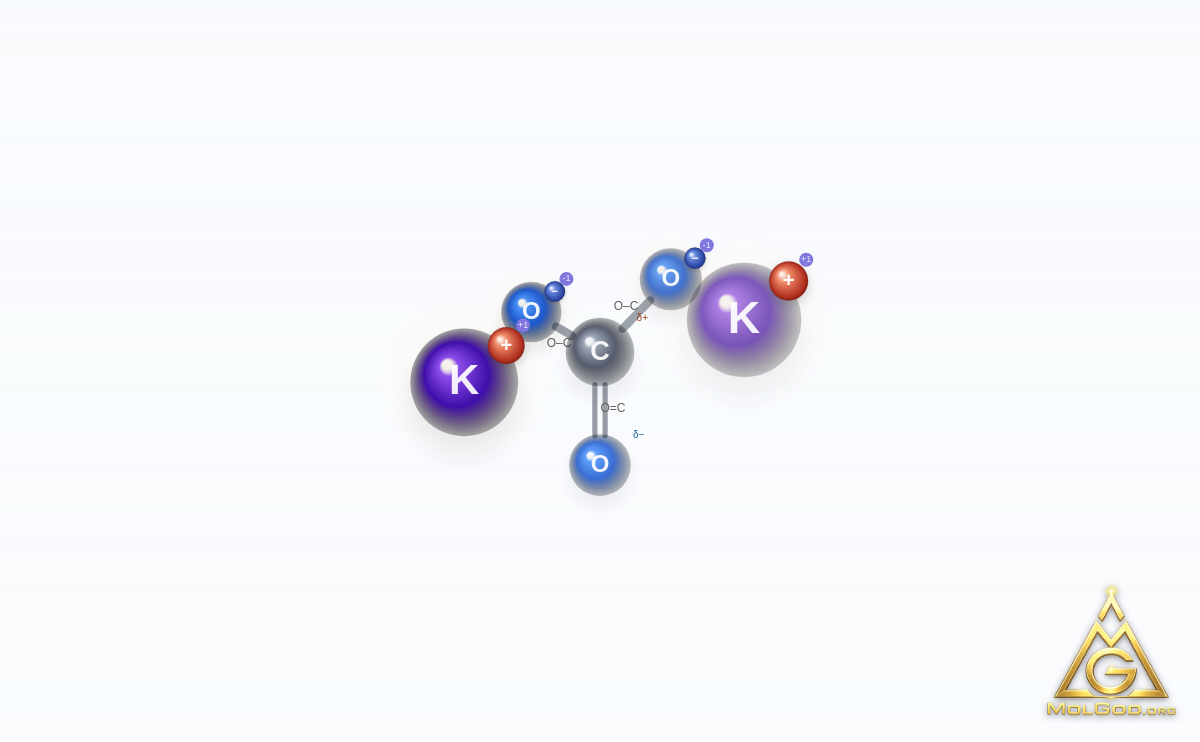
Potassium Carbonate is a chemical compound registered under number CAS 584-08-7, with the molecular formula CK₂O₃, and a molar mass of 138.205 g/mol.
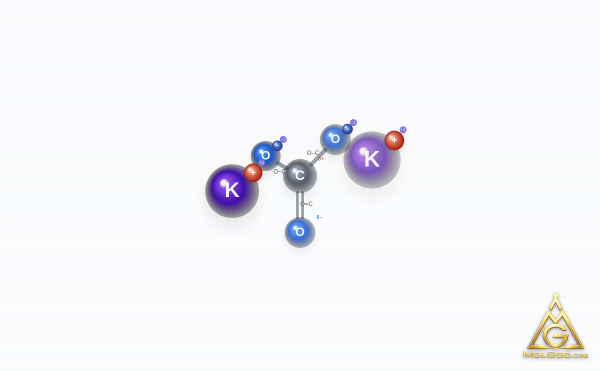
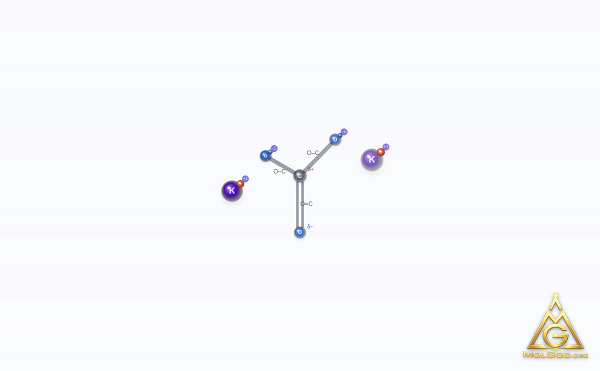
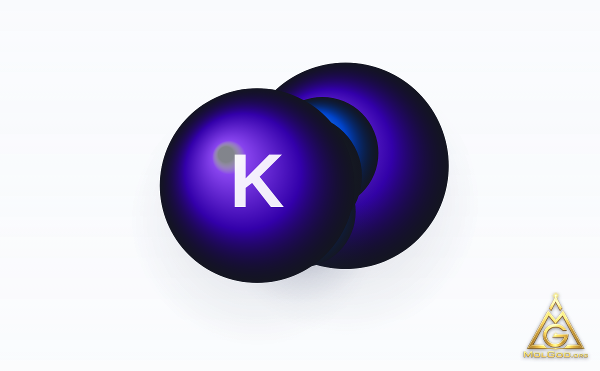
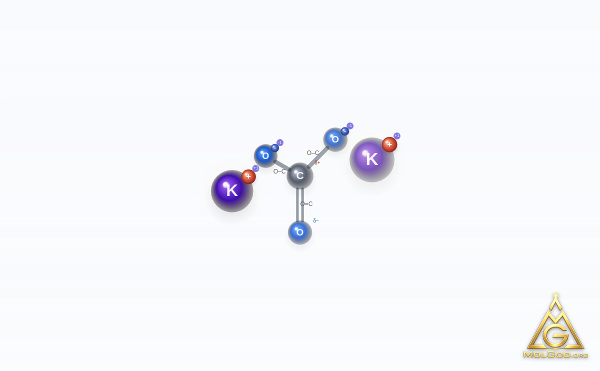
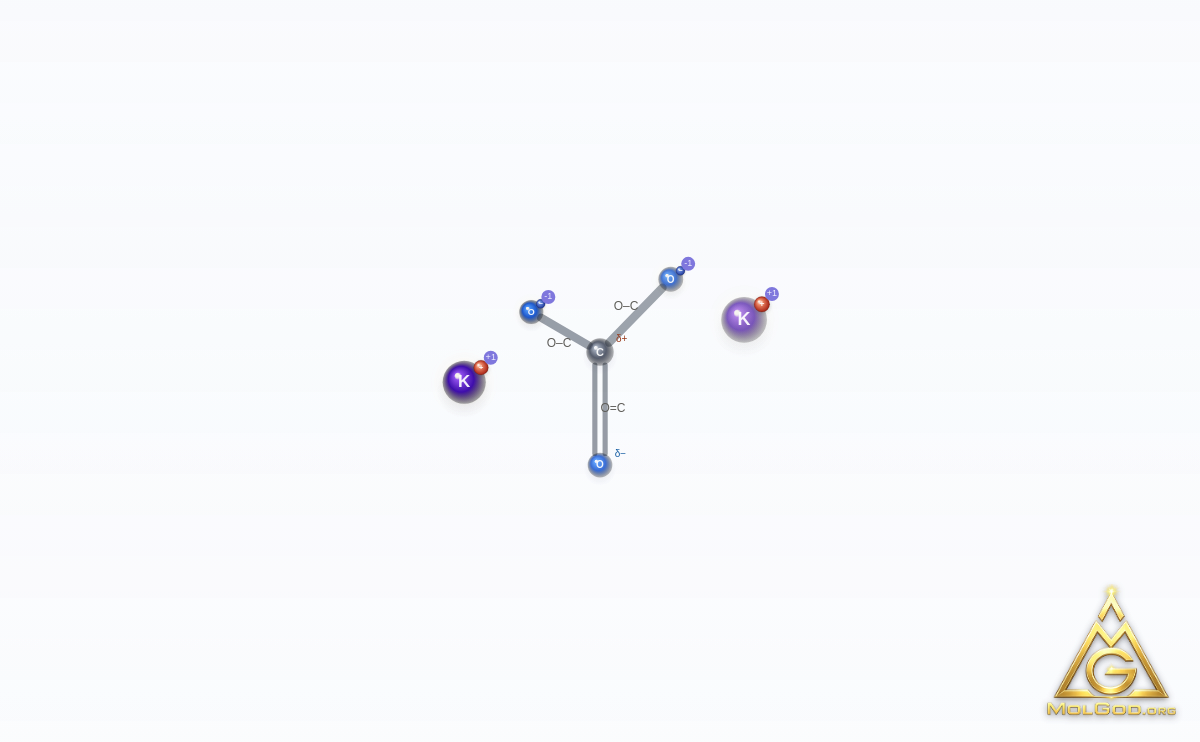
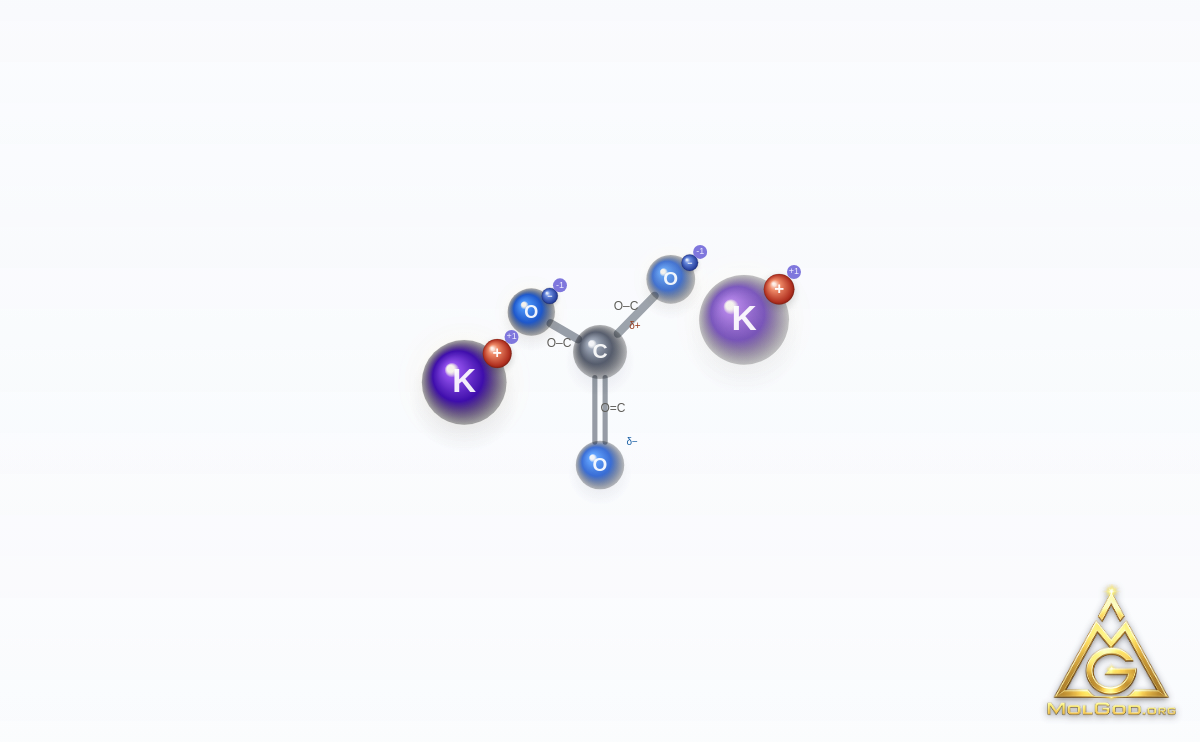
The molecule contains 6 atoms connected by 3 chemical bonds. The full systematic IUPAC name of this compound is dipotassium;carbonate. The interactive 3D model above lets you view the spatial arrangement of the atoms — you can rotate it with the mouse, zoom with the scroll wheel, and switch between skeletal / Ball & Stick / Space Fill visualization modes.
In terms of physicochemical properties, polar surface area PSA = 63.2 Ų, 0 donors and 3 hydrogen bond acceptors. These parameters are key when assessing bioavailability and interaction with biomolecules.
Data from PubMed (NIH NLM), OpenAlex (CC0), Semantic Scholar (AI2). AI Summary generated by Semantic Scholar TLDR. Articles marked with require paid access.
Synonyms
POTASSIUM CARBONATE · 584-08-7 · Dipotassium carbonate · Carbonate of potash · Potassium carbonate, anhydrous · Carbonic acid, dipotassium salt · Pearl ash · Salt of tartar · Kaliumcarbonat · Kalium carbonicum · K-Gran · Potassium carbonate (K2CO3) · K2CO3 · Potassium carbonate (2:1) · BQN1B9B9HA
📜 License & provenancePREDICTED MODEL · NOT VERIFIEDMolGod_License_1
PREDICTED MODEL — NOT VERIFIED computed by MolGod Scientific · experimental feature (beta) · may contain errors ILLUSTRATIVE FRAGMENT ARRANGEMENT — relative positions are not structural data
No source 3-D conformer was available to MolGod for this substance. MolGod Scientific computed this geometry from the structural formula with RDKit 2026.03.6 (ETKDGv3 conformer generation, UFF force-field optimisation; lowest-energy converged conformer of a fixed-seed set). It is not a measured structure, it does not come from PubChem, and it has not been compared with experimental data. It shows one possible conformation.
This substance consists of 3 separate components (for example ions). Each component was computed separately; they are arranged radially around a layout anchor for visualisation only (at least 3.0 Å apart). Their relative positions are not a crystal structure, coordination geometry, ionic contacts or any experimentally determined arrangement.
Methods and references
RDKit: Open-source cheminformatics, version 2026.03.6. Zenodo. doi:10.5281/zenodo.22140358 (all versions: doi:10.5281/zenodo.591637)
Riniker S, Landrum GA. Better Informed Distance Geometry: Using What We Know To Improve Conformation Generation. J. Chem. Inf. Model. 2015, 55, 2562-2574. doi:10.1021/acs.jcim.5b00654
Wang S, Witek J, Landrum GA, Riniker S. Improving Conformer Generation for Small Rings and Macrocycles Based on Distance Geometry and Experimental Torsional-Angle Preferences. J. Chem. Inf. Model. 2020, 60, 2044-2058. doi:10.1021/acs.jcim.0c00025
Rappe AK, Casewit CJ, Colwell KS, Goddard WA III, Skiff WM. UFF, a full periodic table force field for molecular mechanics and molecular dynamics simulations. J. Am. Chem. Soc. 1992, 114, 10024-10035. doi:10.1021/ja00051a040
Heller SR, McNaught A, Pletnev I, Stein S, Tchekhovskoi D. InChI, the IUPAC International Chemical Identifier. J. Cheminform. 2015, 7, 23. doi:10.1186/s13321-015-0068-4
Bolton EE, Kim S, Bryant SH. PubChem3D: Conformer generation. J. Cheminform. 2011, 3, 4. doi:10.1186/1758-2946-3-4 (cited for contrast: no source 3-D conformer was available to MolGod for this record)


 require paid access.