
Methylguanidine hydrochloride
CAS 22661-87-6 · C2H8ClN3 · MW 109.56 g/mol
Modelweergaven
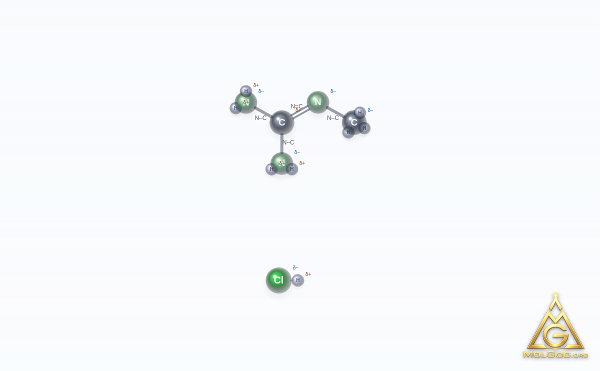
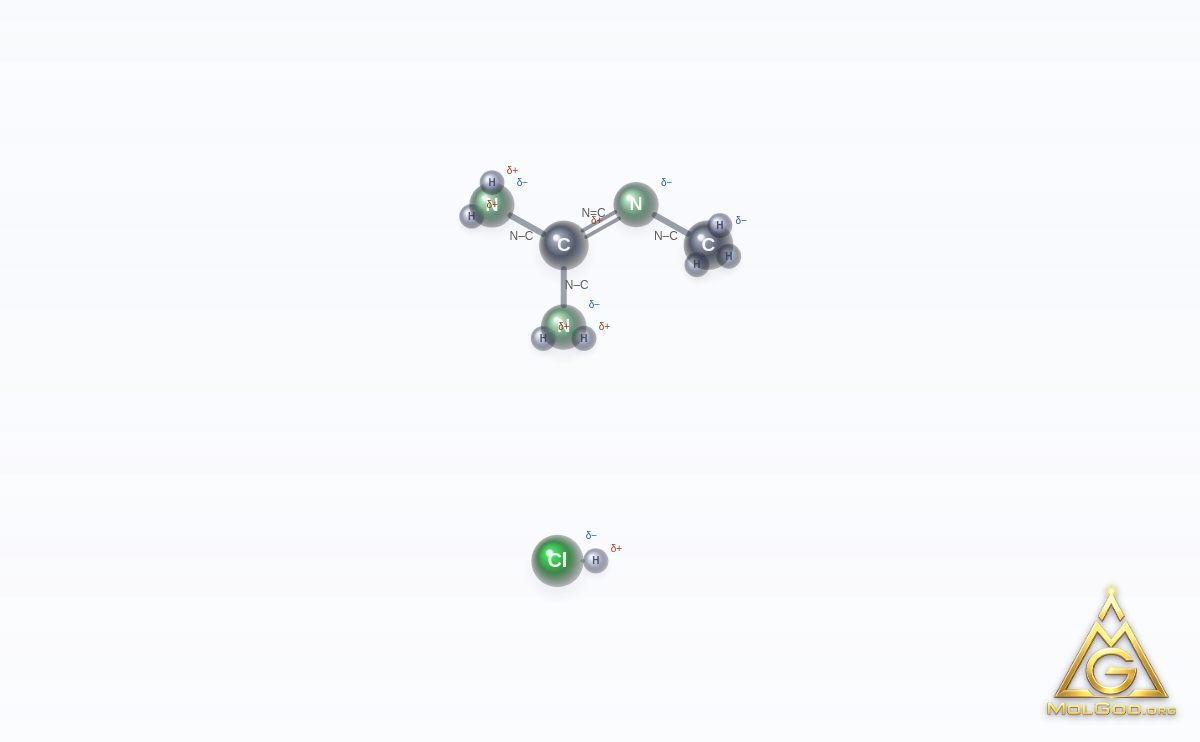
3D-bal-en-stokmodel 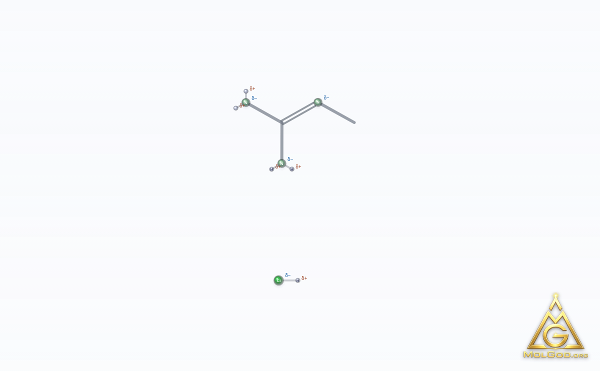
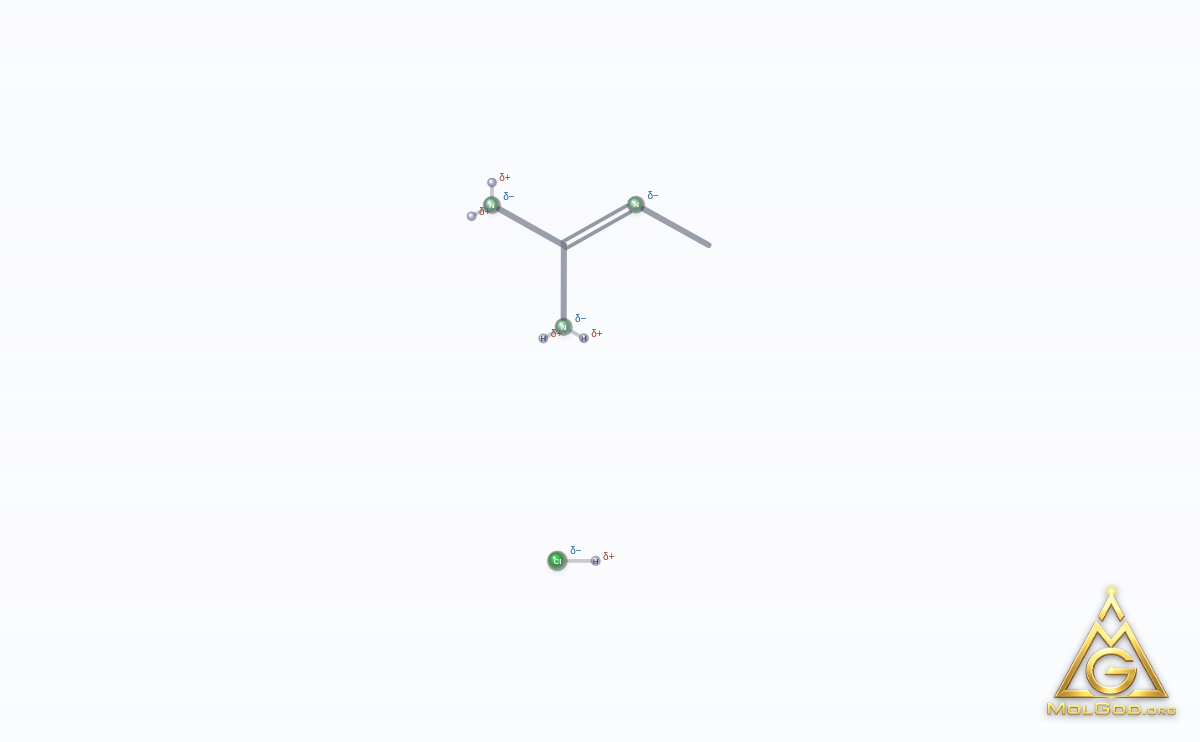
3D-skeletmodel 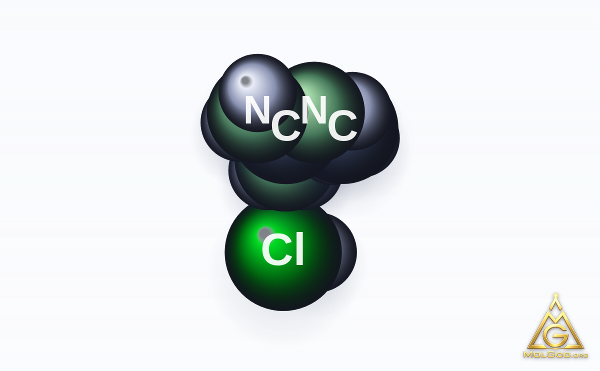
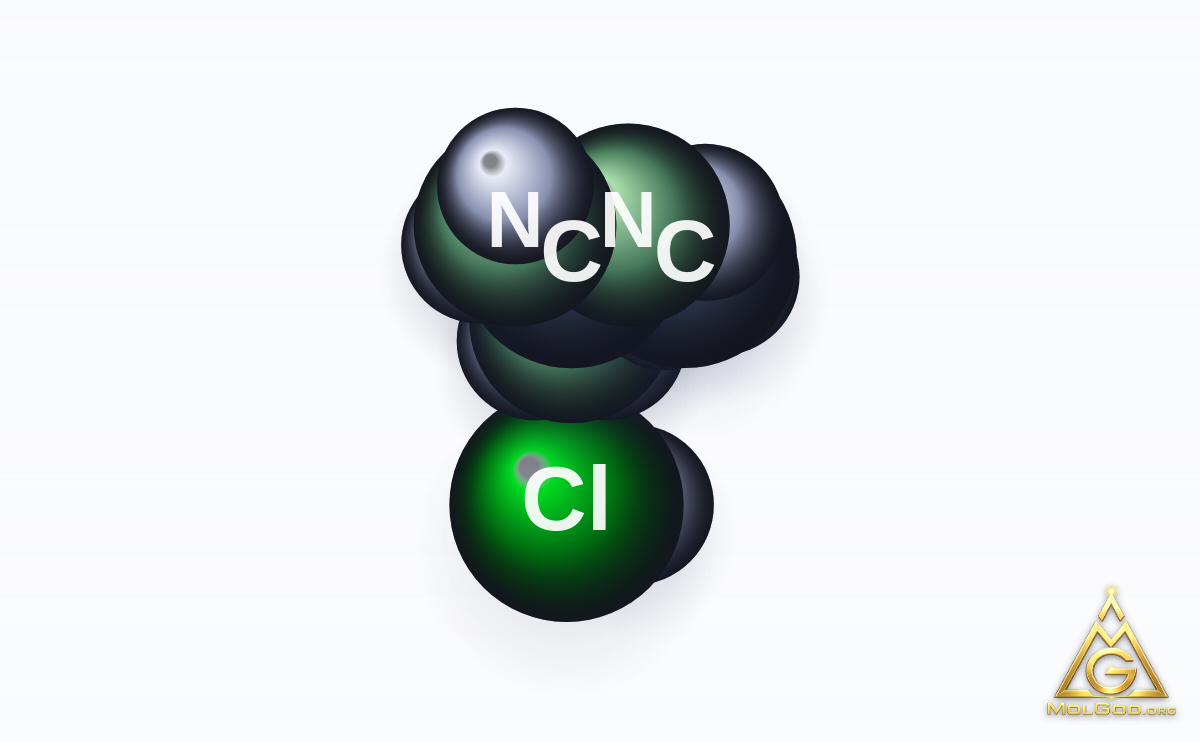
3D-ruimtevullend model 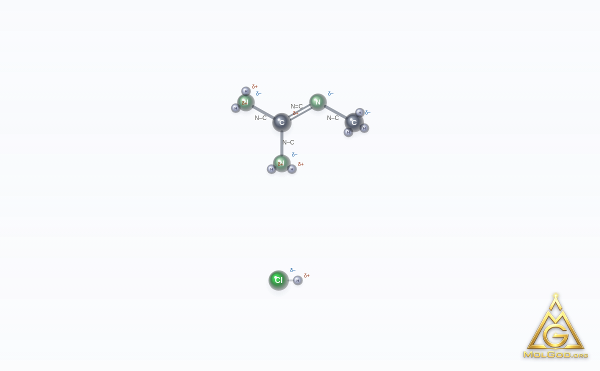
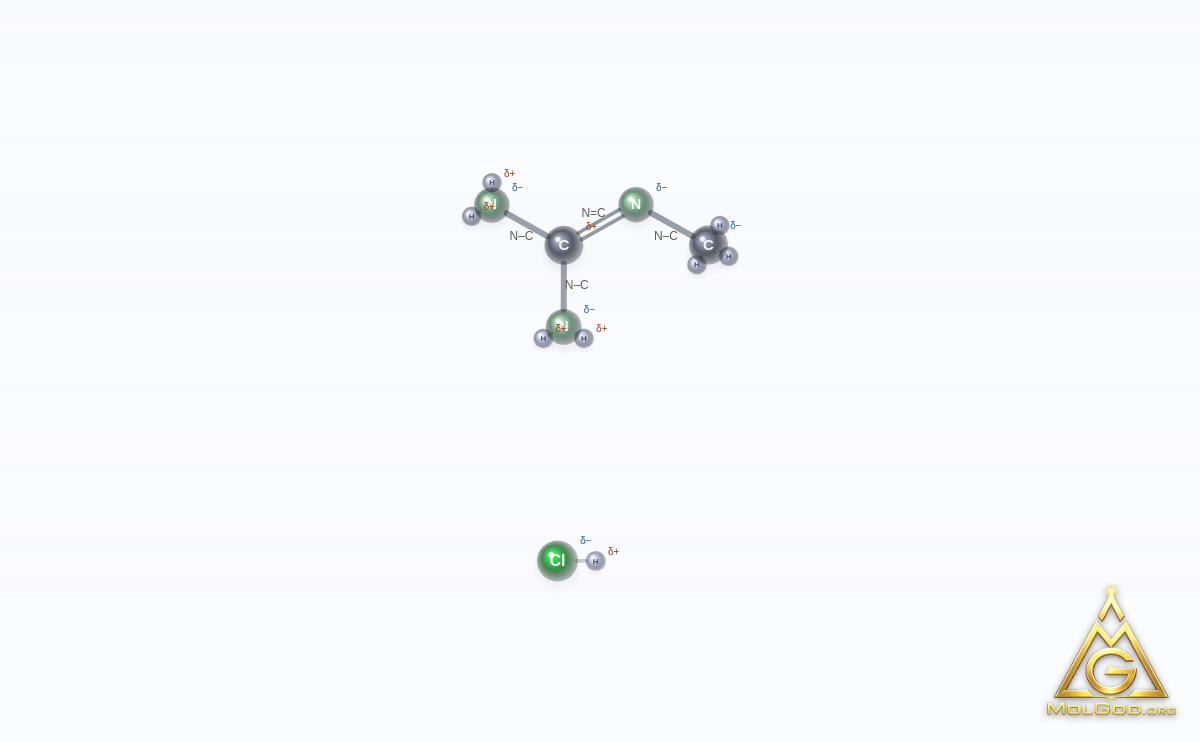
2D-structuur
© 2026 MolGod.org. Alle rechten voorbehouden. · Beeldrechten
Over Methylguanidine hydrochloride
Methylguanidine hydrochloride is een chemische verbinding, geregistreerd onder nummer CAS 22661-87-6, met de brutoformule C2H8ClN3, en een molaire massa van 109.56 g/mol.
Het molecuul bevat 14 atomen verbonden door 12 chemische bindingen. De volledige systematische IUPAC-naam van deze verbinding is 2-methylguanidine;hydrochloride. Het interactieve 3D-model hierboven toont de ruimtelijke rangschikking van de atomen — u kunt het met de muis draaien, met het scrollwiel inzoomen en schakelen tussen de weergavemodi skelet / Ball & Stick / Space Fill.
Wat de fysisch-chemische eigenschappen betreft, polair oppervlak PSA = 64.4 Ų, 3 donoren en 1 waterstofbrugacceptoren. Deze parameters zijn cruciaal bij de beoordeling van de biobeschikbaarheid en de interactie met biomoleculen.
De chemische gegevens voor deze verbinding zijn afkomstig van PubChem (NIH NLM NCBI), een van de grootste chemische databanken ter wereld. Alle informatie wordt automatisch bijgewerkt en verrijkt met vertalingen van GHS-gevarenaanduidingen conform de CLP-verordening (EG 1272/2008). Het interactieve 3D-model en de beelden van de viewer zijn auteursrechtelijk beschermd (© MolGod.org) — gebruiksvoorwaarden: molgod.org/copyright/.
Fysisch-chemische eigenschappen
| Molecular formula | C2H8ClN3 |
| Molar mass | 109.56 g/mol |
| IUPAC | 2-methylguanidine;hydrochloride |
| SMILES | CN=C(N)N.Cl |
| InChIKey | VJQCNCOGZPSOQZ-UHFFFAOYSA-N |
| logP (XLogP3) | — |
| PSA | 64.4 Ų |
| HBD / HBA | 3 / 1 |
| PubChem CID | CID 146724 ↗ |
GHS-veiligheid
Signaalwoord: Waarschuwing
H302 — Schadelijk bij inslikken.
H315 — Veroorzaakt huidirritatie.
H319 — Veroorzaakt ernstige oogirritatie.
H335 — Kan irritatie van de luchtwegen veroorzaken.
Wetenschappelijke literatuur
Brak articles naukowych dla CAS 22661-87-6 w PubMed / OpenAlex / Semantic Scholar.
Synoniemen
Gegevensbronnen
- 📊 PubChem CID 146724 — NIH
- 🔬 NIST WebBook — spectroscopie
- 🌐 Wikidata
- 💊 ChEMBL — bioactiviteit
Gerelateerde moleculen
📜 Licentie en herkomstPREDICTED MODEL · NOT VERIFIEDMolGod_License_1
computed by MolGod Scientific · experimental feature (beta) · may contain errors
ILLUSTRATIVE FRAGMENT ARRANGEMENT — relative positions are not structural data
No source 3-D conformer was available to MolGod for this substance. MolGod Scientific computed this geometry from the structural formula with RDKit 2026.03.6 (ETKDGv3 conformer generation, MMFF94+UFF force-field optimisation; lowest-energy converged conformer of a fixed-seed set). It is not a measured structure, it does not come from PubChem, and it has not been compared with experimental data. It shows one possible conformation.
This substance consists of 2 separate components (for example ions). Each component was computed separately; they are arranged radially around a layout anchor for visualisation only (at least 3.0 Å apart). Their relative positions are not a crystal structure, coordination geometry, ionic contacts or any experimentally determined arrangement.
Methods and references
- RDKit: Open-source cheminformatics, version 2026.03.6. Zenodo. doi:10.5281/zenodo.22140358 (all versions: doi:10.5281/zenodo.591637)
- Riniker S, Landrum GA. Better Informed Distance Geometry: Using What We Know To Improve Conformation Generation. J. Chem. Inf. Model. 2015, 55, 2562-2574. doi:10.1021/acs.jcim.5b00654
- Wang S, Witek J, Landrum GA, Riniker S. Improving Conformer Generation for Small Rings and Macrocycles Based on Distance Geometry and Experimental Torsional-Angle Preferences. J. Chem. Inf. Model. 2020, 60, 2044-2058. doi:10.1021/acs.jcim.0c00025
- Halgren TA. Merck molecular force field. I. Basis, form, scope, parameterization, and performance of MMFF94. J. Comput. Chem. 1996, 17, 490-519. doi:10.1002/(SICI)1096-987X(199604)17:5/6<490::AID-JCC1>3.0.CO;2-P
- Tosco P, Stiefl N, Landrum G. Bringing the MMFF force field to the RDKit: implementation and validation. J. Cheminform. 2014, 6, 37. doi:10.1186/s13321-014-0037-3
- Rappe AK, Casewit CJ, Colwell KS, Goddard WA III, Skiff WM. UFF, a full periodic table force field for molecular mechanics and molecular dynamics simulations. J. Am. Chem. Soc. 1992, 114, 10024-10035. doi:10.1021/ja00051a040
- Heller SR, McNaught A, Pletnev I, Stein S, Tchekhovskoi D. InChI, the IUPAC International Chemical Identifier. J. Cheminform. 2015, 7, 23. doi:10.1186/s13321-015-0068-4
- Kim S, Chen J, Cheng T, et al. PubChem 2025 update. Nucleic Acids Res. 2025, 53, D1516-D1525. doi:10.1093/nar/gkae1059 Compound record: https://pubchem.ncbi.nlm.nih.gov/compound/146724
- Bolton EE, Kim S, Bryant SH. PubChem3D: Conformer generation. J. Cheminform. 2011, 3, 4. doi:10.1186/1758-2946-3-4 (cited for contrast: no source 3-D conformer was available to MolGod for this record)
MG-STL-22661-87-6-ENGRAVED · 157,874 △ · 8 MB · SHA-256 f391ea4628408062
MG-STL-22661-87-6-NORMAL · 5,728 △ · 280 KB · SHA-256 531d8a5124eddadd
- Model
- Methylguanidine hydrochloride ·
22661-87-6 - InChIKey
- VJQCNCOGZPSOQZ-UHFFFAOYSA-N
- Licentie
- CC BY-SA 4.0 International (bronrechten onbepaald — nog niet verleend)
- Naamsvermelding
- MolGod Scientific — Methylguanidine hydrochloride (CAS 22661-87-6)
- Licentie- en herkomstrecord
- Methylguanidine hydrochloride (CAS 22661-87-6) →
- MolGod-molecuulrecord
- Methylguanidine hydrochloride →
- Brongegevens
- PubChem CID 146724 ↗
- Modelinformatie
- STL gegenereerd door MolGod ·
MolGod STL Exporter build 48804cd20b0d· gegenereerd op 2026-10-14 - SHA-256 (STL)
- 531d8a5124eddadda7861ad05d3442984ae9983024aa51e8e1635f7d9452a96b
- MD5 (STL)
- c5fb0fe9defed37dfb6e465d39c55cdb
- Model-identificatie
- MG-STL-22661-87-6
- Transformatie
- MolGod Scientific bal-en-staafmodel
- Wijzigingen
- PREDICTED geometry computed by MolGod Scientific (RDKit), NOT verified; rendered as a triangulated mesh.
- Wikimedia Commons
- nog niet gepubliceerd
Deze licentie geldt voor de door MolGod gemaakte STL-mesh, niet automatisch voor bronmateriaal van derden.