Hydrazine Sulfate

CAS 10034-93-2  ·  H₆N₂O₄S  ·  MW 130.13 g/mol

Loading molecule...
3D model Hydrazine Sulfate, CAS 10034-93-2, molecular formula H₆N₂O₄S, molar mass 130.13 g/mol

Model views

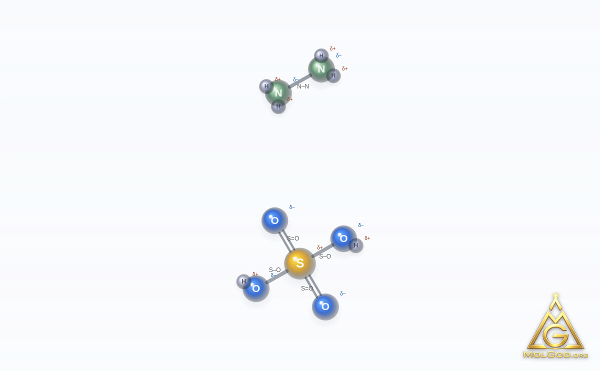
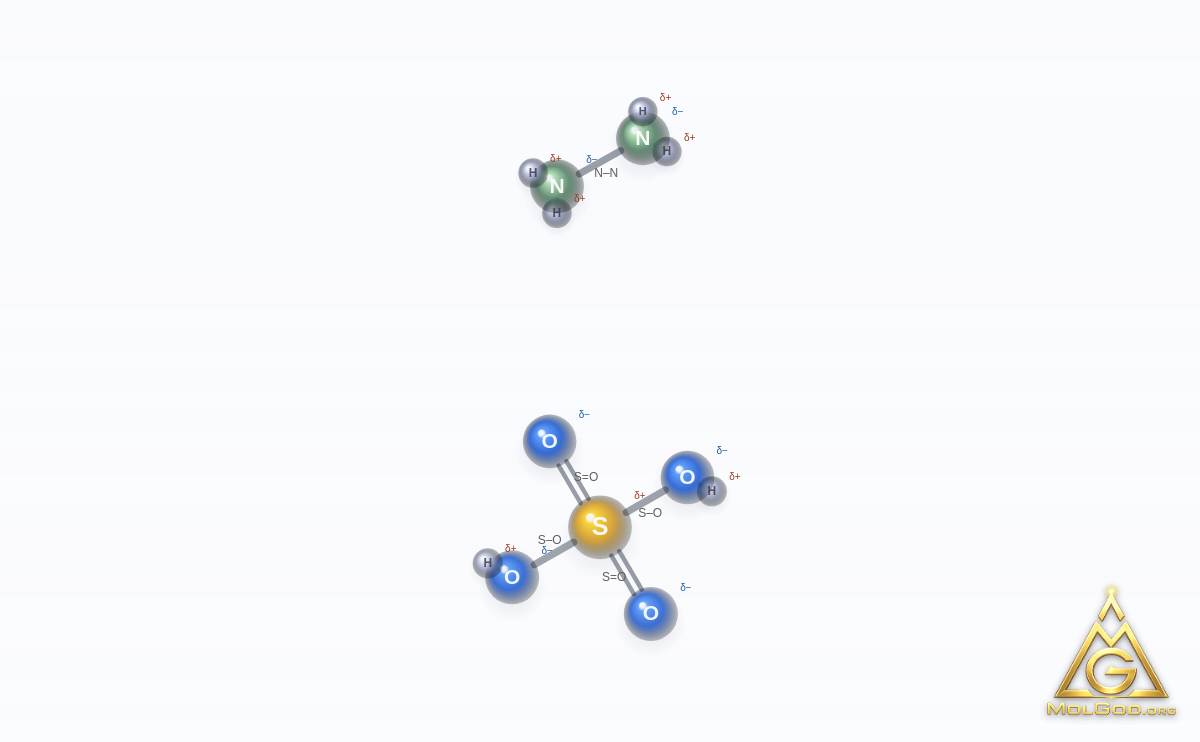
  • Hydrazine Sulfate (CAS 10034-93-2) – ball-and-stick 3D model, MolGod Viewer
    ball-and-stick 3D model
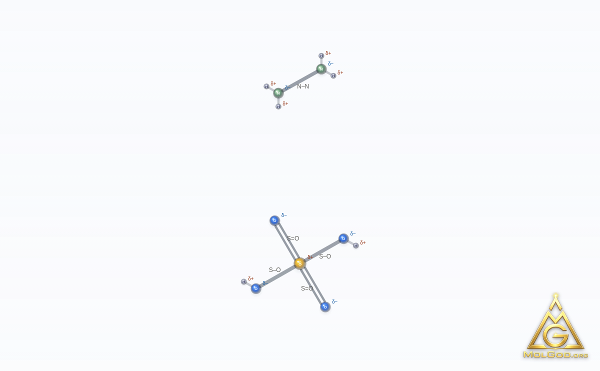
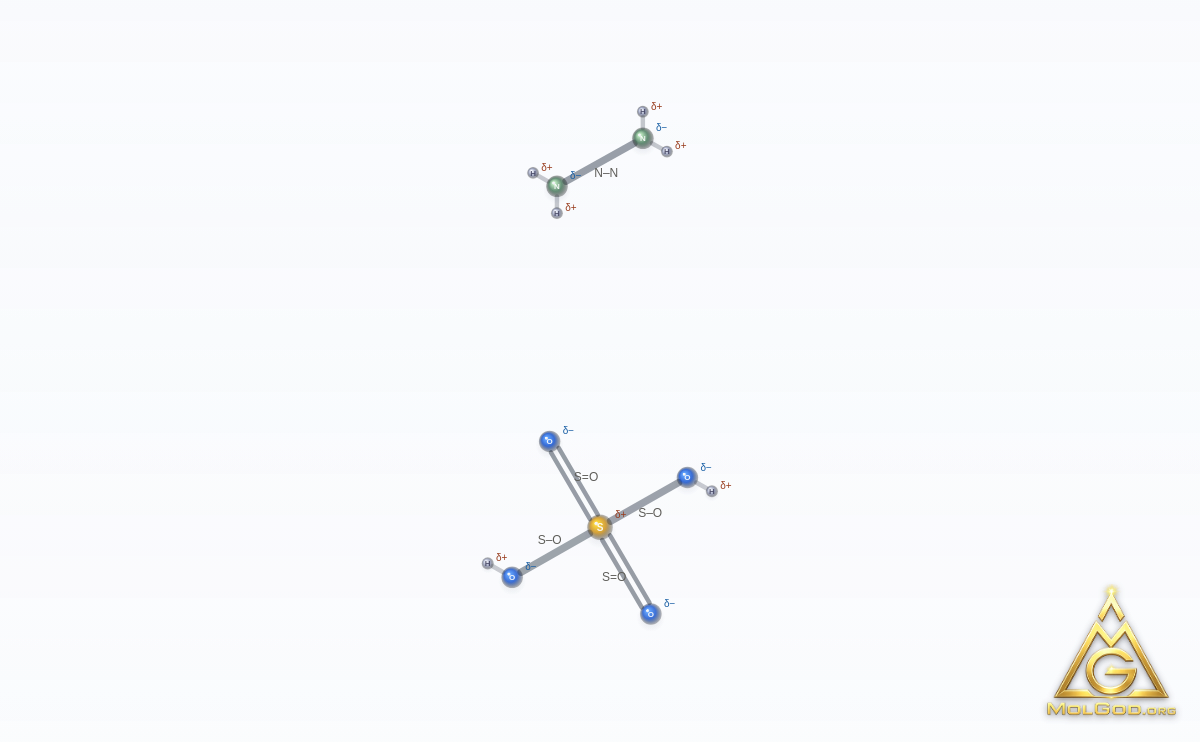
  • Hydrazine Sulfate (CAS 10034-93-2) – skeletal 3D model, MolGod Viewer
    skeletal 3D model
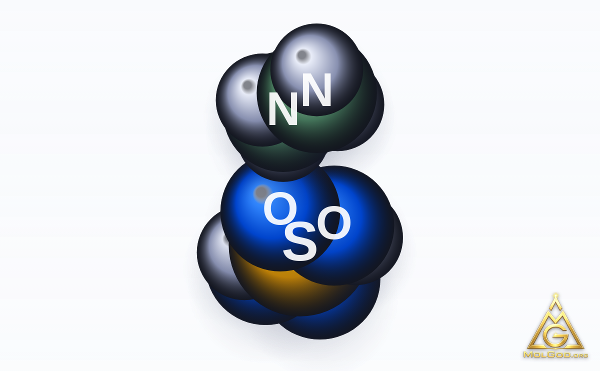
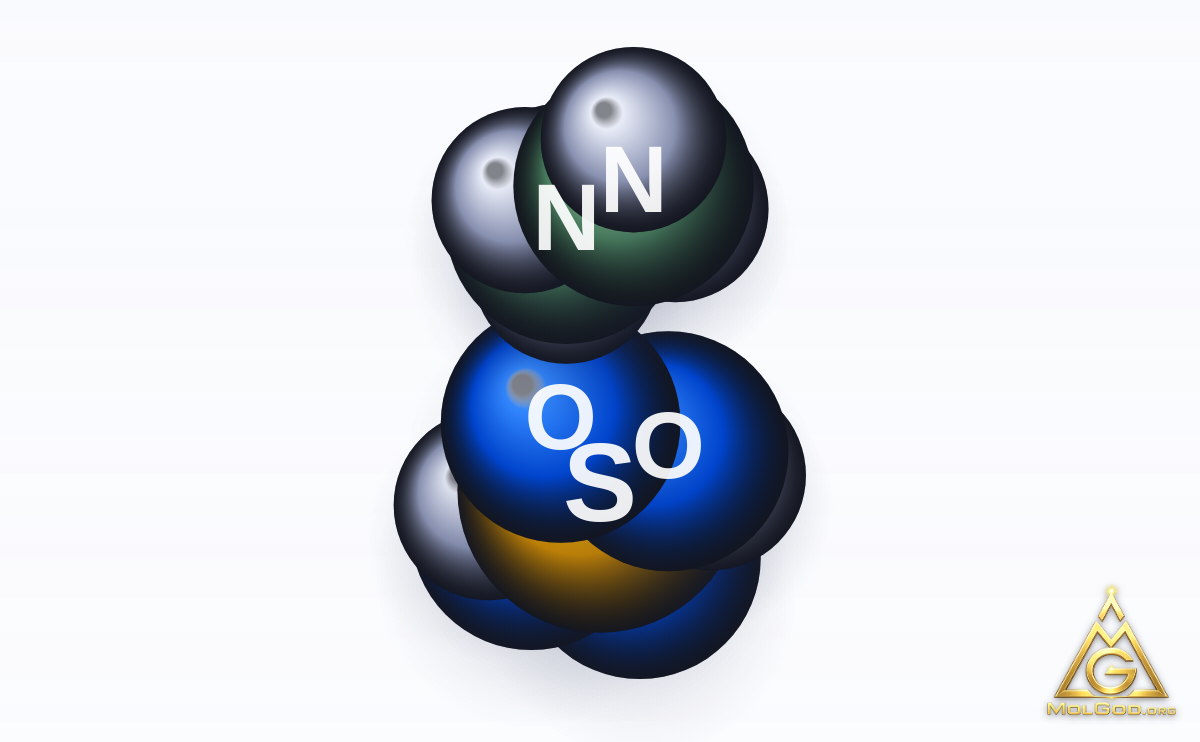
  • Hydrazine Sulfate (CAS 10034-93-2) – space-filling 3D model, MolGod Viewer
    space-filling 3D model
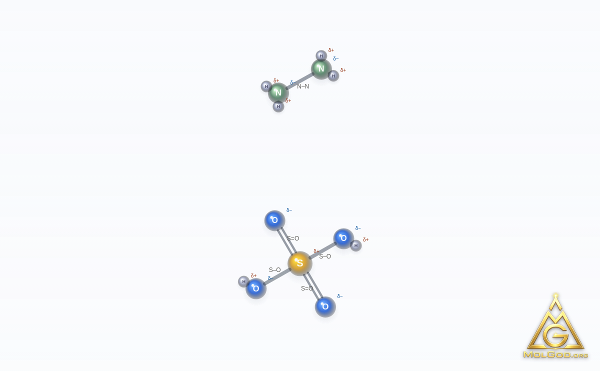
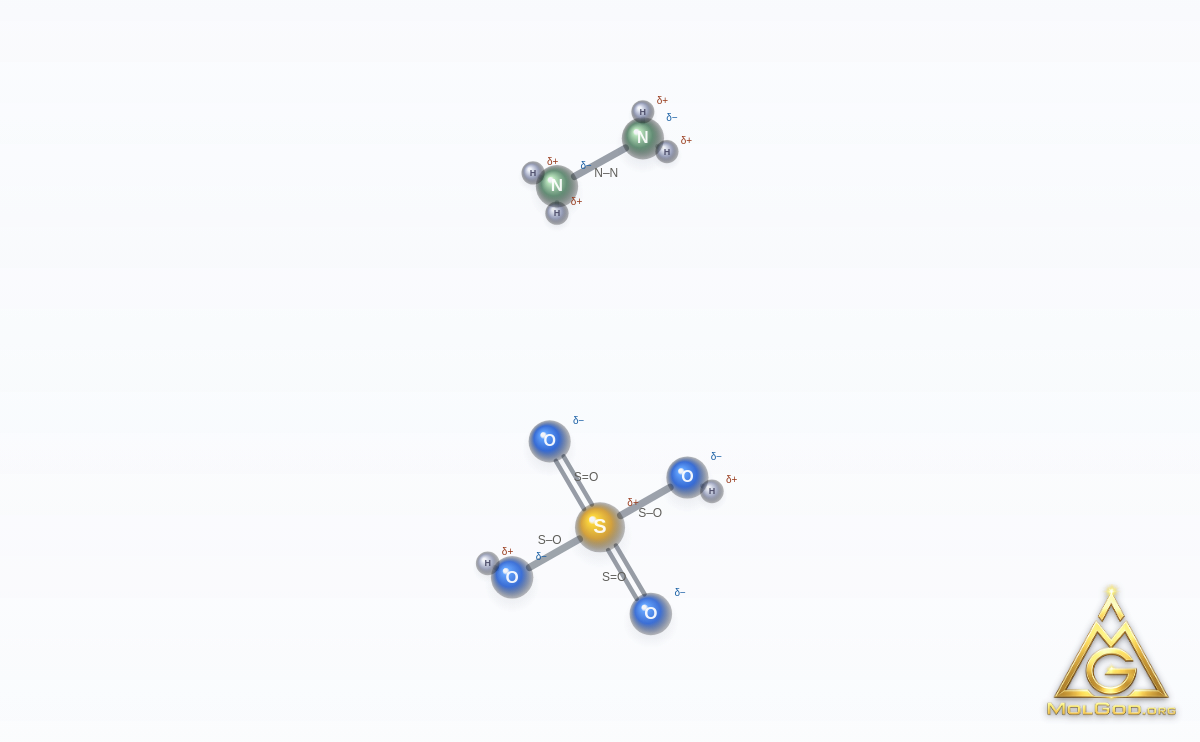
  • Hydrazine Sulfate (CAS 10034-93-2) – 2D structure, MolGod Viewer
    2D structure

© 2026 MolGod.org. All rights reserved. · Image rights

About Hydrazine Sulfate

Hydrazine Sulfate is a chemical compound registered under number CAS 10034-93-2, with the molecular formula H₆N₂O₄S, and a molar mass of 130.13 g/mol.

The molecule contains 13 atoms connected by 11 chemical bonds. The full systematic IUPAC name of this compound is hydrazine;sulfuric acid. The interactive 3D model above lets you view the spatial arrangement of the atoms — you can rotate it with the mouse, zoom with the scroll wheel, and switch between skeletal / Ball & Stick / Space Fill visualization modes.

In terms of physicochemical properties, polar surface area PSA = 135 Ų, 4 donors and 6 hydrogen bond acceptors. These parameters are key when assessing bioavailability and interaction with biomolecules.

Chemical data for this compound comes from PubChem (NIH NLM NCBI), one of the world's largest chemical databases. All information is updated automatically and enriched with GHS hazard statement translations compliant with the CLP Regulation (EC 1272/2008). The widget above may be used for educational, research and commercial purposes.

Physicochemical properties
Molecular formulaH₆N₂O₄S
Molar mass130.13 g/mol
IUPAChydrazine;sulfuric acid
SMILESNN.OS(=O)(=O)O
InChIKeyZGCHATBSUIJLRL-UHFFFAOYSA-N
logP (XLogP3)—
PSA135 Ų
HBD / HBA4 / 6
PubChem CIDCID 24842 ↗
GHS safety

Signal word: Danger

GHS05
GHS05
GHS06
GHS06
GHS07
GHS07
GHS08
GHS08
GHS09
GHS09

H301 — Toxic if swallowed

H311 — Toxic in contact with skin

H314 — Causes severe skin burns and eye damage

H317 — May cause an allergic skin reaction

H331 — Toxic if inhaled

H350 — May cause cancer

H400 — Very toxic to aquatic life

H410 — Very toxic to aquatic life with long lasting effects

H302 — Harmful if swallowed

H335 — May cause respiratory irritation

H341 — Suspected of causing genetic defects

H351 — Suspected of causing cancer

Scientific literature

Related literature

5 articles · 2 open access · Sources: PubMed, OpenAlex, Semantic Scholar

Filters:Export:📄 BibTeX📑 RIS📋 EndNote🔧 CSL-JSON

📈 Publication timeline (number of articles: 5)

2019: number of articles 120192023: number of articles 120232024: number of articles 32024

Bar height = number of articles in a given year. Hover over a bar to see details.

Data from PubMed (NIH NLM), OpenAlex (CC0), Semantic Scholar (AI2). AI Summary generated by Semantic Scholar TLDR. Articles marked with require paid access.

Synonyms
Hydrazine sulfate · 10034-93-2 · Hydrazine monosulfate · Hydrazinium sulfate · Hydrazine sulphate · Hydrazine, sulfate (1:1) · Hydrazonium sulfate · Hydrazine sulfate (1:1) · Segidrin · Sehydrin · Diamine sulfate · Siran hydrazinu · Idrazina solfato · Diamidogen sulfate · Hydrazinium(2+) sulfate
Data sources
Related molecules
📜 License & provenancePREDICTED MODEL · NOT VERIFIEDMolGod_License_1
PREDICTED MODEL — NOT VERIFIED
computed by MolGod Scientific · experimental feature (beta) · may contain errors
ILLUSTRATIVE FRAGMENT ARRANGEMENT — relative positions are not structural data

No source 3-D conformer was available to MolGod for this substance. MolGod Scientific computed this geometry from the structural formula with RDKit 2026.03.6 (ETKDGv3 conformer generation, MMFF94 force-field optimisation; lowest-energy converged conformer of a fixed-seed set). It is not a measured structure, it does not come from PubChem, and it has not been compared with experimental data. It shows one possible conformation.

This substance consists of 2 separate components (for example ions). Each component was computed separately; they are arranged radially around a layout anchor for visualisation only (at least 3.0 Å apart). Their relative positions are not a crystal structure, coordination geometry, ionic contacts or any experimentally determined arrangement.

Methods and references
  1. RDKit: Open-source cheminformatics, version 2026.03.6. Zenodo. doi:10.5281/zenodo.22140358 (all versions: doi:10.5281/zenodo.591637)
  2. Riniker S, Landrum GA. Better Informed Distance Geometry: Using What We Know To Improve Conformation Generation. J. Chem. Inf. Model. 2015, 55, 2562-2574. doi:10.1021/acs.jcim.5b00654
  3. Wang S, Witek J, Landrum GA, Riniker S. Improving Conformer Generation for Small Rings and Macrocycles Based on Distance Geometry and Experimental Torsional-Angle Preferences. J. Chem. Inf. Model. 2020, 60, 2044-2058. doi:10.1021/acs.jcim.0c00025
  4. Halgren TA. Merck molecular force field. I. Basis, form, scope, parameterization, and performance of MMFF94. J. Comput. Chem. 1996, 17, 490-519. doi:10.1002/(SICI)1096-987X(199604)17:5/6<490::AID-JCC1>3.0.CO;2-P
  5. Tosco P, Stiefl N, Landrum G. Bringing the MMFF force field to the RDKit: implementation and validation. J. Cheminform. 2014, 6, 37. doi:10.1186/s13321-014-0037-3
  6. Heller SR, McNaught A, Pletnev I, Stein S, Tchekhovskoi D. InChI, the IUPAC International Chemical Identifier. J. Cheminform. 2015, 7, 23. doi:10.1186/s13321-015-0068-4
  7. Kim S, Chen J, Cheng T, et al. PubChem 2025 update. Nucleic Acids Res. 2025, 53, D1516-D1525. doi:10.1093/nar/gkae1059 Compound record: https://pubchem.ncbi.nlm.nih.gov/compound/24842
  8. Bolton EE, Kim S, Bryant SH. PubChem3D: Conformer generation. J. Cheminform. 2011, 3, 4. doi:10.1186/1758-2946-3-4 (cited for contrast: no source 3-D conformer was available to MolGod for this record)
Hydrazine Sulfate (CAS 10034-93-2), H₆N₂O₄S - 3D ball-and-stick molecular model, engraved element symbols (H N O S), MolGod STL previewDownload image

MG-STL-10034-93-2-ENGRAVED · 158,686 △ · 8 MB · SHA-256 c8e1c56ef818a5b9

Download 3D model · ENGRAVED · H N O S

Hydrazine Sulfate (CAS 10034-93-2), H₆N₂O₄S - 3D ball-and-stick molecular model, MolGod STL previewDownload image

MG-STL-10034-93-2-NORMAL · 5,408 △ · 264 KB · SHA-256 c5f9cadd0eb05f8e

Download 3D model

Model
Hydrazine Sulfate · 10034-93-2
InChIKey
ZGCHATBSUIJLRL-UHFFFAOYSA-N
License
CC BY-SA 4.0 International (source rights undetermined — not yet granted)
Attribution
MolGod Scientific — Hydrazine Sulfate (CAS 10034-93-2)
License & provenance record
Hydrazine Sulfate (CAS 10034-93-2) →
MolGod molecule record
Hydrazine Sulfate →
Source data
PubChem CID 24842 ↗
Model information
STL generated by MolGod · MolGod STL Exporter build 48804cd20b0d · generated 2026-10-14
SHA-256 (STL)
c5f9cadd0eb05f8ec8cab5b0e120f14701084f3e30767e95c0c6c651e6b3f8f9
MD5 (STL)
860f0b1d3857ab57b97cdd40297e05f1
Model identifier
MG-STL-10034-93-2
Transformation
MolGod Scientific ball-and-stick mesh
Changes
PREDICTED geometry computed by MolGod Scientific (RDKit), NOT verified; rendered as a triangulated mesh.
Wikimedia Commons
not published yet

This license applies to the MolGod-created STL mesh, not automatically to third-party source material.

—