-
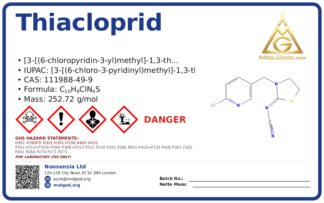
thiacloprid (CAS 111988-49-9) — Safety Data Sheet
Price range: €49.99 through €249.99 -
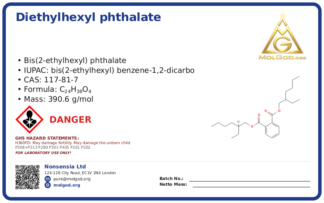
bis(2-ethylhexyl) phthalate (CAS 117-81-7) — Safety Data Sheet
Price range: €49.99 through €249.99 -
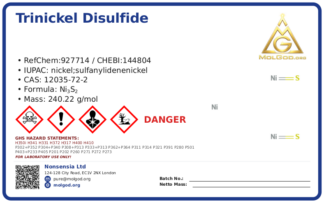
trinickel disulfide (CAS 12035-72-2) — Safety Data Sheet
Price range: €49.99 through €249.99 -
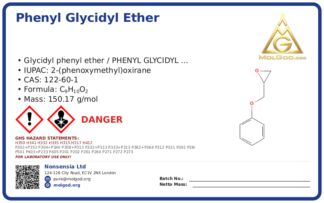
phenyl glycidyl ether (CAS 122-60-1) — Safety Data Sheet
Price range: €49.99 through €249.99 -
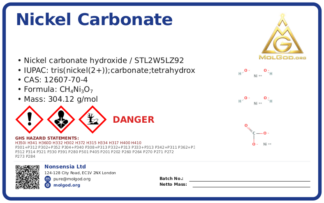
nickel carbonate (CAS 12607-70-4) — Safety Data Sheet
Price range: €49.99 through €249.99 -
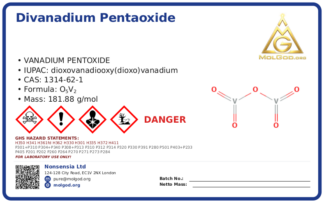
divanadium pentaoxide (CAS 1314-62-1) — Safety Data Sheet
Price range: €49.99 through €249.99 -
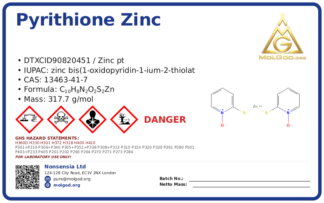
pyrithione zinc (CAS 13463-41-7) — Safety Data Sheet
Price range: €49.99 through €249.99 -
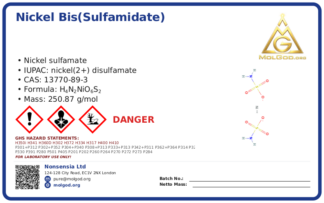
nickel bis(sulfamidate) (CAS 13770-89-3) — Safety Data Sheet
Price range: €49.99 through €249.99 -
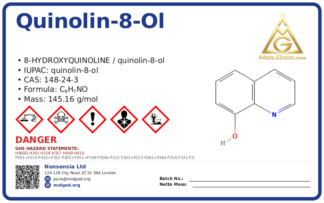
quinolin-8-ol (CAS 148-24-3) — Safety Data Sheet
Price range: €49.99 through €249.99 -
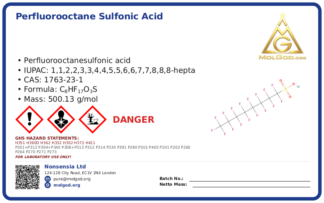
perfluorooctane sulfonic acid (CAS 1763-23-1) — Safety Data Sheet
Price range: €49.99 through €249.99 -
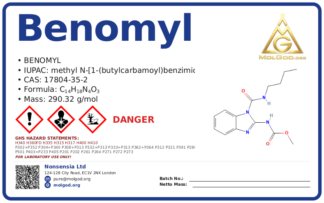
benomyl (CAS 17804-35-2) — Safety Data Sheet
Price range: €49.99 through €249.99 -
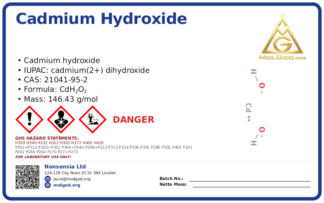
cadmium hydroxide (CAS 21041-95-2) — Safety Data Sheet
Price range: €49.99 through €249.99
One chemical record. Many possibilities.
MolGod organises chemical identity, scientific data, regulatory status and documentation around the substance itself. Search once, read what is known, check where it came from, then take the document you actually need.
- CAS number
- Chemical identity
- Scientific data
- Regulatory status
- Documentation
Why MolGod
Built around the substance, not around the document.
- Classification read against the harmonised entry
- Where CLP Annex VI carries a harmonised entry for a substance, that entry governs the classification shown, and the index number is stated. The reference layer holds 4,167 CAS numbers carrying a harmonised classification, across 3,817 Annex VI index entries.
- Regulatory status across five jurisdictions
- Inventory status is shown against seven lists: REACH Annex XIV and the SVHC candidate list in the EU, SVHC in the UK, TSCA in the US, DSL and NDSL in Canada, AICS in Australia.
- Identity resolved across sixteen systems
- CAS, EC, InChI, InChIKey, SMILES, PubChem, ChemSpider, ChEMBL, KEGG, DrugBank, MeSH, HMDB, UNII, NSC, Wikidata and more. Each card shows how many of the sixteen were resolved, so you can see how well characterised a substance is rather than assuming.
How a document is built, which datasets stand behind it and what is deliberately not checked: documentation methodology.
Transparent by design
- No chemical is sold, supplied or shipped
- Digital delivery only
- Review status stated on every document
- Sources identified, not implied
- Limitations written down, not buried
- No certification claimed — none exists for safety data sheets in the EU